Telstra is moving to use AI to radically scale up and overhaul its approach to workforce training to meet the aims of its ambitious five-year Connected Future 30 strategy.
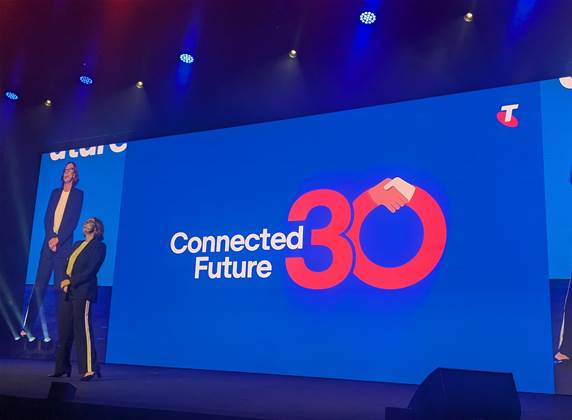
Workforce experience and capability executive Niki Rose said that the company’s workforce would need to look different in five years to what it is today to match what the carrier expected would be a radically-changed world by the time 2030 rolls around.
“That's an incredible challenge for our learning team and systems," Rose said.
"To support our workforce in this shift, we are going to need to upskill and reskill our entire workforce at a scale that we haven't had to do before."
However, Rose, who leads a division of 400 staff, said that the carrier’s current learning systems and extensive libraries of course material weren’t up to the job and that the carrier would need to use AI to “blow up” the way it trains its workforce to achieve its 2030 goals.
“We have a pretty mature learning system. We have thousands of online courses, course libraries, in-person courses credentials and learning pathways available to our team.
“I don't think it's delivering the shift that we need to see for 2030 and I think the usage from people on the results that come through are also not quite measuring up to the return on investment that you'd like to see from that investment in learning.
“Really, we need to blow up the way we're going to learn if we're going to achieve our 2030 strategy,” she said.
Telstra’s Connect Future 30 strategy, announced in May last year, is the name it gives to its five year plan, which includes a “super cycle” of digital infrastructure investment built on predictions that demand for connectivity and data will sharply increase over the period.
Rose delivered the frank assessment of the state of the carrier’s learning workforce training investment at a customer event for cloud-based human capital management software provider, Workday.
At the event she outlined ways that the carrier intended to address the shortcomings including using AI and embedding learning into employees’ daily work – which could free the carrier from having to carve out additional time to train staff.
“Imagine if learning didn't sit in a system that you had to go to, but showed up in the flow of your work – in your Teams, your emails and your day-to-day work and that the learning understood your role, your goals and even what you were working on in that moment. And then it could quietly guide you to the next best step,” she explained.
Some of the approaches that Telstra is “building and piloting”, however, might blur boundaries between work and home spaces.
“Imagine if we stopped asking people to find time to learn but we could actually curate the learning to fit their exact 22-minute commute home or … preferred dog walk around the neighbourhood.
“Imagine if our learning could actually know how you learn best. Whether I could say, ‘I like to listen to a podcast’, ‘I like to have a coaching conversation’ or ‘I like to watch an interview or a presentation’,” Rose said.
“This is how AI is going to help us blow up learning and create something that's much more effective and valuable for all of us,” she added.
The situation is prompting the carrier to reconsider its approach to learning in broader ways, potentially exposing the need to redesign entire processes and ways to eliminate others.
For instance, said Rose, the company was reconsidering the need to create some traditional compliance courses.
She said that replacing them with AI learning agents that reference a SharePoint content, was a possible alternative approach.


.jpg&h=140&w=231&c=1&s=0)
.jpg&h=140&w=231&c=1&s=0)
.jpg&h=140&w=231&c=1&s=0)


.png&w=120&c=1&s=0) HPE Networking Day Sydney
HPE Networking Day Sydney
 iTnews Resilience, Rewired Breakfast
 RIMPA Live Convention 2026
 iTnews Benchmark Security Awards 2026
 iTnews State of Security Breakfast Sydney