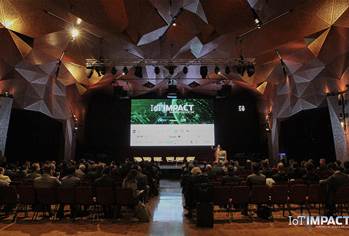
UN Secretary-General Antonio Guterres has warned that artificial intelligence is developing faster than anyone can keep up, calling for globally harmonised rules to reduce potential risks - especially to children.
"A technology that can reshape economies, transform the world of work, sway elections and tilt the balance of security is being deployed faster than anyone, including the people building it, can keep up," Guterres told delegates at the first-ever government-level global dialogue on AI in Geneva.
"Innovation needs guardrails … If AI is to be powerful, it must be governed," Guterres told delegates.
The two-day inaugural UN Global Dialogue on AI Governance is not intended to forge a treaty, but to discuss how to set rules to mitigate the potential harms of AI and take advantage of its opportunities.
Delegates will consider a report by a UN-backed independent scientific panel of 40 experts, who will present findings from the first global, independent scientific assessment of AI.
A more comprehensive report is planned next year, alongside a second global meeting in New York.
Guterres stressed that globally harmonised rules on AI must prioritise safety for children after examples of minors being steered towards self-harm and being deceived by machines posing as friends.
"We do not let medicine reach a child until it is proven safe. We test every toy. Yet AI has reached our children – their learning, their friendships, their most private questions – before anyone asked what it would do to them," he said.
He called for an AI child safety pledge, where companies building systems would have to prove they are safe before making them accessible to children.
Systems should also not be allowed to generate sexual images of children, and when a child shows signs of distress, the system should stop and connect them to a human for help.
While AI poses significant opportunities, such as in healthcare, Guterres said the world's institutions were not prepared for machines that make decisions, and that AI's breakneck speed of development meant machines were increasingly making choices with little human or government oversight.
"The internet took 15 years to reach a billion people. AI got there in two," Guterres told delegates.
He also warned about the concentration of the most advanced AI systems within a handful of companies and countries, meaning developing countries have little say in the progress of AI and risk being left behind.
The independent report of scientific experts found that AI development is even more concentrated, with the US accounting for 75 percent of the computing power among the world's top 500 AI supercomputers, and China 15 percent.
While globally over a billion people now use conversational AI weekly, adoption in developing countries lags, the report added.
Bridging AI gap
Guterres said that if used well, AI could compress decades of development into years, potentially becoming "the great equalizer of the twenty-first century".
The head of Libya's Presidential Council, Mohamed al-Menfi, urged that the AI gap be closed in Africa, which accounts for 10 percent of the world's population but only possesses fewer than two percent of global data centres.
"AI cannot be a legitimate resource if African countries cannot make use of it," he said, calling for greater participation of African states in the design of AI rules.
Georgian President Mikheil Kavelashvili told delegates that world leaders also had a shared responsibility to create robust international laws to prevent the power of AI from becoming an "instrument of totalitarian control and new digital tyranny".


iTnews State of Data & AI Breakfast
Forrester's AI Forum Sydney
The 2026 iAwards
Integrate 2026
Security Exhibition & Conference