Australia’s Fair Work Commission is struggling with the volume of AI-assisted filings and appeals it now receives, with the “workload pressure” impacting its ability to hear important cases and make timely decisions.

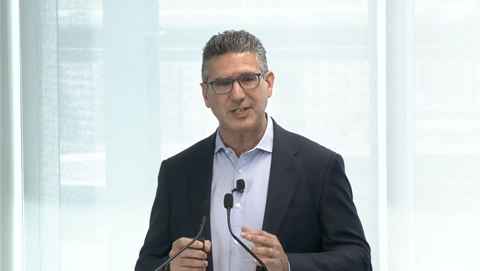
In a speech [pdf] to the Victorian Bar Association earlier this week, commission president Justice Adam Hatcher said that by the end of this financial year, the commission’s workload is likely to be up “over 70 percent” compared to just three years ago.
“That this is principally being caused by the increasing use of AI tools by potential litigants is, in my view, the only reasonable inference which can be drawn,” Hatcher said.
“The clue that the growth in lodgments was AI-driven first became apparent by the widespread use of AI-generated language in the applications being filed. Once you learn what this looks like, it becomes pretty easy to spot.
“But what I hadn’t realised until fairly recently is how easy AI has made it to get information about remedies available under the Fair Work Act and to make applications and submissions.”
Hatcher conducted his own experiment with ChatGPT last year and found it could prepare an unfair dismissal application and witness statement in “less than 10 minutes”.
But ChatGPT also invented aspects of the dismissal story and even suggested the quantum of compensation that could be expected, based on its partially fabricated filing.
Hatcher suggested that while AI made access to legal avenues more accessible, it gave false hope to people whose cases had little prospect of success.
“Clearly … anything which can tell an aggrieved dismissed employee, within the space of a few minutes and with no prior knowledge required, that there is a thing called the Fair Work Commission, that you can apply to it for an unfair dismissal remedy, what the criteria for doing so are, and that you have 21 days to apply has to be regarded as a win in terms of access to justice,” he said.
“But when the AI tool starts inventing facts to justify a weak unfair dismissal claim or, worse, can gloss up a general protections claim for a person who does not meet the qualifying period criterion for an unfair dismissal claim, then the balance of benefit and detriment becomes less clear.”
He said the commission is fielding an increased volume of “AI-generated appeal notices which identify multiple grounds of appeal which are then required to be addressed.”
“It has become harder to quickly and efficiently identify and dispose of cases which do not have reasonable prospects of success,” Hatcher said.
“This has flow-on consequences for the Fair Work Commission’s capacity to deal with its overall workload, to assign resources to priority areas of its jurisdiction and to deliver quick and effective justice in meritorious cases brought by applicants.”
Already, the commission is starting to slip on key performance indicators such as the percentage of decisions made within a 12-week period.
“I expect further slippage in other areas as the workload continues to increase,” Hatcher said.
The commission has started a research project “to gain a better understanding of the use of AI by litigants,” Hatcher said.
It is also reforming its procedures, including requiring applicants to disclose whether they had AI assistance for all forms and documents.
Additionally, Hatcher suggested legislative amendments and increased powers would be of assistance.
“This would include amendments … to increase our powers to dismiss matters which are not properly prosecuted by a party, or which lack reasonable prospects of success,” he said.


.jpg&h=140&w=231&c=1&s=0)
.jpg&h=140&w=231&c=1&s=0)
.jpg&h=140&w=231&c=1&s=0)
.jpg&h=140&w=231&c=1&s=0)


.png&w=100&c=1&s=0)
 Sydney Cloud & Datacenter Convention 2026
 iTnews Executive Retreat - Security Leaders Edition
 Can Testing Keep Up? Quality in the Age of Accelerating Delivery
 iTnews Resilience, Rewired Breakfast
 RIMPA Live Convention 2026