TPG Telecom has warned that telecommunications users in metropolitan areas are at risk of being left worse off by Labor’s incoming universal outdoor mobile service legislation.
The legislation is intended to extend the current universal service obligation regime to include basic SMS and mobile services, and places an onus on TPG Telecom, Optus and Telstra to meet technical challenges to make it happen by late 2027.
However, TPG Telecom said that, to meet obligations under the legislation, carriers will need to divert limited spectrum resources away from metropolitan areas where demand for mobile services is highest.
“Universal coverage can only succeed if spectrum is managed responsibly, and with finite spectrum supporting critical mobile services, operators need certainty that the connectivity millions of Australians rely on in our major cities won’t be put at risk,” a TPG Telecom spokesperson said.
The universal outdoor mobile obligation (UOMO) is backed by legislation that amends current consumer telecommunication laws to require the big three mobile network operators to provide competitive service coverage over 5 million square kilometres of the Australian landmass, including 37,000 kilometres of road.
The bill for the new laws was introduced to parliament late last year following a consultation period that that ended last October.
However, TPG Telecom has told iTnews that the consultation process should be extended to adequately assess the legislation’s impact.
“With key questions around technology readiness, spectrum allocation, funding and the scope of coverage still unresolved, further consultation is needed to ensure the framework is workable and avoids unintended consequences,” TPG Telecom’s spokesperson said.
TPG Telecom is not the only carrier designated as a UOMO provider under the legislation to express concerns about its technical feasibility.
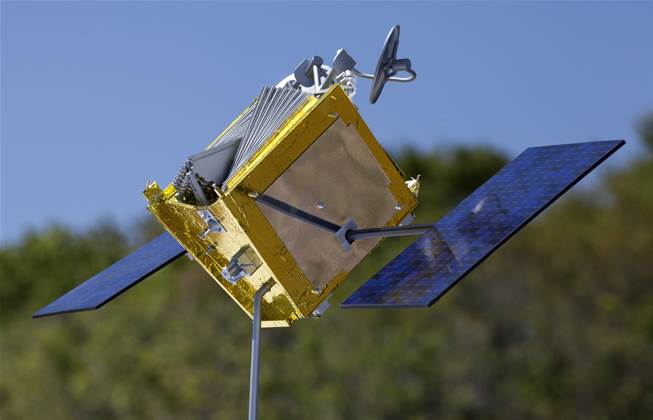
The legislation leans heavily on recent developments in telecommunications, including Low Earth Orbit satellites (LEOsats) and Direct to Device (D2D) technology, both of which could vastly improve emergency service communications in remote areas like the Australian outback.
Telstra already uses LEOsats to provide backhaul support for a network of small cell mobile stations in remote parts of Australia, although the reliability of the service has started to generate controversy.
D2D technology could bring further improvements to emergency service coverage by effectively converting standard, consumer mobile handsets into satellite phones.
Known as Satellite to Mobile (STM) technology, it promises to allow consumer handsets to transmit and receive signals from orbiting low earth orbit constellations using spectrum in bands that are already standard for connecting them with terrestrial mobile base station networks.
However, like TPG Telecom, Telstra has told the federal government its expectations of the technology might be overly optimistic at this stage and that it also has concerns about spectrum availability to meet the legislation's requirements.
The UOMO legislation does allow for ministerial discretion to treat some services differently and to vary their commencement dates.
However, in its submission to the government during the consultation period for the draft legislation, Telstra warned that STM technology needed to mature and urged the government to push the new laws’ default commencement date back by a year to December 2028.
“It is not feasible to run UOMO STM services simultaneously on separate 4G and 5G satellite networks because we do not have enough spectrum, and STM voice will most likely only be available on 5G,” Telstra wrote in its submission.
Telstra recommended that the government hold off commencement of the new obligations until STM standards for 5G mobile technology became available.
It said that LEO STM currently only works in a limited way over 4G using proprietary system modifications and that upcoming 5G standards would address the problem.
“If a UOMO SMS service is designated before 5G STM SMS is available, customers will acquire handsets capable of 4G STM SMS in the expectation that they will have access to the benefits of that government-mandated service for the lifetime of that handset.
“However, when STM Voice is later launched on 5G, the handsets already acquired will need to be replaced at customers' cost with handsets capable of 5G STM SMS and Voice, because we will need to switch off 4G STM SMS.
This will be a poor customer experience and in our view is not something government should be driving,” Telstra wrote in its submission.
It’s not clear whether the third mobile network operator designated under the UOMO legislation, Optus, participated in the consultation process.
Sources familiar with the matter told iTnews that Optus has also raised concerns with the current technical feasibility of providing low earth orbit satellite services.
It’s understood that, like TPG Telecom, the carrier is concerned that technology the government is expecting carriers to rely on is too immature to deliver the obligation by 2027 and that more work is required with industry to understand the UOMO’s impact on spectrum harmony.
However, it’s believed that Optus is also concerned about commercial challenges that might arise from current satellite market conditions..
The draft legislation is currently in a holding pattern after the senate bills committee deferred its consideration, along with a raft of others, until its next meeting.



.png&h=140&w=231&c=1&s=0)
.jpg&h=140&w=231&c=1&s=0)
.jpg&h=140&w=231&c=1&s=0)
1.jpg&h=140&w=231&c=1&s=0)


.png&w=120&c=1&s=0) HPE Networking Day Sydney
HPE Networking Day Sydney
 iTnews Resilience, Rewired Breakfast
 RIMPA Live Convention 2026
 iTnews Benchmark Security Awards 2026
 iTnews State of Security Breakfast Sydney