The federal government has started examining the performance of around 200 Telstra-supplied small cell mobile base stations providing service to remote communities using LEOsat services for connectivity.
A federal Department of Communications spokesperson told iTnews that it had asked the telco for more information about the base stations after an apparent triple zero communication failure incident involving one of the base stations at Tirranna Springs in Queensland late last year.
"After being made aware of mobile services outages at Tirranna Springs Roadhouse last year, the department sought advice from Telstra on the performance of its small cell remote mobile base stations. We are continuing to look into this matter," spokesperson for the department said.
Telstra confirmed that the department did not start seeking additional information about its remote base stations until after iTnews contacted the government agency seeking comment on the incident.
Jil Wilson, the owner of the roadhouse at Tirranna Springs who was the caller involved in the incident said that voice dropouts were the key cause of her difficulties when using her local mobile base station to call an ambulance late last September.
Queensland Ambulance Service confirmed to iTnews that it attended to an emergency incident in the vicinity of the roadhouse September 23 after it received a triple zero call in circumstances closely matching Wilson's account of what occurred on the day.
On the day, Wilson said, a staff member’s car caught alight, causing its battery to explode. An occupant of the vehicle received burn injuries and another individual drove him to the roadhouse with the intent of seeking help.
When Wilson tried to use her mobile to call triple zero, the operator was unable to understand her requests due to voice dropouts, which she said were all too familiar when using the small cell base stations.
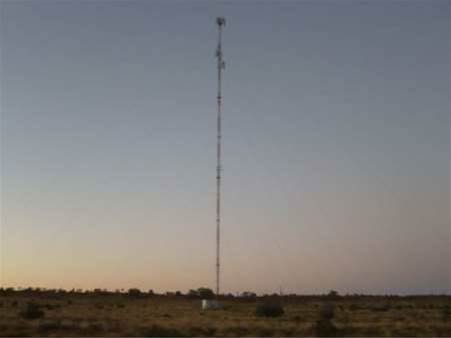
A small cell base station is located on her property and serves local tourists and traffic passing through on the local highway.
“We were outside with him and I tried ringing triple zero and the call connected. The lady started talking to me and then the voice cut out,” Wilson said.
“I hope we experience this now [on this call to iTnews] because usually it happens all the time. The voice cuts out but there is no warning, no beeping or anything that tells you that the voice has just cut out,” she added.
What Wilson said she then experienced the day of the emergency incident was a series of frustrations as she tried alternate ways to reach the local hospital and call-in paramedics.
The voice call she placed to triple zero outdoors eventually disconnected.
Wilson said that she was reluctant to attempt to call triple zero again because continued voice dropouts would result in her explaining the emergency situation to operators repeatedly.
She decided to use her local knowledge instead.
Wilson knew the phone numbers of some local hospital staff and used an imperfect but known method to try to communicate with them. Wilson put her phone into flight mode so that it would connect her Starlink satellite broadband service. Wilson then used a mix of texts and calls to try to deal with the emergency.
During the ordeal her injured staff member was in a shower in her home, trying to follow hospital instructions to treat the burns as they were relayed from medical experts at the hospital.
When Wilson asked staff at the local hospital if they could dispatch the ambulance on her behalf, she was told that only triple zero operators could authorise the dispatch. She called triple zero again, but her attempts to explain where to send the ambulance on her ten-building property were again stymied by voice dropouts and the call disconnected again.
Wilson told iTnews the Starlink satellite service can also have reliability problems and doesn’t work as well in remote Tirranna Springs it does in metro areas, such as Brisbane.
Eventually, she reached staff at the hospital again in a bid to confirm that the ambulance had been dispatched. The hospital was able to verify for her that the ambulance had been activated.
QAS confirmed for iTnews that it received a triple zero call that resulted in an ambulance being dispatched to take a man to a healthcare facility about 30 kilometres from the roadhouse to be treated for burns.
"QAS received a triple zero (000) phone call in relation to reports a man in his 40s was experiencing burns after suspected battery acid exposure on September 23 2025," a QAS spokesperson said.
"The case was processed normally, an ambulance was dispatched, and the patient was taken to the Burketown Primary Health Centre in a stable condition."
Telstra had previously told iTnews that it was not aware of any incidents in which a customer was left unable to contact triple zero when using the small cell base stations. However, after making more thorough inquiries, a spokesman for the carrier confirmed that it was aware of the incident and was sharing what it knew about it with the department.
"We were very sorry to hear that a customer at this location had some trouble contacting Triple Zero. After one of our team members heard about this issue directly from the customer, we took steps to better understand what caused the issue.
"The Triple Zero Custodian has asked us for information relating to this incident at the Tirranna Roadhouse and we will be providing the information we have available," the spokesperson said.
Telstra's small cell woes
As iTnews recently reported, there has been steep rise in the number of remote Telstra mobile service outages deemed to have a significant community impact since 2024 – around the time the carrier started using Eutelsat OneWeb LEO satellites to provide small cell sites with backhaul into its core network.
After being relatively stable in preceding calendar years, the number of outages, which Telstra described as periods of 10 to 15 minutes during which the base stations could not be used to make emergency calls, leapt from 3614 in 2024 to 5221 in 2025.
Telstra revealed the outages in answers to questions on to the federal government’s parliamentary triple zero inquiry published earlier this year.
The carrier had been asked during the inquiry to report the number of triple zero service outages that had occurred on its network from 2022 to 2025.
Telstra has since admitted that it doesn’t have access to enough of Eutelsat's OneWeb LEO satellite craft orbiting above the continent to provide ubiquitous coverage.
Last week it told iTnews that the base stations lost service for periods of 10 to 15 minutes twice a day as they moved under the coverage gaps between satellites.
Problems are more widespread: BIRRR
Since iTnews published the story, both Telstra and residents have aired differences of opinion over the performance of the LEOsat-backed base stations.
Better Internet for Rural, Regional and Remote Australia (BIRRR), a community group that advocates for telco users in the bush, alleged that Telstra was downplaying the impact of the outages on the community.
It also said that the carrier was not acknowledging its reports that callers frequently lose voice communication when using the base stations, even when they remain connected to the satellites.
BIRRR co-founder Kristy Sparrow told iTnews that it has consistently provided feedback to Telstra and the government that the outages on the base stations are more frequent, more prolonged and "extremely difficult to report".
iTnews has seen anecdotal data BIRRR has collected from a range of remote locations that partly challenges Telstra’s overall account of the scale of the issue.
However, Telstra maintains that outages of longer duration on the network are isolated.
“We are also aware of some longer-duration interruptions caused by the need to update software or replace faulty ground-based hardware impacting a limited number of specific sites. Connectivity infrastructure of all types is also vulnerable to extreme weather events and power outages, particularly in remote locations,” Telstra said.
However, what might prove more problematic for the carrier to explain is voice dropouts that disrupt conversations carried over the base stations even when satellites remain connected.
Sparrow said that even during intervals when the mobile base stations were able to connect calls, conversations were disrupted by voice drop-outs.
Regulatory grey area
The base stations’ ability to keep calls connected, even though callers might not be able to hear each other, might place Telstra’s small cell remote base stations in a regulatory grey area when it comes to triple zero call failure reporting rules.
Carriers currently don’t appear to have a regulatory obligation to notify the Australian Communications and Media Authority (ACMA) or the Department of Communications about individual triple zero call failures, even under tightened rules that the regulator introduced in December 2024 in response to the Optus 2023 network outage.
This was confirmed by Telstra's spokesperson in a statement to iTnews.
They are required to report the failures if they’re due to systemic issues. However, whether the issues with LEO satellite connectivity would be classed as systemic remains untested.
The ACMA said it was aware of concerns about mobile service problems in the Tirranna Springs area, but not the September 23 triple-zero incident.
"The ACMA was informed of mobile services outages at Tirranna Springs Roadhouse in September last year, however we received no information about any specific failed triple zero calls," a spokesperson for the ACMA said.
Geopolitics behind OneWeb coverage issues
In the meantime, Telstra said that it is working with Eutelsat to address the coverage gaps in the OneWeb LEOsat constellation that the carrier claims are the main cause of the outages on the 200 or so small cell base stations.
The carrier said that the problems that the remote communities in Australia are experiencing with the base stations can in part be traced all the way to armed geopolitical conflict in Europe.
A Telstra spokesperson said that Russia’s invasion of Ukraine and the continuing conflict had impacted Eutelsat’s capacity to launch new satellite and, as a result, its ability to sustain its OneWeb LEO satellite constellation.
“When we first deployed our OneWeb LEO satellite backhaul solution, the constellation was complete and the service operated as intended.
"However, like any network, it needs to be constantly maintained with any faulty equipment replaced. Russia’s invasion of Ukraine meant organisations including OneWeb needed to find alternatives to launching satellites from the Baikonur Cosmodrome in Kazakhstan, creating some delays to the timing of replacing damaged or degraded equipment,” a Telstra spokesperson said.
Eutelsat has recently made two announcements regarding its capacity to provide LEO satellite capacity that could ultimately help address the coverage gaps. However, it's not clear when that might happen.
Eutelsat announced January 12 that it had secured orders with Airbus Defence and Space to for 340 new LEO satellites for its OneWeb constellation.
Four days later it revealed that it had signed a multi-launch agreement with MaiaSpace, which operates reusable launch vehicles.
"These are positive steps, though at this stage we can’t be specific about when our customers will benefit from these,” Telstra's spokesperson said.
iTnews contacted Eutelsat for comment on which orbital plans it intended to prioritise for LEO satellite capacity boosts, but it did not respond in time for publication.
In the meantime, Telstra said that its regional managers and network advisers were working with remote communities to get a better understanding of the issues that they face with the base stations in a bid to try to solve the problem.




.jpg&h=140&w=231&c=1&s=0)

.jpg&h=140&w=231&c=1&s=0)

.png&w=100&c=1&s=0)



 SAP NOW AI Tour ANZ
 Forrester's AI Forum Sydney
 The 2026 iAwards
.jpg&w=120&c=1&s=0) Integrate 2026
Integrate 2026
 Security Exhibition & Conference








_(1).jpg&h=140&w=231&c=1&s=0)