Key points
- Optus is discussing cyber security policies that could regulate or even ban smart glasses in its stores and offices.
- EGM security and risk Corien Vermaak says the focus is shifting towards disclosure, such as declaring or indicating when the devices are recording, rather than an outright ban.
- Vermaak points to cheaper, less understood smart glasses flooding the Australian market, alongside the NSW government's pool ban, as driving the privacy concerns.
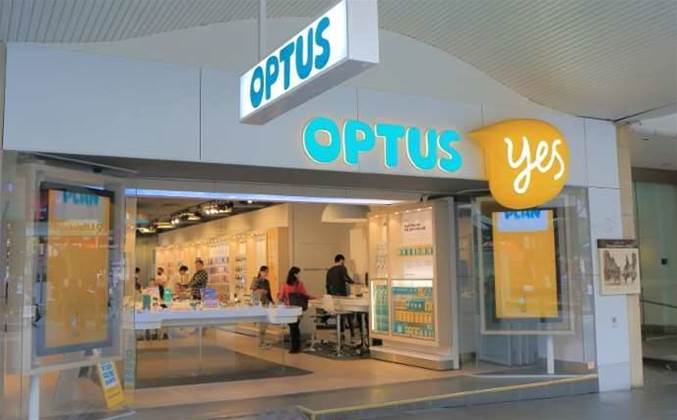
Optus is contemplating cyber security policies to regulate the use of smart glasses in its stores and offices, with a ban on the devices possible.
Optus EGM security and risk Corien Vermaak revealed the move at a customer event for cyber security provider Zscaler yesterday, telling attendees that, following government moves, it had become “a definite conversation point from a policy perspective”.
“What do we allow in stores is currently being discussed, [and] what do we allow in the office and how do we create awareness around it, because it's a personal privacy thing.
“You would have seen that [the] NSW government [has] now banned [them] at swimming pools, specifically where children train. That's one of the first policy moves that we've seen, which is which is a really interesting move to see,” Vermaak said.
Vermaak told iTnews that the threat posed by smart glass had been on the carrier’s cyber security radar for about three months, but had become a focus of corporate policy more recently.
“At a corporate policy level, we've definitely taken focus on it within the last month, where we've started questioning and looking at our own policies around privacy, as to how do we handle it because it technically does become a privacy a privacy challenge,” she said.
Public angst about smart glasses is at a peak due widely demonstrated uses of the devices to visually prey on people, particularly young women. It's earned the devices and their users’ unflattering nicknames, such as “glassholes” and “pervert glasses”.
Vermaak said that while social media sites such as TikTok were main drivers of the public's angst, from a policy perspective, the proliferation of lower cost versions of the devices in the Australian market is heightening concerns about privacy for Optus.
In addition, she said that, unlike Meta – which produces expensive versions of the devices bearing luxury brands – the risks present in information ecosystems and services associated with the cheaper devices were less understood.
“I think that angst was brought on by a price factor. It's becoming more readily available, and that brings two parts. You don't know who the manufacturer is, so you don't know how safe the technology is,” she said.
Vermaak said that Optus isn’t considering a total ban on the devices at this stage. Instead, it appears that Optus’ policy will focus on disclosure rather than prohibition.
“We haven't restricted them as yet. We are certainly still in the discussion because it is quite a complex policy that you need to need to consider and adopt.
“Restricting them would absolutely be a possibility, or asking, in line with AI ethics, for disclosure. So, when you walk into a room, you say, ‘I've got smart glasses on’. And, similar to recording in, let's say … a Teams environment [you ask], ‘Do you mind if I record this session?’
“It's about being open about your use of technology, which we haven't seen with the use of smart glasses,” she said.
Vermaak suggested that the presence of an indicator on the devices to announce that they're recording could be one approach considered by regulators.
"I think where we need to build the practice around it, is disclosing when it's in use and legislating the light, so the light makes people aware that the camera is on. So then at least you can say, 'Listen, I can see your glasses are recording. Do you mind if you switch it off?'," she said.
Vermaak also noted that device security labelling was to receive greater focus in Horizon Two of the federal government’s cyber strategy.
“They are focusing on device safety big time. So, there's security labelling coming out, there's a lot of effort being done by the government to ensure that people are aware of the cyber and safety controls regarding these digital features,” she said.



.jpg&h=140&w=231&c=1&s=0)


.jpg&h=140&w=231&c=1&s=0)


.png&w=100&c=1&s=0)
 iTnews Executive Retreat - Security Leaders Edition
 Personetics Executive Forum 2026 — Sydney
 Personetics Executive Forum 2026 — Auckland
 Can Testing Keep Up? Quality in the Age of Accelerating Delivery
.png&w=120&c=1&s=0) HPE Networking Day Sydney
HPE Networking Day Sydney