Key points
- Firmus Technologies has signed a US$300 million ($416 million) agreement with SUBCO, securing rights to 150Tbps of capacity on the APX East subsea cable system for at least 25 years.
- APX East is expected to become operational in late 2028 and will be Australia's first direct link to the US, as well as the longest continuous undersea optical cable ever built.
- The deal builds on an existing agreement to double Tasmania's undersea cable capacity to mainland Australia, supporting Firmus' plans for data centres in the state.

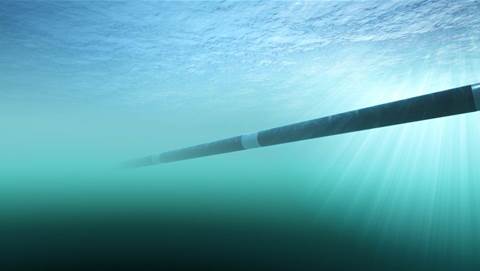
SUBCO has entered a US$300 million ($416 million) agreement with Firmus Technologies that will see the AI data centre builder become a major customer for its APX East subsea cable system.
Under the terms of the agreement, Firmus’ investment will secure it rights to 150Tbps of capacity on the undersea route for at least 25 years after it becomes operational, which is currently expected in late 2028.
Firmus, which has raised around $US3 billion from investors over the past year and is tipped to launch an IPO in October, has ambitions to build what it describes as “AI factories” across Australia and the Asia Pacific region.
SUBCO, which is wiring Australia into the world through of a large program of undersea cable projects, has a business model built on the anticipation that domestic AI data centres will drive up demand for transcontinental transmission capacity.
In all, SUBCO has around 37,000 kilometres of undersea cable routes either built or currently under construction, with APX East expected to be Australia’s first direct link to the US and the longest continuous undersea optical cable ever built in the world.
SUBCO’s founder and co-chief executive Bevan Slattery, a vocal champion of Australia’s potential to become an AI powerhouse in the region, said Firmus was a “natural fit” as an investment partner.
“With millions of AI GPUs planned across the region in the next two-to-three years, generating petabits of tokens per second, AI factories are front and centre of that need,” Slattery said in a statement.
Firmus co-chief executive and co-founder Tim Rosenfield said that AI workloads were set to become a major export commodity for Australia but that developing AI data centres was only “part of the challenge”.
“Securing up to 150 terabits per second of dedicated capacity gives us the scale and performance to connect Australian AI infrastructure directly with the United States, ensuring the AI infrastructure we build here can reliably serve the world's leading AI natives,” Rosenfield said.
Firmus' investment builds on an agreement that it already has with SUBCO to double Tasmania's undersea cable capacity to mainland Australia with a new link across Bass Strait that will tap into SUBCO's SMAP cable.
Under that agreement, SUBCO will build the cable with Firmus underwriting the investment.
Doubling the capacity will support Firmus' plans to develop data centres in Tasmania.
Firmus has been successful in attracting private funding, recently raising $US2 billion in a strategic equity investment round, building on existing backing from Coatue, NVIDIA, Blackstone and Jane Street.
The fundraising rounds value the company at around $US10.5 billion, according to media reports.
However, data centre investments might be starting to lose their sparkle for some, with community backlashes against their developments frequently gathering public attention.
Firmus experienced this, directly becoming the subject of media scrutiny over its plans to develop datacentres in Tasmania.
Meanwhile, the Labor government has firmly signalled to the technology sector that data centres and AI are on its political radar.
Earlier this year, following the release of its national AI plan last December, it published a set of expectations it had of the sector, creating a unified framework guided by the principle that the expansion of data centres “must reflect Australian values”.



.jpg&h=140&w=231&c=1&s=0)
.jpg&h=140&w=231&c=1&s=0)

.jpg&h=140&w=231&c=1&s=0)


 RIMPA Live Convention 2026
 What’s Next?
 iTnews Benchmark Security Awards 2026
 iTnews State of Security Breakfast Sydney
 iTnews Executive Retreat - Security Leaders Edition - VIC



.jpg&h=140&w=231&c=1&s=0)


.jpg&h=140&w=231&c=1&s=0)