Colonial First State is chasing even better personalisation of marketing communications to members by switching on a decision engine in its Adobe stack to deliver relevant and timely messages.
The company, which provides superannuation, investment and retirement-related financial services, is transforming the way it connects with customers.
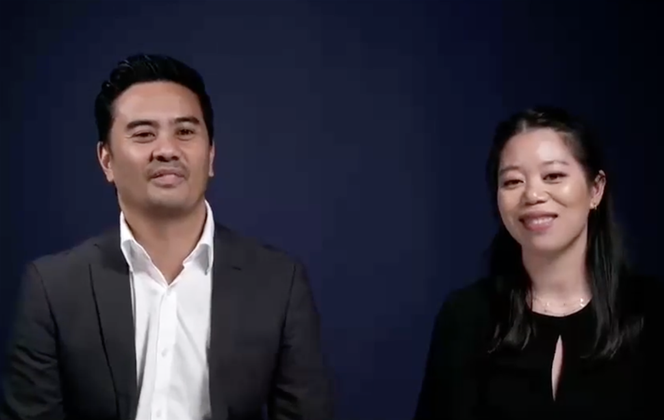
Speaking as part of the virtual portion of the Adobe Summit 2026 held recently in the US, martech director Miguel Alvarez and senior product owner for personalisation and customer engagement Michelle Pang revealed aspects of the program of work.
An accompanying session description indicates that Colonial First State is using both Adobe Experience Platform and Adobe Journey Optimizer.
The latter tool contains the decision engine capability described as a next step in tightening personalised member engagement, using data points to automatically put a ‘next-best’ message in front of members, tailored to what they are likely to be most receptive to at that point in time.
Such ‘next-best action’ systems have been desirable in the financial services sector for several years, with Australia’s banks among adopters.
Pang said that CFS determined that it needed “to evolve how we showed up for our customers”, to fulfil its purpose of “helping Australians achieve financial freedom.”
Six months ago, Pang said that communications to a “newly-onboarded member” were “very linear” and only done via email.
“Email was the only channel available, so we weren't reaching members in their preferred channel location,” she said.
CFS’ other challenges were that it used only “batch siloed data” to inform communications and that the “end-to-end [marketing] journey build was manual.”
“Every audience, journey and piece of content was bespoke. We had no reasonable templates, which made it impossible to scale,” she said.
“The impact [and] inefficiencies across the entire process created long turnaround times, preventing us from communicating with our customers in a timely manner, and resulting in an inefficient operating model. We knew we had to modernise.”
Alvarez said that the martech transformation focused on three pillars: unifying customer data, enabling omnichannel reach, and creating efficiency “through automation and AI”.
“With a combination of daily data ingestion, real-time digital data and direct plumbing of event data, we've now enabled a timely and holistic view of our customers across our online and offline platforms,” Pang said.
Working alongside CFS’ digital and technology teams, marketing has expanded its reach beyond email to “personalised omnichannel engagement at pace.”
This includes through the use of push notifications as well as “content cards” - a way of delivering non-intrustive digital messages in web and mobile channels.
“To ensure we are messaging our customers safely, we've embedded standard audience exclusions that are applied to all messages. This includes channel preferences for both outbound and inbound,” Pang said.
“We want to be relevant but also respectful to our customers.
“And by implementing the above, we're able to message our customers the right message at the right moment in the right channel.”
Pang said that the next evolution of this will be “implementing a decisioning framework within Adobe, which will further accelerate the scale in which we can prioritise each message to our customers.”
This is described in Adobe documentation as “a centralised catalog of marketing offers known as ‘decision items’ and a sophisticated decision engine” that uses “rules and ranking criteria to select and present the most relevant decision items to each individual.”
Pang also said that what has been put in place will also act as a “foundation to utilise agentic AI” in marketing.
On the AI front, the company is using an AI Assistant in Adobe Experience Platform to help with administration of that platform.
“When we've hit issues or needed clarity on, for example, content card set up, journey statuses, or simply which audience are in use, it has given us fast results to better serve our customers,” Pang said.
Pang demonstrated the richer experience that members now receive as a result of the martech improvements and member engagement modernisation.
While a new member may still be welcomed with an email, they’ll be prompted to download the CFS app, where they’ll receive push notifications of super contributions being made, and “content card” offers to engage other products or services.
Alvarez said that CFS had achieved strong results “from the progress made so far”, including a 95 percent reduction in data handling, a 20 percent “uplift in campaign delivery by [using a] standardised approach to our always-on journeys and building reasonable templates”, and a 120 percent “campaign volume increase”, owing to its newfound omnichannel reach and consistency in engaging over these various channels.
“We’re reaching our customers quicker with more relevant messages, giving them the choice of how they engage,” he added.


.jpg&h=140&w=231&c=1&s=0)

.png&h=140&w=231&c=1&s=0)
.jpg&h=140&w=231&c=1&s=0)


.png&w=120&c=1&s=0) HPE Networking Day Sydney
HPE Networking Day Sydney
 iTnews Resilience, Rewired Breakfast
 RIMPA Live Convention 2026
 iTnews Benchmark Security Awards 2026
 iTnews State of Security Breakfast Sydney