“How much is this actually costing?” The more that AI becomes embedded into the way an organisation works, the more this question is going to be elevated to the executive, if not the board. While the technology’s potential is widely recognised, how it should be applied at scale is far from settled, with most organisations still rethinking how to capture its full value. At the same time, as usage increases, attention is shifting to the practical challenge of managing tokens efficiently.
.jpg&h=420&w=748&c=0&s=0)
This shift reflects a broader reality. As organisations move from experimentation to scaled deployment, the economics of AI are coming under closer scrutiny, with token usage emerging as a significant and often poorly understood cost driver.
What is tokenomics?
Think of AI like your car, and tokens like petrol. Every time you ask an AI to do something, it uses fuel. A quick question is a short trip to the shops. A complex, multi-step task is a long drive, and your tank empties much faster.
That “fuel” is not free, and tokenomics is the discipline of understanding how much of it your AI consumes, and how to drive more efficiently so that the budget is not burned through unnecessarily. Many business leaders fail to realise that this pricing picture is more complex than it seems on the surface.
This becomes even more important as organisations move beyond using AI purely for incremental productivity gains and begin exploring more transformative, agent-led use cases that can unlock significant returns.
Costs are falling, but use is increasing exponentially
The headline story on AI token pricing might seem encouraging as costs have fallen dramatically, from roughly $20 per million tokens in late 2022 to around $0.40 per million tokens by mid-2025.
But, to go back to the fuel analogy, when you upgrade a small sedan to a truck, any decline in fuel price is offset by significantly increased consumption. You might be doing more work with the vehicle, but it’s coming at a premium.
In reality, cheaper tokens create an incentive to use more of them, and the emergence of reasoning models and agentic workflows has introduced entirely new categories of token spend that did not exist two years ago.
Take for example reasoning models. These think through problems by generating thousands of internal tokens before producing a response. They inherently require dramatically more tokens than traditional models for the same output. In documented benchmarks, some reasoning models consumed over 600 tokens to generate just two words.
The spread between vendors is also widening. A comparison of identical queries across models showed cost differences of 10x or more for exactly the same output. This is significant because those same vendors are working hard at creating a “lock-in” for clients, and choosing the right model for one use case could be the wrong model for another, and depending on how token usage flows across the entire organisation, this can multiply costs significantly at scale.
This challenge is compounded by a limited understanding of how inferencing works and how tokens are consumed across complex workflows. As a result, early design decisions can lead to significant and unintended cost consequences at scale.
Why it matters for organisations
Average monthly enterprise AI spend rose from $US63,000 in 2024 to $85,500 in 2025, and nearly half of companies now spend more than $100,000 per month on AI infrastructure or services. For many, returns remain elusive. This might not seem like an excessive spend in the OpEx column for something that’s returning significant value, but research shows that clear, measurable value from AI investments remains elusive, and despite the clear capabilities of the technology, most (85%) of companies are struggling to demonstrate the ROI.
Part of this disconnect is that many organisations are still applying AI to existing processes rather than fundamentally rethinking how work gets done. While this can drive efficiency, it often captures only a fraction of the potential value.
Improving outcomes requires not just better use cases, but also greater discipline around how AI consumption is managed.
A new approach to governance is needed
Managing token economics requires more than procurement discipline. It demands observability tooling that captures token usage, costs, and reasoning traces in real time, giving teams visibility into what is being consumed, by which workflows, and at what cost per successful outcome.
It also requires a FinOps-style approach to AI spend: forecasting token demand, enforcing ROI thresholds, and approving only those projects that meet defined economic criteria. Organisations that treat AI spend with the same rigour they apply to cloud costs or capital allocation consistently outperform those that do not.
But the biggest lever remains upstream. Rigorous use case selection, with realistic return estimates and clear change management frameworks built in from the start, consistently delivers better outcomes than deploying first and optimising later. The organisations getting AI economics right are not necessarily the ones with the most sophisticated infrastructure. They are the ones that decided carefully which problems were worth solving before they started spending.
This is where HCLTech comes in, as a partner that helps organisations take control of their AI economics before costs spiral. That means designing token-efficient architectures from the ground up, implementing observability frameworks that give real-time visibility into consumption across every workflow, and applying FinOps discipline to AI spend so budget goes toward initiatives that demonstrably deliver value.
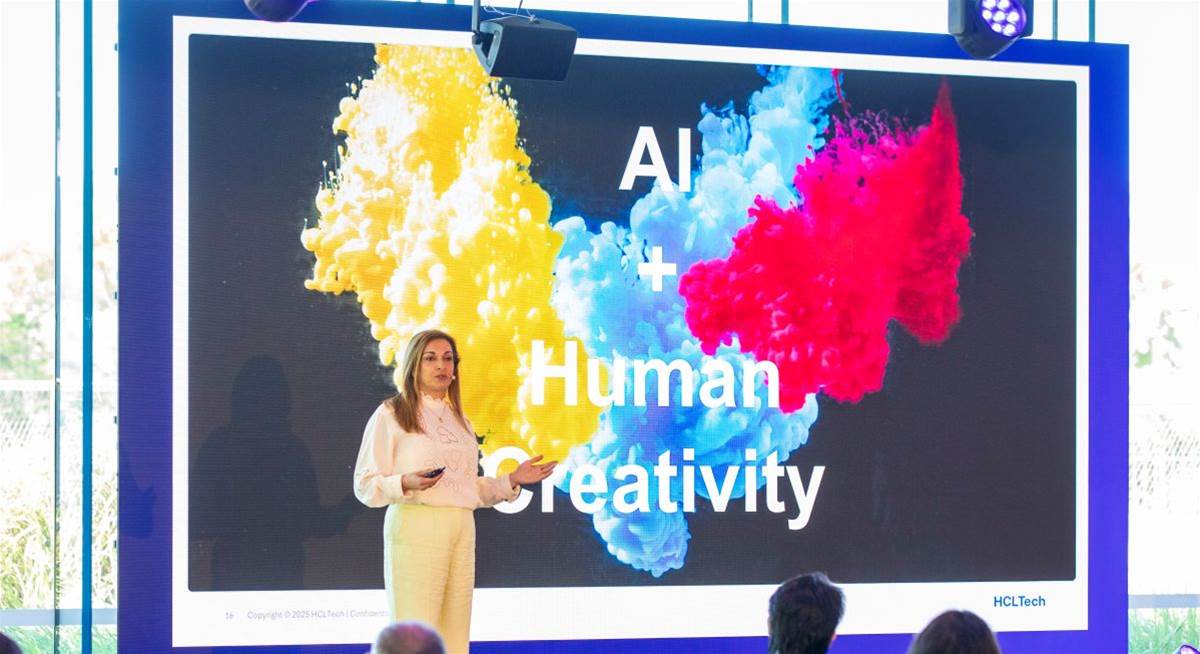
“We are seeing a clear shift at the executive level from experimentation to accountability,” said Sonia Eland, Executive Vice President and Country Manager, Australia and New Zealand at HCLTech. “AI investment is now under close board scrutiny, and token usage plays a direct role in cost, scale, and return. Organisations that manage this well, with the right governance and financial discipline in place, are far more likely to see consistent and measurable outcomes from their AI investments.”
HCLTech's AI and cloud engineering teams work across vendor selection, model optimisation, infrastructure design, and use case governance - the full stack of decisions that determine whether AI scales sustainably or becomes an unmanaged cost centre. For organisations serious about turning AI adoption into measurable enterprise value, HCLTech provides the expertise to make tokenomics a strategic advantage rather than a financial liability.




.jpg&h=140&w=231&c=1&s=0)


.png&w=120&c=1&s=0) HPE Networking Day Sydney
HPE Networking Day Sydney
 iTnews Resilience, Rewired Breakfast
 RIMPA Live Convention 2026
 What’s Next?
 iTnews Benchmark Security Awards 2026


.jpg&h=271&w=480&c=1&s=1)
.jpg&h=271&w=480&c=1&s=1)
.png&h=271&w=480&c=1&s=1)
.jpg&h=271&w=480&c=1&s=1)


.jpg&h=140&w=231&c=1&s=0)