University of Southern Queensland has replaced its hypervisor software, migrating around 800 virtual machines supporting 100 virtualised applications to run on Nutanix’s AHV and Lenovo hardware.
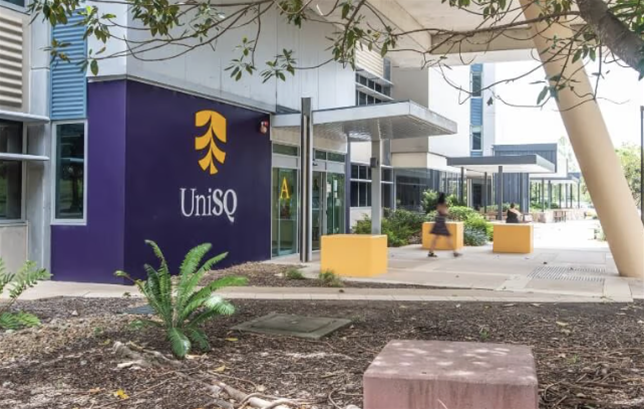
The university is now expanding its use of Nutanix software with the vendor’s database-as-a-service platform NDB as well as taking up micro-segmentation capabilities from the Nutanix Cloud Platform for an implementation planned for later this year.
But the need to replace its hypervisor software was what led the university to Nutanix in the first place.
Associate director for hosting infrastructure Stephen Payne told the iTnews Podcast that UniSQ kicked off a “strategic review” of its virtualisation environment in late 2024.


The timing was purposely ahead of an April 2025 renewal for its incumbent hypervisor software.
“Our incumbent solution was the same solution that a lot of other organisations use. We were very comfortable with it, [but] there was a takeover of that particular product, and in 2024 we decided that we needed to look at what other alternatives were out there,” Payne said.
“We started looking early because it was important to us to have a clear line to where we were going to be when our renewal came up.
“Through the help of many good vendors and resellers, we got some very good information coming in.
“We dealt with Red Hat, looking at OpenShift; we looked at Microsoft for Hyper-V and their products, and we looked at a few others, Proxmox and so on.”
The review and evaluation of alternatives ran for about six months, and led to the selection of Nutanix for software and Lenovo for hardware.
That led to a relatively short timeframe to make the actual transition.
“We had a very short timeline there also because we were concerned that once we finalised our contract with the incumbent vendor that there may be audits,” Payne said.
“We didn't want to have any trace of their product. We wanted to make sure that we had everything done by a particular time.”
In selecting Nutanix, the university was able to take advantage of a group pricing discount negotiated and offered via CAUDIT - the Council of Australasian University Directors of Information Technology.
The initial plan was for a like-for-like migration of existing VMs and related capabilities and services over to Nutanix.
“Like-for-like for us was deployment of VMs being very straightforward,” Payne said.
“We had templates. We had all of our playbooks and everything set up to do things a certain way, and we have compliance settings there.
“We wanted our monitoring to be pretty much the same as what it was before, and we didn’t want to change management of VMs too much there either because that just meant upskilling that would add lead time to getting to the new solution.”
Considerable planning went into the transition, although the university’s architecture also assisted in that regard.
“For the most part, we architect a lot of our systems and services to be redundant, so we could move the non-active nodes early, and then we could swing over to the active node when we needed to,” Payne said.
“We looked at what we could migrate in-hours, what we had to migrate out of hours, what was disruptive, what was non-disruptive, what things we were going to need to reassess when we migrated them, and then there were certain things that we just could not migrate that aren't currently supported on Nutanix, and we had to come up with some creative ideas there on how we would address that.
“There was certainly a lot of planning put into it and a lot of nights where we were hoping things would go well, and it all seemed to go well.”
As part of the transition, the university utilised Nutanix Move, which acts as a cross-hypervisor migration tool.
“It's pretty much point-and-click, migrating the machine and [enacting the] final cutover, which is like a reboot of the VM once it's done,” Payne said.
“We could stage a whole lot of migrations [through Move] and then have those reboots out-of-hours if they were disruptive reboots.”
Move has also helped the university match virtualised workload requirements to underlying infrastructure, resulting in a reduction in the amount of server infrastructure required.
“One of the features of Nutanix Move is it actually gives you recommendations to rightsize before you migrate,” Payne said.
“[Previously], we were in the land of plenty with our hardware deployment. We had 30-odd Dell servers that were running the incumbent virtualisation platform. We never wanted for [extra] RAM, compute or storage.
“Of course, there's been recent constrictions based on price for hardware, so our strategy now is to look at what we can eke out of what we have rather than looking to purchase more, and we’re also looking at cloud options [for burst capacity] as well.
“So the strategy has slightly changed underneath. We use the toolsets that are there to inform us as to whether increasing CPU or RAM is a good idea and whether we need to do it at all.”
Micro-segmentation
UniSQ had intended to implement micro-segmentation with its existing virtualisation stack, but will instead do so using Nutanix.
Micro-segmentation is a security best practice that helps control and limit network access between workloads in an organisation’s data centre or cloud environments.
“East-west [traffic flow] is still a challenge for us,” Payne said.
“We have firewalls, obviously, in our environment. They do a fantastic job and we're not looking to replace them.
“We're just trying to improve our cyber security posture to make sure that we're covering all bases.”
Payne said the intent is to implement micro-segmentation by the end of the year.
Emerging IaaS environment
The university is also in the “early days” of utilising infrastructure-as-a-service via Azure.
While it’s not intended that all workloads will run in the cloud, UniSQ is exploring Azure for certain use cases that could improve resilience and availability for critical applications.
“We value high availability,” Payne said.
“In the event that we do have some issue with our physical environment, it makes sense for us to have a secondary node, say, for some workloads, particularly those ones that we don't want to have any downtime on. That's certainly a direction that we would be looking at with the IaaS.
“Things like burst-out workloads are a big one for us as well. We go through stages where accessing our university website might have a lot of traffic. [Student] results release, [for example] is a peak time for accessing certain systems, and because our students are obviously our most important customers, we want to make sure that their experience is up to scratch. We don't want any delays and latency.”



.jpg&h=140&w=231&c=1&s=0)
.png&h=140&w=231&c=1&s=0)


.png&w=120&c=1&s=0) HPE Networking Day Sydney
HPE Networking Day Sydney
 iTnews Resilience, Rewired Breakfast
 RIMPA Live Convention 2026
 iTnews Benchmark Security Awards 2026
 iTnews State of Security Breakfast Sydney