Hollard Insurance Australia has started introducing AI into its business to speed up claim management in a bid to make the process faster and more accurate.

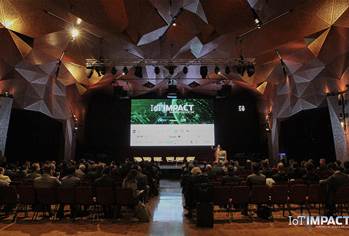
The privately-owned company, which has partnerships with the Commonwealth Bank, Woolworths and Australian Seniors, revealed it is piloting the technology at a recent event by insurance software specialist Guidewire in Sydney.
Speaking at the event, Hollard’s claims value owner Daniel Dearsley said that the insurer’s new AI system can crunch multiple pages of notes that would take a human consultant hours to sift through, producing a summary in a matter of seconds.
Dearsley said the new system is designed to give consultants, who might have to sort through “dozens” of pages of material, the ability to provide customers with accurate claim updates in a far timelier way.
Ordinarily, Dearsley said, consultants can spend up to 15 minutes going through previous notes or hoping that the last note left on a claim file is thorough enough to update customers adequately.
“[It’s] a bit of a conundrum to work through, both operationally and certainly from a customer experience point of view," he said.
“To address this, we now have the ability to synthesise an entire claim into an easily digestible paragraph with meaningful information.
"In a practical setting, what would have taken a consultant through via dozens of pages of notes is now available in seconds."
Translating that into overall efficiency gains, Dearsley said, returns could be expected to be disproportionately higher" on more complex claims.
“We're seeing 70 percent reduction in the time it takes for an individual to review these claims," he said.
"Logically, the more intense the number of notes, and the complexity of the claim, the greater the differential, but the reality of efficiency is that we've seen, in some cases, up to 25 to 35 minutes saved in terms of the capability."
Dearsley said that while Hollard is still “refining” the AI claims summariser, it is already starting to consider next steps such as applying the same process to customer correspondence.
However, it would appear that the insurer’s most urgent priority for the technology is to grab some easy wins when dealing with Australia’s not infrequent and often devastating disasters.
“If we deployed this tomorrow, even in the current format it would provide a tremendous upside, especially during catastrophe times.
"The reality of a fast return when you're dealing with a portfolio of claims that is exploded based on a catastrophe that has come through is seriously viable,” Dearsley said.
The insurer is also yet to identify any problems with AI hallucination in testing and, in some cases, the AI is picking up errors that human consultants missed, something that Dearsley said were “almost unintended benefits”.
“In a few cases we've identified leakage where an excess wasn't applied or potentially should have and vice versa – a customer had an excess applied that shouldn't have,” he explained.
However, the AI sentiment analysis capability still needed work, he said.
“With no hallucinated content or incorrect information, the accuracy is there, but on the usefulness side, there's still some opportunity [for improvement].
“The inability to pick up on sentiment is probably the biggest piece of feedback we have identified leading to, in some cases, missing potential vulnerabilities.”




.jpg&h=140&w=231&c=1&s=0)
.jpg&h=140&w=231&c=1&s=0)
.jpg&h=140&w=231&c=1&s=0)


.png&w=100&c=1&s=0)
 Sydney Cloud & Datacenter Convention 2026
 iTnews Executive Retreat - Security Leaders Edition
 Can Testing Keep Up? Quality in the Age of Accelerating Delivery
 iTnews Resilience, Rewired Breakfast
 RIMPA Live Convention 2026