
Key points
- Superloop is redirecting cost savings from AI-based customer service into higher salaries for security, compliance and further AI investment.
- CEO Paul Tyler said the telco is nearing a floor in how much opex its current AI technology can cut, with its opex-to-sales ratio flattening out.
- Superloop grew revenue 21.6 percent to $664 million and posted a net profit after tax of $17.5 million, reversing last year's net loss.
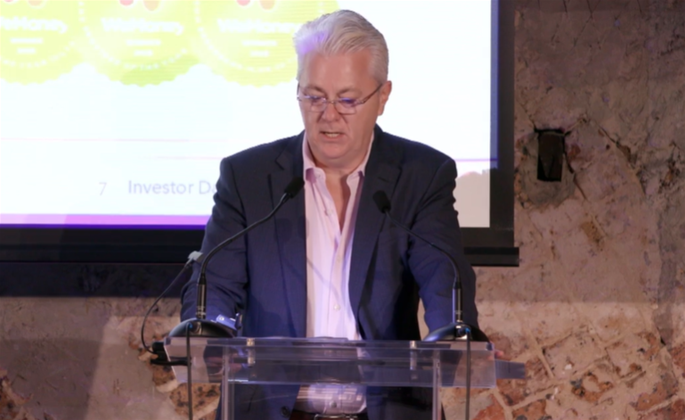
Superloop has revealed that it has started diverting cost savings generated by its investments in AI-based customer service into other areas of its technology budget.
At its full-year results, chief financial officer Dean Tognella said that the company’s investments in technology platforms and AI had “broken the linear relationship” between growing its customer base and taking on additional labour cost in its customer service operations.
However, he said that the savings were now being used to cover higher salaries needed to boost its security and compliance, and for further investment in AI.
“From a perspective of the last two years, I'm pleased with the absolute level of employee spend growth being quite modest but, within that number, we're certainly changing the mix of our employee base which is really important because that sets us up for the future," Tognella said.
The telco has had success routing large volumes of customer calls generated by its rapidly growing subscriber base through AI agents, lowering its call centre costs.
At its last investor day in June, it revealed estimates that its self-service AI agents, “Teddy” and “Mo”, had allowed its call centres to avoid around 320,000 service calls.
At its full-year results this week the company provided an update on their progress, saying they were “enabled” in 63 percent of customer interactions as its base grew 28 percent to 935,000 subscribers.
Teddy and Mo handled 34 percent of customer support interactions with 400,000 calls avoided. In addition, more than 500,000 customer interactions were routed to its fault remediation AI bots, Refreshify and Exray, with no further human assistance needed in 85 percent of cases.
However, the telco’s chief executive Paul Tyler said the telco was approaching a limit in how much opex cost its current AI technology could take out of the business.
Asked how much cost the telco could expect to avoid in coming years by moving away from a traditional call centre model and focusing on AI, Tyler said that the rate of improvement in its opex-to-sales ratio was bottoming out.
“We’ve tried to give you a sense of that in the number of calls that have been avoided over the last year – you can form your own view on what’s the cost of the call – and the opex-to-sales trend that we’ve been tracking over the last couple of years, I think we’ve gone down from something like 20 percent a couple of years ago mid-13s (percent) at this stage.
“I think that can go a bit further but it is certainly flattening out. There is a floor that we will get to with opex where … we just can't cut any further,” Tyler said.
“We’re living in a world where it's increased cost avoidance rather than taking big chunks of the organisation out at this stage … I think we can go a little bit better than our current opex as percentage of sales, but it will flatten out over the next little while,” he added.
Overall, Superloop’s employee expenses increased 7.9 percent over the year to reach $29.8 million with Tyler citing higher salaries required to attract talent to invest in more AI, and its security and compliance capability.
Superloop returned a positive result for the year, achieving its earnings guidance, growing revenue 21.6 percent to $664 million and generating a net profit after tax of $17.5 million.
That compared to a net loss in FY24 of $14.7 million and a modest net profit of $1.2 million last financial year.
Its underlying EBITDA grew 33 percent to reach $123 million and it was bullish on reaching its target of a billion dollars revenue and underlying EBITDA of $200 million by FY29 under its Supercharge29 plan.



.jpg&h=140&w=231&c=1&s=0)
.jpg&h=140&w=231&c=1&s=0)

.jpg&h=140&w=231&c=1&s=0)


.png&w=120&c=1&s=0) HPE Networking Day Sydney
HPE Networking Day Sydney
 iTnews Resilience, Rewired Breakfast
 RIMPA Live Convention 2026
 What’s Next?
 iTnews Benchmark Security Awards 2026


.jpg&h=271&w=480&c=1&s=1)


.jpg&h=140&w=231&c=1&s=0)


