Service NSW is changing the way it containerises and hosts more than 200 digital products, moving off the Tanzu Application Service to a Red Hat OpenShift platform.
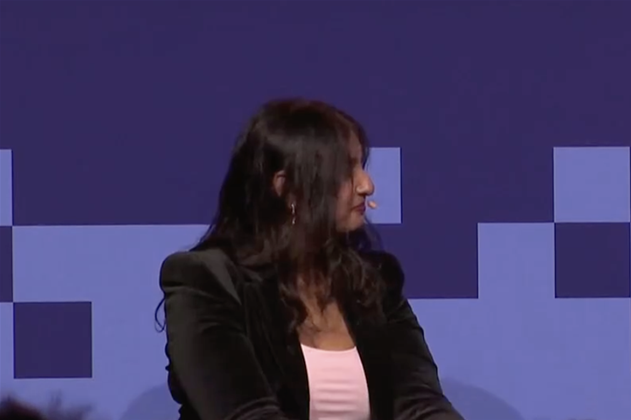
CTO Suneetha Bodduluri told the AWS Summit Sydney that the latest change of ownership of Tanzu Application Service - known as TAS - prompted the agency to examine alternatives.
The agency presently runs TAS and “vanilla Kubernetes” side-by-side to underpin its applications.
Bodduluri said that 80 percent of all transactions at Service NSW, involving more than 200 “products”, “are all based on one container platform called TAS”.
“Over the last few years what we have noticed is [the] TAS platform has been bought by many many vendors which led to increasing costs and potential legacy issues, and also complex vendor and partnership negotiation issues leading into that,” she said.
“That led us to think about what our future of Service NSW technology would look like, and what is really required.”
TAS was once known as Pivotal Cloud Foundry, which VMware bought in 2019 and rebranded. VMware was then bought by Broadcom, an acquisition that has led to sizable price increases for many customers, and pressure to find alternative options.
Bodduluri said there were more reasons to switch. The agency was not just wanting “platform transformation” but to enable “an entire capability uplift” as well.
That will come in the form of the Red Hat OpenShift service on AWS, known as ROSA, which is being adopted after a market test that turned up 20 options and a “six-to-eight week” proof-of-concept.
“All our products will rely on ROSA going forward,” Bodduluri said.
Bodduluri said that the switch is being funded entirely out of cost savings.
“We could not bring a dedicated budget, so we need to find cost savings to fund this program,” she said.
The potential savings of switching to ROSA are substantial.
“If we complete this … three quarters of the [PaaS] bill will be reduced, so it means we’ll operate within one quarter of the bills which we are paying,” Bodduluri said.
The agency’s last TAS bill is likely fairly fresh-in-mind: nearly $13 million over three years, signed in November last year and running through until nearly the end of 2028.
The migration of containerised applications and services to ROSA was originally anticipated to take longer to complete, but was recently fast-tracked.
“We wanted to actually deliver migration in four years time, and then due to this partnership [between Red Hat, AWS and Service NSW] where we were able to engage consistently and teams collaboratively working together as one, we revisited [the timeline] and we decided we can actually finish it by the end of next year,” Bodduluri said.
“We have reduced the time to two years.”
Migration is occurring in chunks of 10-to-20 digital “products” per quarter, starting with the most challenging ones first.
“Every quarter we’re trying to bring [across] as much as possible,” Bodduluri said.
“ I know we have 10 products already being tested in non prod - aiming to go to prod - but every quarter we’re trying to aim anywhere between 10-20 products go into prod.
“I [also] want to make it clear - the first ones will be the harder ones, because you need to learn and adapt. As you put more and more [in] it becomes easier.”
Ry Crozier travelled to AWS Summit Sydney as a guest of AWS.




.jpg&h=140&w=231&c=1&s=0)
.jpg&h=140&w=231&c=1&s=0)
.jpg&h=140&w=231&c=1&s=0)


.png&w=120&c=1&s=0) HPE Networking Day Sydney
HPE Networking Day Sydney
 iTnews Resilience, Rewired Breakfast
 RIMPA Live Convention 2026
 iTnews Benchmark Security Awards 2026
 iTnews State of Security Breakfast Sydney