The Australian Taxation Office is looking to AI technology to help it handle up to 20 million interactions processed by its contact centre each year more efficiently.
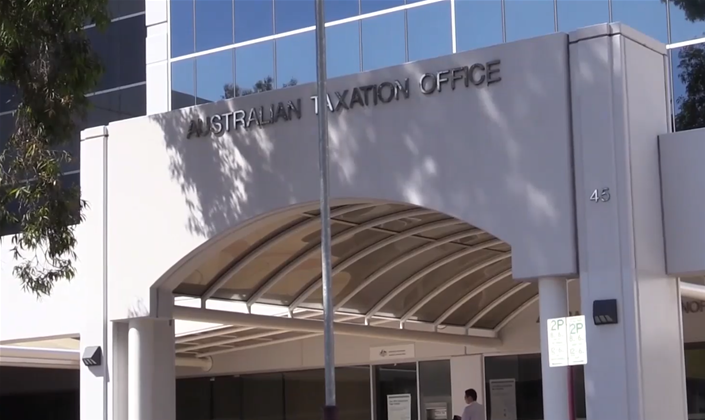
It will seek out the AI applications as part of a massive, five-year contact centre system transformation project, codenamed RISE – short for Reimagined Interactions Streamlined and Effective.
Tender documents for the RISE transformation published late last week reveal that the agency must completely replace its current system, Genesys Engage, by December 2028.
Supplied in 1999, Engage is now approaching end-of-life, leaving the ATO with an ecosystem that is “ageing and unable to provide contemporary tools and technology to support the ATO into the future.”
The ATO’s new system is expected to be in use beyond 2030.
A spokesperson told iTnews that AI technologies will be among the agency’s key considerations in delivering expected, future customer contact service needs.
“The ATO will look for opportunities to use AI technology to provide these services efficiently and effectively, recognising the importance of security, privacy, transparency and ethical use of data with appropriate human oversight as supported by the ATO’s AI transparency statement," the spokesperson said.
“The ATO will continue to review existing, and, where appropriate, implement new policies and processes to help them evolve and remain current in the face of rapidly advancing AI capability and ensure they leverage AI in a safe way to create a better tax system for all Australians.
"This includes aligning with the government’s national AI plan."
The ATO declined to comment on how it expected AI to impact its future headcount and operating expenses.
The tender documents contain few indications of the kinds of AI capability the ATO expects from the new system but the agency lists fully configurable machine learning and LLMs “across all capabilities” as highly desirable in its statement of requirements.
Specifically, it said that the ability to “implement pre-prompting, prompt chaining, multi-turn prompting, boundary setting, self-correction, and any other industry-leading functions” should be available across the new system.
However, there does not appear to be any reference to specific business cases or proof-of-concepts for AI applications in the documents.
The spokesperson said that the agency was not able to provide an exact expected budget for the overall RISE project but said the figure would “reflect the scale and complexity of the ATO’s contact centre, high interaction volumes, and the investment needed to implement and sustain a solution with uninterrupted service.”
The ATO has imposed strict conditions on use of its data by AI, completely forbidding its use for training or improving AI models used outside the agency.
Arguably then, the successful supplier or consortium for RISE – which carries significant operational risk for the ATO due to its contact centre operation’s critical role – will be able to command high dollar reward.
Used by up to 3400 ATO staff for voice and chat, the current system is dimensioned to handle peak loads of 160,000 calls per day with capacity for 15,000 calls an hour.
That translates to 16.8 million voice calls per year that must be triaged, routed and often recorded by the agency as part of ensuring tax compliance from 12.6 million individuals, 4.9 million small businesses, 46,500 public companies and multinationals, and 224,800 not-for-profit organisations.
In addition, the Genesys system currently underpins a broad range of the agency’s customer interaction channels, including its myTax live web chat, interactive voice-based self-help for tax payers and other internal staff support functions, such as IT.
The ATO has been grappling with series of pain points with its contact centre system, including long call handling times and limited self-service options, information siloes and rigid work routing that requires excessive manual intervention, lack of a single view across business divisions and limited analytics for “effective and efficient” outcomes for taxpayers.
Also in scope for replacement, the ATO is considering replacing virtual online assistant, Alex. Alex is underpinned by a product owned by Microsoft called Nuance Mix but is not a part of Genesys suite of technologies.
The agency is hoping to take advantage of recent developments in cloud-based technology to implement and deploy the new system.
The ATO has given bidders until March 2 to respond to the tender.




.jpg&h=140&w=231&c=1&s=0)
1.jpg&h=140&w=231&c=1&s=0)
.jpg&h=140&w=231&c=1&s=0)


.png&w=100&c=1&s=0)
 Sydney Cloud & Datacenter Convention 2026
 iTnews Executive Retreat - Security Leaders Edition
 Can Testing Keep Up? Quality in the Age of Accelerating Delivery
 iTnews Resilience, Rewired Breakfast
 RIMPA Live Convention 2026