The Labor government will consult with the telco industry on reforms to two key pieces of telecommunications legislation in a bid to accelerate investment within the sector.
The commitment to alter the legislation was a surprise gift that the federal government placed at the sector’s feet in this week’s federal budget.
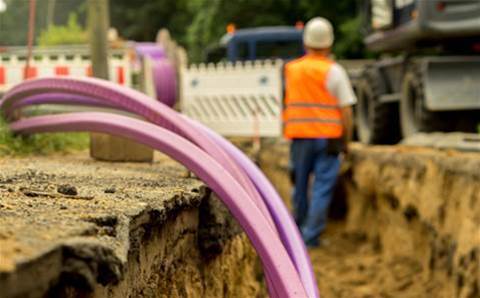
Included in the budget’s productivity measures, the government committed to amending the Telecommunications Act 1997 and National Broadband Network Companies Act 2011 in a bid to improve fibre rollouts and potentially hasten upgrades to ageing equipment in multi-dwelling units.
Both are key pieces of legislation that impact the trajectory of the billions of dollars’ worth of investments in pits, pipes, cables, towers, mobile equipment, and fibre and wireless backhaul-links criss-crossing the nation.
However, for the seeming gravity of the move the government was very short on detail about its planned reforms other than to say that it was preparing to consult with industry on draft legislation.
A spokesperson for Communications Minister Anika Wells told iTnews that proposed reforms would improve and streamline approval processes for telecommunications infrastructure and simplify regulations.
“We want to make it easier for telcos to invest in infrastructure to support Australians and boost productivity which is what these reforms will help do,” a spokesperson for the minister said.
“The government will consult on the reforms including on draft legislation."
It’s understood that the reforms are the result of persistent lobbying and industry consultations involving a large cross-section of stakeholders, including the department’s Mobile Telecommunications Working Group, the Productivity Commission, local councils, public utility operators and the telco industry.
It's expected that the reforms will aim to give NBN Co the ability to serve multi-dwelling buildings using new and emerging technologies, and promote greater access to telco towers and related facilities, according to sources close to the matters.
NBN Co welcomed the reforms in a brief media statement.
“We support legislative changes that will improve the rollout of fibre and new telecommunications infrastructure, including the delivery of services to multi-dwelling residential and commercial buildings," a spokesperson said.
“We look forward to working with the Australian Government on these important amendments to the Telecommunications Act and National Broadband Network Companies Act."
Telecommunications industry lobby, Australian Telecommunications Alliance (ATA), also welcomed the government’s move.
ATA chief executive Luke Coleman said that regulations such as for construction and land access were frequently the cause of excessive delays to telecommunications rollouts.
“Red tape is holding back construction of new telecoms networks at the very time Australia needs it most. This commitment to streamlining approvals is a positive step, and we look forward to working with the government to progress specific reforms,” Coleman said.
Regional telco consumers disappointed
Others in the sector were not so fortunate from the budget.
Telecommunications consumers in the bush were dealt a blow with news that the government has decided not to renew funding for the Regional Tech Hub.
The precursor to the hub was run by volunteers from bush telco consumer lobby Better Internet for Rural, Regional and Remote Australia (BIRRR) before the federal government stepped in and began financing the initiative through an annual $2 million endowment from its Better Connectivity Plan for Regional and Rural Australia (BCPRRA) fund in 2023.
Managed by the National Farmers Federation (NFF), the hub provided consumers in remote areas with free advice on telecommunications products and services.
BIRRR said it was “extremely disappointed” with the decision to discontinue funding.
“At a time when rural, regional and remote Australians are being forced to navigate multiple consecutive telecommunications technology transitions, with reduced consumer protections, increasing service complexity, rising costs of living and an environment where sales bias, misleading advertising and telecommunications misinformation are increasingly common, the loss of Australia’s only free, independent telecommunications support service for regional consumers is deeply concerning,” BIRRR spokesperson Kristy Sparrow wrote on the organisation's Facebook page.
Larger questions hang over the government’s commitment to regional telco consumers with funding for the BCPRRA also set to drop sharply from next year.
Forward estimates in the budget papers show that it will drop from $116 million this financial year to $32 million in FY2027-28 before halving to $17 million the following year and finally to $780,000 by 2029-30.
The government’s ongoing mobile blackspots program also appears to have run its course, with its funding set to drop from $44 million this budget to just $2.5 million across the next two budgets.
ACCAN said, with no new funding forthcoming for the black spot and mobile network hardening programs, the government's commitment to investment in regional telecommunications remained “up in the air” .



.jpg&h=140&w=231&c=1&s=0)
1.jpg&h=140&w=231&c=1&s=0)
.jpg&h=140&w=231&c=1&s=0)
.jpg&h=140&w=231&c=1&s=0)


.png&w=120&c=1&s=0) HPE Networking Day Sydney
HPE Networking Day Sydney
 iTnews Resilience, Rewired Breakfast
 RIMPA Live Convention 2026
 What’s Next?
 iTnews Benchmark Security Awards 2026


.jpg&h=271&w=480&c=1&s=1)





.jpg&h=140&w=231&c=1&s=0)