Sydney Metro has revealed that it abandoned hopes of building a 5G network across the city segment of its M1 rapid transit line after finding the rollout would be too expensive.
A spokesperson for Sydney Metro said that while the 5G network service was once considered desirable, it was never formally within the project’s scope.
Nevertheless, the public transport project operator is currently trying to sell a huge stockpile of excess optical fibre cable it bought in preparation for the project.
Sydney Metro confirmed that it purchased the consignment of cable in 2022 and earmarked it as a “long lead item” to provide backhaul connectivity when the 5G was still being “considered”.
The purchase also included materials sufficient for a massive underground antenna system comprised of a type of coaxial cable known as “leaky feeder cable”.
“Fibre optic cable was purchased by Sydney Metro in 2022 as a long lead item, while the option of 5G on the city section of the M1 was being considered.
“5G proved cost prohibitive to roll out for a project that was also being impacted by Covid at the time and so the material is now being sold to recoup costs,” the spokesperson said.
The enormous stockpile of coaxial and fibre optic cable that Sydney Metro is hoping to sell is currently being stored in 13 shipping containers at a facility in Sydney’s west, according to tender documents for their disposal.
The optical fibre cabling, including its holding drums, weighs in at close to eight tonnes.
The consignment of materials also includes 79 drums of leaky feeder cable, 300 kilograms of wall brackets, and 200 kilograms of miscellaneous cables, clips and connectors.
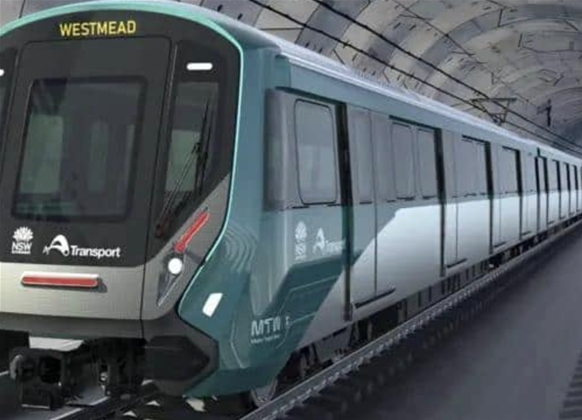
While it was too expensive for Sydney Metro to rollout 5G on the M1 line, it has managed to make the business case for a 5G network for its Metro West project.
The project authority has engaged BAI Communications to build a private 5G network for the rail segment between Parramatta and the CBD, which is expected to be operational by 2032.
The private 5G network will support radio systems, train communications and rail signalling.
It’s not clear how much the excess stockpile of fibre optic cable will fetch on the market.
If Sydney Metro has put an estimate on its value, it wasn’t prepared to share that number with iTnews.
“We anticipate that tenderers may be interested in purchasing the cable for reuse on other telecommunications projects. Value of the cable is largely dependent on market demand,” Sydney Metro’s spokesperson said.
Current market demand for optical fibre cable might well be working in Sydney Metro’s favour.
During the past six months, data cable manufacturers have started to warn that increased demand for data centres capable of carrying AI workloads was placing pressure on optic fibre supplies.
In August last year, president of Texas-headquartered fibre-optic cable manufacturer Incab America Mike Riddle released statement warning of a fibre shortage triggered by data centres “sucking up fibre production capacity”.
“The three leading glass manufacturers in the United States are experiencing challenges in meeting this heightened demand," Riddle wrote in the statement.
"Notably, one manufacturer has already sold all of its fibre inventory through the year 2026.
"While initial speculation suggests that this shortage may primarily affect supply in 2026, the unpredictability of such situations must be acknowledged."
Sydney Metro has revealed that it abandoned hopes of building a 5G network across the city segment of its M1 rapid transit line after finding the rollout would be too expensive.
A spokesperson for Sydney Metro said that the 5G network service was once considered desirable but never formally within the project’s scope.
Nevertheless, the public transport project operator is currently trying to sell a huge stockpile of excess optical fibre cable. Sydney Metro confirmed that it purchased the consignment in 2022 and earmarked as a “long lead item” to provide backhaul connectivity when the 5G was still being “considered”.
The purchase also included materials sufficient for a massive underground antenna system comprised of a type of coaxial cable known as “leaky feeder cable”.
“Fibre optic cable was purchased by Sydney Metro in 2022 as a long lead item, while the option of 5G on the city section of the M1 was being considered.
“5G proved cost prohibitive to roll out for a project that was also being impacted by COVID at the time and so the material is now being sold to recoup costs,” the spokesperson said.
The enormous stockpile of coaxial and fibre optic cable that Sydney Metro is hoping to sell is currently being stored in 13 shipping containers at a facility in Sydney’s west, according to tender documents for their disposal.
The optical fibre cabling, including its holding drums, weighs in at close to eight tonnes. The consignment of materials also includes 79 drums of leaky feeder cable, 300 kilograms of wall brackets, and 200 kilograms of miscellaneous cables, clips and connectors.
While it was too expensive for Sydney Metro to rollout 5G on the M1 line, it has managed to be able to make the business for rolling it on its Metro West project.
The project authority has engaged BAI communications to a private 5G network for the segment between Parramatta and the CBD, which is expected to be operational by 2032. The private 5G network will support radio systems, train communications and rail signalling.
It’s not clear how much the excess stockpile of fibre optic cable will fetch on the market. If Sydney Metro has put an estimate on its value, it wasn’t prepared to share that number with iTnews.
“We anticipate that tenderers may be interested in purchasing the cable for reuse on other telecommunications projects. Value of the cable is largely dependent on market demand,” Sydney Metro’s spokesperson said.
Current market demand for optical fibre cable might well be working in Sydney Metro’s favour.
During the last six months data cable manufacturers have started to warn that increased demand for data centres capable of carrying AI workloads was placing pressure on optic fibre supplies.
In August last year, president of Texas-headquartered fibre-optic cable manufacturer Mike Riddle released statement warning of a fibre shortage triggered by data centres “sucking up fibre production capacity”.
“The three leading glass manufacturers in the United States are experiencing challenges in meeting this heightened demand. Notably, one manufacturer has already sold all of its fibre inventory through the year 2026. While initial speculation suggests that this shortage may primarily affect supply in 2026, the unpredictability of such situations must be acknowledged,” Riddle wrote in the statement.
Gartner vice president analyst Peter Liu concurred with Riddle, telling iTnews that the global shortage was genuine.
“The global fibre optic cable market has been experiencing a supply shortage since late 2025. Prices for mainstream optical fibre products have increased significantly, driven primarily by massive AI data centre buildouts, concurrent government broadband programs and submarine cable expansion.
“Supply-side constraints, including long preform manufacturing lead times, raw material export restrictions and cautious capacity expansion by manufacturers, suggest this tightness will persist for at least 18–24 months,” Liu said.
Late last month, one of the world’s largest suppliers of fibre optic materials, Corning, announced that it had entered a long-term agreement to provide cabling for Meta’s advanced data centres in the US in a deal valued at up to US$6 billion ($8.48 billion).
Under the terms of the agreement, the 175-year-old glass and ceramic materials engineering company has committed to expanding its manufacturing capacity across North Carolina, with a focus on its Hickory facility north of Charlotte where Meta will become an anchor client.



1.jpg&h=140&w=231&c=1&s=0)
.jpg&h=140&w=231&c=1&s=0)
.jpg&h=140&w=231&c=1&s=0)
.jpg&h=140&w=231&c=1&s=0)


.png&w=100&c=1&s=0)
 Sydney Cloud & Datacenter Convention 2026
 iTnews Executive Retreat - Security Leaders Edition
 Can Testing Keep Up? Quality in the Age of Accelerating Delivery
 iTnews Resilience, Rewired Breakfast
 RIMPA Live Convention 2026