Key points
- People First Bank expects its fully modernised technology stack, including a Fiserv core banking platform and Backbase-powered digital banking, to be complete by late 2027.
- Customer migration of residual Heritage Bank accounts onto the People First Bank core banking system is targeted for late 2027, with a new end to end lending platform going live within about a month.
- Chief technology and transformation officer Andy Weir says the modernisation mirrors what larger banks like Westpac are doing, aiming for a simple, modern, cloud based and evergreen stack.

People First Bank is nearing completion of its fully modernised technology stack, after forming from the combination of People’s Choice and Heritage Bank in mid-2023.
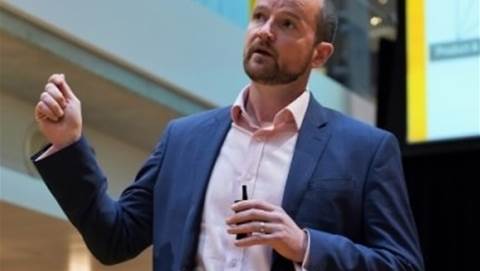
Chief technology and transformation officer Andy Weir told the iTnews Podcast that the new technology stack should be fully implemented towards the end of 2027.


The stack comprises a Fiserv core banking platform, a new website, and a new online banking and new digital banking app experience powered by Backbase, a new end to end lending platform, and enhanced customer service systems powered by Salesforce and Vonage, among its key components.
This year has been particularly significant, with the People First Bank brand going live in May.
“The new digital banking app, website and online banking are now live and early customer reviews have been excellent,” Weir said.
“The vast majority of new product sales are People First Bank products from the core banking system, irrespective of whether a customer walks into what is currently a former Heritage brand.
“Our customer migration is targeted for late 2027, and that's when the residual Heritage Bank customers and accounts will be moved onto the People First Bank core banking system.
“We're about a month or so away from our new end to end lending platform being live as well, which will transform the experience for our customers, our brokers and our staff.
Weir likens the modernisation at People First Bank to what much larger banks are going through, such as Westpac with its Unite program.
“All banks are transforming and modernising their technology stacks, such as Westpac's Unite program, which is essentially a much larger version … in terms of simplifying and consolidating the technology stack,” he said.
“When I look at our position, that same outcome of having a simple, modern, cloud based and evergreen stack, is within touching distance and is tantalisingly close for us.
“We still have some major deliveries to execute over the course of the next 12 months, including the decommissioning of legacy systems, but I’m very excited about our modernised [new] stack.
“Having been in the industry for a little while, the technology stack we’re building is something that I would have loved in previous roles.
“It is very simple, very modern, and it is absolutely very close to being in our grasp.”
Architecting the stack
Weir’s role as technology and transformation leader was formalised shortly before the technical merger of the former People’s Choice and Heritage Bank organisations began.
Both constituent organisations were at different points with digital transformation when they came together.
Heritage Bank was relatively early but had made the decision to replace its core banking system.
People’s Choice Credit Union was more advanced, having already implemented Salesforce and Vonage, and was already modernising its Fiserv core banking system.
“Part of the role I undertook when I came on board was working with the existing technology and business teams in both People's Choice and Heritage to determine our technology target state for the entire suite of platforms,” Weir said.
“I think one of the biggest successes we had was that before we got to merger day one, about 98 percent of all the target technology decisions had already been taken.
“So, we did all of that thinking in advance, building upon the work that the former People's Choice and Heritage had initiated.”
From the outset, the aim was to “consolidate the two former brands onto a single suite of new, modern, evergreen platforms under the brand of People First Bank,” Weir said.
The approach was, in part, informed by three strategic pillars: simplicity, digital enablement, and doing good.
“We believe in elegant simplicity,” Weir said.
“I think a lot of organisations can overcomplicate what they bring to market in a rush to want to incorporate every single feature that is conceivable.
“So, the challenge is not how much functionality we cram into our banking app - it's how we ensure we focus on providing the simple things that customers value most, in the most seamless way possible. This also aligns strongly to our strategic pillars and the simple, seamless customer experience that we want to provide.
“Interestingly, we've been live with our new digital banking platform for around three months now. It consistently rates between 4.4 and 4.6 across both app stores, compared to the previous apps that had more features [but rated lower].
“For us, that's a testament to the fact that we have created a much slicker, more intuitive, and more pleasing experience for our customers than we had previously. That simplicity is really, really important to us.”
That simplicity flows through to the backend, in terms of architecture and configuration decisions.
“We did not want to heavily customise the technology because when it comes to resilience, security, upgrades and [emerging opportunities around] AI, we need our technology to be as clean as possible so that we could have a much, much easier journey in continuing to have a resilient, safe, secure, and AI-enabled platform for the future,” Weir said.
To meet its digital enablement strategic ambitions, the bank is building capabilities into its digital banking platform to not only make life easier for customers, but also to “reduce the number of calls and branch visits that were necessary with the former digital banking apps”.
“From our perspective, authenticated messaging, integration with CRM, improved anti-fraud integration: all of these just make things not only a lot simpler and more intuitive, but also a lot safer from a customer perspective, and we know that customers are going to demand that increasingly as time goes on.”



.jpg&h=140&w=231&c=1&s=0)
.jpg&h=140&w=231&c=1&s=0)
.jpg&h=140&w=231&c=1&s=0)
.jpg&h=140&w=231&c=1&s=0)


 What’s Next?
 Cloud Resilience Summit
 iTnews Benchmark Security Awards 2026
 iTnews State of Security Breakfast Sydney
 iTnews Executive Retreat - Security Leaders Edition - VIC