NBN Co will be limited in how much the last part of its fibre-to-the-network overbuild can be used to increase broadband pricing from mid-2032.
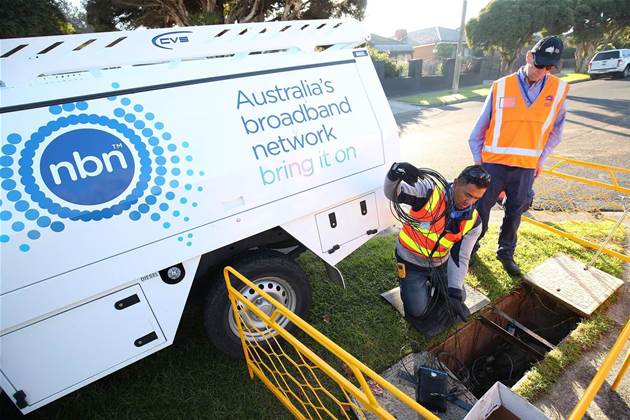
A new accounting treatment by the government means it will treat less than half the cost of overbuilding the last of the NBN fibre-to-the-node network as prudent and efficient, with the other half ineligible to be reimbursed.
A government policy project notice [pdf], first reported by CommsDay, and an associated explanatory document, provide new details about the cadence of investment and work to move the last 622,000 premises out of the FTTN footprint.
The project, announced back in January, is to be funded with $800 million from NBN Co and up to $3 billion from the government.
The project notice confirms the overbuild is necessary to meet government policy, but seeks to cap how much of its cost can be recovered by NBN Co through pricing from mid-2032.
This is the regulated time when NBN Co can – if it chooses to and market conditions allow – start to recover billions of dollars of costs sunk into the network build through prices charged to retail service providers.
This would, of course, flow through to consumers, and has long been anticipated to potentially cause ‘bill shock’.
Currently, NBN Co can only increase its prices in line with inflation. This is currently driving up prices year-on-year, but by nothing like what will be possible from mid-2032 onwards.
The limitation is that NBN Co can only reclaim costs that the Australian Competition and Consumer Commission (ACCC) agrees are “prudent” and “efficient”.
This is judged based on whether NBN Co did what “a commercially prudent investor would” do in the same circumstance.
The government’s policy project notice, however, pre-judges how much of the up to $3.8 billion cost to replace the final remnants of the FTTN network is prudent – coming in at $1.723 billion in nominal terms.
The clear intent of this decision is to “impact the maximum wholesale broadband prices that NBN Co can charge” from mid-2032, according to an explanatory document. [pdf]
“The [communications] minister has set a maximum amount of expenditure to limit the increase in NBN Co’s permitted revenue, and any potential future impact on retailers and consumers,” the explanatory document states.
The government’s decision relates only to construction costs for local fibre network and any new fixed wireless infrastructure.
NBN Co will be able to seek recompense for the full cost of building fibre lead-ins in pricing after mid-2032, assuming its costs are judged to be prudent and efficient.
Cap levels
The government had initially proposed a prudent and efficient investment cap of $2 billion.
However, the Australian Competition and Consumer Commission (ACCC) successfully argued [pdf] the sum was too high.
The ACCC suggested that the $2 billion included an up to $400 million “contingency”. It worked this amount down to $100 million in the end.
NBN Co, meanwhile, lobbied [pdf] for the amount to be uncapped, or failing that, to be higher than $2 billion.
“Specifying a maximum amount … limits how much of the company’s expenditure is taken into account by the ACCC in making certain decisions that may in turn affect how much NBN Co can charge for services in the future,” NBN Co said.
NBN Co argued that limiting what overbuild expenses it could claim in future was a departure from how past investments in fixed wireless and satellite were treated.
However, the company went on to argue that wholesale pricing may not materially change, because other factors also weighed on pricing decisions.
“[NBN Co] does not anticipate that the removal of the maximum amount, or an increased maximum amount which allows for more capital expenditure to be recoverable … would substantially impact NBN Co’s wholesale pricing forecasts,” it said.
“We consider that any price implications would also be naturally tempered by customers’ willingness to pay, competition from other telecommunications networks (e.g. wireless networks, LEO and alternative fixed line networks) and general economic conditions.”
Lead-in and CPE work to run to FY40
The network overbuild is expected to be completed by the end of calendar year 2030, with capital expenditure extending into FY31.
“The majority of lead-in connections” are anticipated to be delivered by 2031-32.
However, the government notice indicates that lead-in construction work will continue beyond that, through to FY40.
The total cost of lead-ins for the 622,000 premises will be $1.19 billion, to be entirely funded by NBN Co from cashflow and/or commercial debt.
Most of these are fibre lead-ins, but some of the money would go to wireless or satellite customer premises equipment (CPE), given not all remaining FTTN connections can be cost effectively served with fibre.
That puts the average cost of a lead-in or of CPE for this last part of the FTTN footprint at $1914.
With network build costs, the total upgrade cost per premises for these FTTN could exceed $8000, although the government’s decision makes not all of this reclaimable by NBN Co.
Still, NBN Co will save money, avoid future expenses, and be able to offer better service and reliability by exiting FTTN altogether.
The government said that “recent measurements indicate NBN Co’s FTTN footprint shows a degradation rate of around four-to-six percent per annum.”
“An increasing number of premises in the FTTN footprint are expected to experience lower reliability over time due to this degradation and eventually some may not be able to meet the minimum statutory wholesale speed requirement of 25/5 Mbps,” the government said.
It added: “NBN Co projects that it can benefit from up to $85 million in operational savings and up to $322 million in avoided capital expenditure (for example, remediating copper lines that would eventually degrade) as a result of the” overbuild of the last parts of the footprint.




.jpg&h=140&w=231&c=1&s=0)
1.jpg&h=140&w=231&c=1&s=0)


.png&w=120&c=1&s=0) HPE Networking Day Sydney
HPE Networking Day Sydney
 iTnews Resilience, Rewired Breakfast
 RIMPA Live Convention 2026
 iTnews Benchmark Security Awards 2026
 iTnews State of Security Breakfast Sydney



.jpg&h=271&w=480&c=1&s=1)