BHP’s history of enabling low latency, high throughput applications at mine sites has it entering the AI era with already well-tuned network infrastructure, according to one of its technology superintendents.
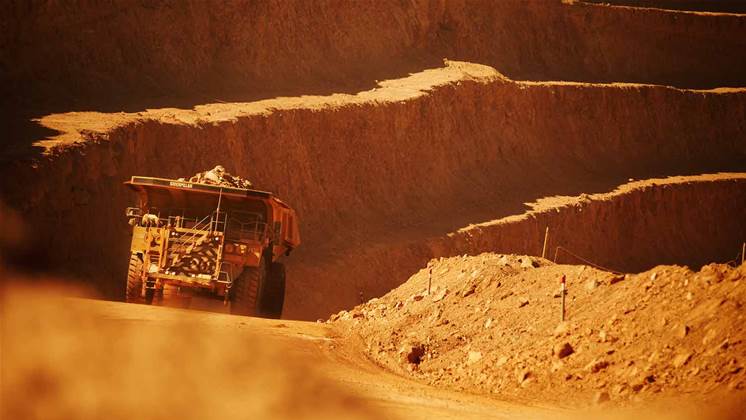
Speaking at Cisco Live in Melbourne, the mining giant's operation technology (OT) networks superintendent Michelle Fernando said that BHP was already practically running “AI-ready infrastructure” owing to its focus on network performance in harsh and dynamic mining environments.
“We have been chasing every single packet for a while, and it is about low latency, high throughput applications,” she said.
“I think we have got an OT environment that is ready to take on the challenges of AI.”
Fernando predicted that AI would drive a higher degree of convergence between IT and OT networks.
“Traditionally, the OT network and IT network did not want to mix together, [instead] maintaining separate infrastructure, separate nodes and everything, but I think for the future with enabling AI, we need to look for opportunities to converge IT and OT networks and [for] very secure solutions.”
She said that “enterprise technologies like SD-WAN” were likely to be brought to mine sites, and that some physical network infrastructure would be shared by the two technology domains.
“We need to learn to live together and converge through secure practices,” she said.
Fernando said that bringing AI into the OT domain could improve access to timely information to aid decision-making.
“For me, when I think about the mining operations and the operators, what AI means is the ability to give them the right information at the right time, so that they can make informed decisions on how to do predictive maintenance and how to make sure that we are applying the safety and solutions,” she said.
Fernando said that future investment in the network would likely be around resilience and observability.
This, she said, could provide the basis for capabilities around self-healing and improve the adaptability of the network to dynamic conditions presented at mine sites, such as evolving terrain, site and weather hazards.
“We want networks which can self-detect [problems], self-heal and self-configure,” Fernando said.
“That is my dream. But right now we do most of these things manually.
“Observability to know before the truck stops that there is something going on and a small anomaly is happening in the mine in terms of our network is really important for us.”
She said the miner would invest more into “understanding how we can have better visibility and observability in the network.”
Fernando added that investments to keep “network operations and security … on the cutting edge” were also a priority.



.jpg&h=140&w=231&c=1&s=0)

.jpg&h=140&w=231&c=1&s=0)
.jpg&h=140&w=231&c=1&s=0)


 What’s Next?
 Cloud Resilience Summit
 iTnews Benchmark Security Awards 2026
 iTnews State of Security Breakfast Sydney
 iTnews Executive Retreat - Security Leaders Edition - VIC