UI experts upbeat on Windows 8 preview


But are icons more effective?

View larger image
Windows 8 Start Page.
View larger image
Windows 8 lock screen.
View larger image
Using the pinch action, users can shrink app groups to view within the screen.

See all pictures here »

User interface experts have expressed surprise at the re-design of the Windows OS interface, giving Microsoft the thumbs up for touch-based gestures and use of web app development standards.
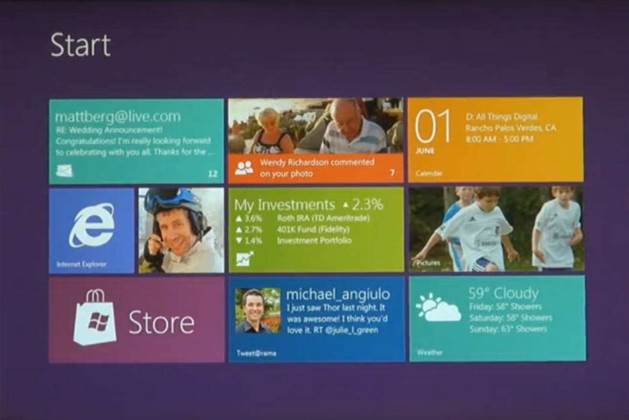
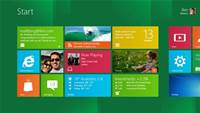
The new interface, previewed late last week, replaces menu bars and icons with tiles akin to Windows Mobile 7.

A panel of Australian user interface gurus told iTnews the preview was significant.

Whereas web applications were once developed to mimic richer desktop applications, users now prefer the simplicity and ease of navigation of web applications.

Today, the desktop OS attempts to mimic the web.

“Hallelujah, at last, someone got it!” said Anthony Colfelt, Creative Director at web user experience firm, Different.

Microsoft’s tiles “take the best from informational web-design and applies it to the main computer UI,” he said.

He was particularly impressed that Microsoft has chosen to run applications developed with HTML 5 and Javascript, to prepare for an “inevitable shift toward light-weight terminal computers that rely on web-served applications.”

Colfelt said Microsoft was “finally attempting to lead in the area of UI and experience, rather than following Apple.”

“It has always been to Microsoft's advantage to open up their system (for a reasonable fee) to the masses of developers and hardware manufacturers,” he said.

”Lots of programmers and machines equals lots of cheap programs and computers, and that means lots of accessibility for the consumer.”

Richard Edwards, Principal Analyst at Ovum said the preview proved Microsoft is still a “viable market-maker.”

Made for tablets

Shane Morris, director at UI specialists Automatic Studio said the interface “shows that Microsoft is serious about embracing touch and slate-based modes of use within Windows itself – as it should be.

“Clearly Microsoft has thought hard about how to integrate the casual consumption model of tablet devices with ‘real’ operating system features like multi-tasking, file system access and rich applications that require extensive user input, like Office.” he said.

“Why abandon the power and familiarity of Windows if they can possibly help it?

“The use of scrolling panels of tiles is a natural extension of the use of tiles and panning ‘panoramas’ in Windows Phone 7, which are proving popular with users,” he said.

“Swiping left and right to scroll through choices is a very natural action, and leverages both spatial memory and muscle memory to help users find and re-find what they need.”

But Morris pointed out that the preview did not reveal any on-screen cues to users to show them how swiping in from the edge of the screen could activate operating system features like task switching. This could prove a sticking point until users grew used to the concept, he said.

Colfelt also noted that many of these same interactions would “feel clumsy using a mouse.

“That could cause RSI if the user gets too excited about using them,” he noted.

The only point on which the experts disagreed was the use of tiles on the home page. Whilst Colfelt felt it was a solution to what he calls “information spelunking” (areas of a site easy to fall into and hard to find your way back out of), Morris felt Microsoft was abandoning icons that have historically proven far more effective.

Tiles, Morris said, are difficult to differentiate and can crowd the screen.

“The use of larger, consistently sized tiles containing dynamic content has the potential to create a vista that ‘yells’ at the user – and the demonstrated use of bright, saturated colours might actually make it difficult for users to discriminate between tiles and to focus on individual tile content,” he said.

“We know that people use various cues to search the visual field. Outline shape is one of the primary prompts to help people discriminate and identify objects visually. The dominant and consistent rectangular shape of the tiles themselves means Windows 8 users cannot use this outline shape as the primary cue. They must instead rely on colour and the actual tile contents. Compare that to the carefully designed icons in Microsoft Office products. Those icons present unique outlines – for good reason.”

Morris raised concerns as to whether Microsoft would continue to support stylus and other pen-based input as well as touch.

What's your take on the Microsoft Windows 8 interface?

Copyright © iTnews.com.au . All rights reserved.


"Windows 8 will be great exercise. I can see a disappearance of "tuckshop/canteen arms".... that flabby underarm flesh will now be getting a real workout everyday. What I have found most interestin..."
By BigAussie


Comments: 12
robjsewell
Jun 6, 2011 4:00 PM
Colfelt says "rather than following Apple" - has he not looked at Lion? The whole idea of bringing touch screen interaction to the desktop interface was announced and demonstrated by Apple last year and is being launched today - so how is Windows 8 new or leading? There is nothing I have seen in the preview that Lion doesn't already have, and Apple, knowing this was coming brought out the Touch Pad a while back to get over the clumsiness of the mouse in respect of this interface technology.
FLashy
Jun 6, 2011 5:27 PM
I started with DOS and when icons were created for all those Americans who can't read, everything went down hill.
I work on a PC all day every day, and I can tell you an unfamiliar icon is a pain, much can also be said about acronyms.
Those shortened names on some icons drive me nuts.

Text can be read at a glance, whereas an icon needs to be recognised.
Call me old fashioned but I do dislike my Android screen with icons, without the name underneath I am lost.
I always display folder contents as 'Details" not icons.

nlemoz
Jun 6, 2011 5:51 PM
@FLashy
Most websites (like this one) are failing to report that the above UI is optional. YOu can resort to a standard windows UI (not seen yet for windows 8) whenever you need to.
@robjsewell
Your one-eyed comments are incorrect.
Windows 7 supports touch input as do many other user interfaces. There is nothing new about Lion supporting it. The new bit is the ui overlay as seen on this page.

Also, the "touchpad" that apple released is nothing more than a laptop trackpad sold as a separate accesory. Myriad companies have released similar devices going back into the far distant past.
If you beleive the mouse is clumsy vs a trackpad, as steve jobs would say "you are holding it wrong".
Ace
Jun 7, 2011 3:13 AM
Like MS Windows Mobile 7, it just doesn't seem that intuitive. In spite of that, I like the way they're pushing the touch UI paradigm in different directions. The UI is only a small part of the mobile platform problem for Windows though. It doesn't preserve battery well, it is not secure enough and it is not reliable enough. I would have thought Windows Mobile 8 would be closer, but it does seem to be severely short of functionality at the moment.
maxama
Jun 7, 2011 9:27 AM
My 2 cents: I think Windows 8 is a step in the right direction.

Some businesses already use both, "Mouse" & "Touch Screen" functionality such as "Specsavers. They are both efficient ways of doing computing by mouse clicks and pressing the screen. I actually think it's cool :) and it seems quicker

Not everyone will like the UI (can't please everyone), so i'd imagine there would be able to switch to the taskbar.
Mark D
Jun 7, 2011 10:00 AM
@ Ace "but it does seem to be severely short of functionality at the moment."

What the? Win Mo 7.1 will be putting it ahead of the competition. Suggest you read up more on the platform.
Mark D
Jun 7, 2011 10:16 AM
If you have not watched the Windows 8 preview, ensure you watch it in its entirety. You can see the standard shell running in the background. No doubt the interface will be either a feature, a version of the OS or an application on top of the shell (much in the same way it currently works).

Personally, I welcome a Manageable touch device with good Application support. The market desperately has a gap here.
Ace
Jun 7, 2011 10:47 AM
Windows Mobile 7.1 (which is in beta) ahead of the competition @Mark? I read somewhere that Microsoft are making more out of Android than they are out of Windows Mobile 7 (due to a court win against HTC that is netting them $5 a handset). That doesn't sound like anywhere near ahead of the competition. In fact, the stats put them a fair way adrift in about 5th place with -20% sales growth since 2009. I strongly doubt 7.1 is going to increase their market share by the 1000% they need to be in the hunt.

That aside, I tend to look at it from the enterprise development point of view, where it's still short of where 6.5 was. Admittedly, I do forget people use these things for playing games and making phone calls :P
Mark D
Jun 7, 2011 1:30 PM
@Ace, when you talk current market share, I absolutely agree it's behind and only Microsoft are to blame. They held a great PDA OS for quite a while and internal politics screwed the pooch. However from a simple usability (social information such as facebook, twitter etc natively integrated into contacts as just one big point) it really can't be beaten. It is very intuitive & simple to use only downside is the limitations for tiles (or widgets) and the "metro" look isn't for everyone.

So far from an enterprise dev point of view they are putting allot back into the platform. 7.1 brings features that were just left out in comparison to 6.5. Such as SQL CE support, app multitasking, over 1500api's and apparently 500 such features.. If you develop for smart phones and are not already a member, check out the xda guys. http://forum.xda-developers.com/showthread.php?t=1084161
ITnovice
Jun 7, 2011 11:10 PM
What if someone using a real PC (not a tablet or phone)wants a nice background and not ugly square information overload tiles? will there be an option to return to the 'classic' home screen with icons and a background of our choosing? definitely tablet oriented, which is great for some.
Mark D
Jun 8, 2011 9:38 AM
@ITnovice, watch the Windows 8 preview already.
BigAussie
Jun 8, 2011 10:29 AM
Windows 8 will be great exercise. I can see a disappearance of "tuckshop/canteen arms".... that flabby underarm flesh will now be getting a real workout everyday.

What I have found most interesting is how our "average" non-technical client has reacted to the Windows 8 GUI, after I sent a link out to many for an early reaction.

The overwhelming response has been very positive; except from one who was concerned about the apparent tight integration of "social" into the GUI. Their concern was leveled at those employees who would/could spend even more time on social networks during work hours.

From many of our clients this positive reaction came as a comlete surprise; based on their reactions when migrating them from Win XP to Windows 7.

I doubt tiles will be my favourite interface; until/unless monitors are easily able to be setup on a 45 degree angle and placed where the keyboard would normally sit. Even then I can feel the RSI kicking in :p

Microsoft might be onto something -- if nothing else it will sell massive numbers of LARGE (24"+) touchscreens.

Comments have been disabled for this article.


Top Stories
Australian miners send drones to work
In-depth: Unmanned aerial vehicles in the resources sector.
 
The New Zealand telco problem
Opinion: Could Telstra save Kiwi telcos?
 
IT price probe to 'name and shame' gougers
Industry ducking the issue, committee claims.
 
Sign up to receive iTnews email bulletins
   FOLLOW US...

Latest VideosSee all videos »

Latest Comments
Polls
Should the Government enact new legislation to protect copyright holders in the digital age?

   |   View results
Yes
  19%
 
No
  81%
TOTAL VOTES: 510

Vote