
IIA throws support behind NBN


Weighs in on “Broadband Election”.

The Internet Industry Association (IIA) has positioned itself behind the Government's National Broadband Network ahead of this weekend's Federal Election.
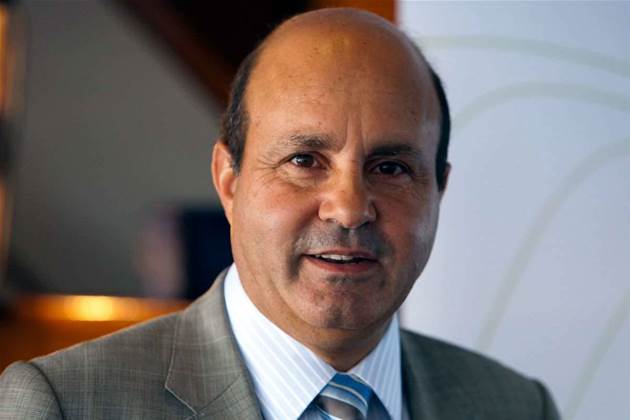
In a statement released this afternoon, the association outlined the benefits of a high-speed, optical fibre network.

IIA chair Peter Coroneos (pictured) said the association had been disadvantaged in forming a position by the Coalition delaying the announcement of its $6 billion NBN alternative until last Tuesday.

While the IIA was taking a "neutral position" about political parties, its position on technology was clear, he said.

Last month, the association called for bipartisan support for a national fibre rollout in its 50-page Principles for a Digital Economy manifesto (pdf).

"We felt a little disappointed by the Opposition's rejection of fibre," he said, describing the NBN as a future-proof network that could be easily and economically expanded with Australian demand.

"We've called for a nation-building approach to broadband. There are two parties that support that and one that doesn't," he said, presumably referring to the incumbent ALP, Greens and Coalition.

Coroneos had no praise for the Coalition's broadband policy, noting that the party hadn't "committed to fundamental market reform to the degree of the Government."

He argued that wireless, which formed a major part of the Coalition's broadband policy, relied on spectrum availability, and networks could become slow and saturated as demand for services grew.

This would have a negative effect on the IIA's 150 members, which were companies in the internet content, commerce and connectivity sectors.

Faster broadband would also improve access to health, education and aged care services, facilitate teleworking, and give birth to new ways of doing business, the association stated.

"[Speed is] not a 'nice to have', it's an essential part of a modern economy," Coroneos said. "Optical fibre based solutions like the NBN will mean a more stable and prosperous future for all Australians."

"This really is a critical part in the evolution of the internet. We are at a crossroads at the moment," he said.


Copyright © iTnews.com.au . All rights reserved.


IIA throws support behind NBN
"Internet Industry Association - let the taxpayer build the infrastructure we then resell, well they would say that wouldn't they, nothing new here people, move along. Edited by advocate: ..."
By advocate
 
Tags
 
 
Comments: 11
DazzaJ
Aug 19, 2010 8:12 PM
This Peter Coroneos has no idea.
Put internet before lives! Great choice!
Australia can not afford basic medical, yet can blow the funds on a glorified internet system that is of no benefit to anybody but the wealthy.
Try living in the real world rather than Cyerworld!
Ace
Aug 19, 2010 9:22 PM
Ah @DazzaJ, I think you're a little confused. The IIA is not the Red Cross. They do not run health, employ doctors (that I am aware of) or manufacture medicine. Having said that, a decent network would certainly allow remote communities to access the best medical resources in Australian medicine in a far superior way. In this way, it is the disadvantaged to will gain the most from a decent network. It does not in fact benefit the wealthy that much, as of course they already have access to great network speed. You need to think it through a bit.
mad1k5
Aug 19, 2010 9:24 PM
DazzaJ,

Why are you using the Internet then? Trolling doesn't help you or the Internet.
RDEFCON1
Aug 19, 2010 9:49 PM
While I think DazzaJ is going a little over the top, Coroneos statement that the IIA "felt a little disappointed by the Opposition's rejection of fibre" does show they have no idea.

The Opposition may have rejected FTTH, but that doesn't mean they reject fibre entirely - and to suggest they do is a massive over-simplification that does absolutely no credit to an association that purports to be the peak industry body.

Furthermore, to call their "Principles for a Digital Economy" document a 'manifesto', smacks of a socialist/communist bent which doesn't exactly inspire me with confidence in their judgement about the value of the NBN. It does explain their obvious affinity with Labor Part policy, however.
mad1k5
Aug 19, 2010 10:01 PM
RDEF, I think going over the top is a little understatement.

Before complaining, just remember that IIA is a group of companies.
MerariSchroeder
Aug 20, 2010 9:28 AM
@Ace "...a decent network would certainly allow remote communities to access the best medical resources in Australian medicine in a far superior way"

Telemedine is glorified way too much!
How much treatment can you receive by internet?
Drugs?, Physio?, Surgery?, Radiotherapy?
What tests can be performed?
Bloods?, XRay?, CT?, MRI?
How does the doctor listen for respiratory conditions?

The NBN supports think in their head, that they'll video call a doctor, and they'll be cured!

In reality, rural health needs to be facilitated by a health clinic with a nurse, who can then make a video call to a doctor, who will direct a nurse. That doesn't need fibre to every house! It simply requires an internet connection at every medical clinic - something which IS affordable.
RDEFCON1
Aug 20, 2010 11:08 AM
@MerariSchroeder

You're right Merari. Telemedicine from the residential perspective will be little more than triage (the determination of priorities for action in an emergency). Effectively, NBN will provide a glorified 000 service where an operator will be able to see what's going on and perhaps more effectively dispatch the appropriate services.
Digger11
Aug 20, 2010 12:05 PM
Agreed - this medical rationale for the NBN is total nonsense, and has us all clutching at straws to find some useful tool for this total and utter waste of money.

ADSL2+ does video very well now and is not used for any medical "triaging" !!!!

I can imagine the NBN enabled 000 call - hang on, I'll just point my little webcam at my father having a heart attack, getting stabbed, suffering a stroke etc. etc.

We really are getting deperate to justify this waste of $43b aren't we.
Maxxi2
Aug 20, 2010 3:05 PM
I believe that several folks here are undervaluingt the bigger picture associated with the overall services delivery ramifications presented by the NBN scenario.

Telemedicine is just of myriad servcies that will be delivered far more flexibly, cost effectively, faster, more productively and far more competitively with an expanded and dynamic (aka viable) online component, than they are today.

Don't make the error that medical servcies are the be all and end all of this scoping, it is one aspect and a powerful one. Having worked with delivering online services to regional medical networks, I can confirm that ther is no foreseeable limit to the improvement and actual delivery scope here.

The "all or nothing" mentality does not enhance the debate guys, nor does it reflect the true viability vs. costs picture at all.

The example of contacting a doctor does not require a nurse on all calls, that is a flurphy. Many many initial consultation with doctors and basis advcie and assitance has been done for years using a wonderful technology called the telephone, and this process will now allow the medical professional to also view various aspects of the patients status, thus immediately improving the initial consultation, and the doctor or nurse can then still require an appearance at the clinic etc if required.

This will apply irrespective of distance, thus basis consultations can be available in a far more viable scenario 24x7.

You will value that if you have ever had to visit an emergency dept of a hospital or sought a doctor after 8PM...

Digger11, just love your examples, cos naturally those would be the only medical conditions that Australians have, right? Heart attacks, stabbings and strokes make up what, 98% of medical conditions??? lol

Now extrapolate these communications possibilities across 100 other segments of our economy, public services, education, government, transport etc, and you have a productivity and efficiency delivery medium of significant value.

Remember, it is not an "all or nothing" scenario. We would be naive fools to refuse a technology enhancement because it cannot do everything.

Merari, that means that we will still be able to use this technology for various medical services today even if it cannot do a blood transfusion... >;))

We delivered conferencing services and consultation related services, digital xray & records libraries with secured web access, remote diagnostics and support, remote equipment diagnostics and servicing related services, security and authentication services etc.

All of these and more will become more viable, cheaper, faster, more effective and more universally available with vastly improved access and transmission rates.

And Digger old boy, you might one day be very thankful that some medical professional on a screen actually shows you what to do to save your father and keep him alive for the 10 mins until the MICA wagon arrives...

And whoever that happens to just once, will not consider the NBN investment in vain...??

Ace
Aug 21, 2010 1:31 AM
Ha, I love the short sightedness of people who pick on something that was simply one of thousands of examples I could have picked of something that are a good reason to have adequate bandwidth across communities in the future.

But in regard to the medical example, of course, anyone with half a clue knows that many diagnosis are already completed remotely, because what an expert needs is information, which is what the internet happens to deliver very effectively. The more info, the better. Like high quality scans, closer to real-time etc. Show me one person in Australia who would believe the internet could replace a triage nurse, or even one person who would compare the internet to a triage nurse, and I'll show you an idiot. Oh, hang on....
advocate
Aug 23, 2010 9:21 AM
Internet Industry Association - let the taxpayer build the infrastructure we then resell, well they would say that wouldn't they, nothing new here people, move along.

Edited by advocate: 23/8/2010 09:23:41 AM
Comments have been disabled for this article.
 
 
Top Stories
ATO commits to complexity
Greater demand, fewer apps.
 
Photos: AusCERT 2013 day two
The second day of the Queensland security conference.
 
The illusion of cognitive computing
Opinion: IBM's Watson is a marketing success.
 
 
Sign up to receive iTnews email bulletins
   FOLLOW US...

Latest VideosSee all videos »

Bankwest builds continuous delivery capability
To automatically deploy test/dev sandboxes by mid-year.
Veterans' Affairs sets sights on modernisation
Data safe with Human Services, CIO says.
Citi Australia drops platform customisations
Technology chief shifts focus from building to leveraging systems.
VicRoads restructures IT team
Department moves to align with industry benchmarks.
Zurich Australia extends IT team offshore
Malaysian staff served from Australian data centres.
Leigh Berrell - Utilities CIO of the Year
Yarra Valley Water CIO Leigh Berrell accepts his Benchmark Award for Utilities CIO of the Year.
Wayne McMahon - Retail CIO of the Year
Domino's Pizza CIO Wayne McMahon accepts his Benchmark Award for Retail CIO of the Year.
Inside Perpetual's ongoing IT transformation
CIO Jenny Levy discusses how outsourcing will help the firm "simplify, refocus and grow".
Managing Complexity - Defence's Daniel McCabe
Daniel McCabe, Assistant Secretary of Australia's Department of Defence, provides the audience at the iTnews Data Centre Strategy Summit with a deep dive into the organisation's data centre consolidation program.
How Facebook designed the data centre from scratch - Marco Magarelli
The full keynote by Facebook data centre architect Marco Magarelli at the Australian Data Centre Strategy Summit. Magarelli details the design considerations behind the social network's Prineville, Oregon; North Carolina and Luleå, Sweden data centres.
Modernising Legacy Data Centres - Telstra's Jon Curry
Telstra general manager of managed data centres Jon Curry guides the audience at the iTnews Australian Data Centre Summit through the build of the telco's Clayton, Victoria data centre.
NSW Government launches NABERS data centre rating tools
Matthew Clark from the NSW Department of Environment guides facilties managers through the details of the new NABERS data centre energy rating tool at the Australian Data Centre Strategy Summit.
NABERS launch panel: Australian Data Centre Strategy Summit
Matthew Clark (NSW Dept of Environment), Greg Boorer (Canberra Data Centres), Glenn Allan (National Australia Bank), Mike Andrea (Strategic Directions) and Bob Sharon (Green Global Consulting) discuss the impact of the NABERS data centre rating.
Judges notes: Fortescue Metals [The Benchmark Awards]
iTnews' panel of judges discuss Fortescue Metals 'New World of Work" project, one of three shortlisted finalists for the Industrials category of the CIO Benchmark Awards.
Judges notes: Retail [The Benchmark Awards]
iTnews' panel of judges discuss the shortlisted finalists for the Retail category of the CIO Benchmark Awards.
Judges notes: Pacific Aluminium [The Benchmark Awards]
iTnews' panel of judges discuss Pacific Aluminium's lightning fast service desk refresh, one of three shortlisted finalists for the Industrials category of the CIO Benchmark Awards.
Judges notes: Domino's Pizza [The Benchmark Awards]
iTnews' panel of judges discuss Domino's Pizza's shift to hosted services, one of three shortlisted finalists for the Retail category of the CIO Benchmark Awards.
Judges notes: McDonald's Australia [The Benchmark Awards]
iTnews' panel of judges discuss McDonald's Australia's new self-service portal for employees, one of three shortlisted finalists for the Retail category of the CIO Benchmark Awards.
Judges notes: ING Direct [The Benchmark Awards]
iTnews' panel of judges discuss ING Direct's 'Bank in a Box', one of three shortlisted finalists for the banking and finance category of the CIO Benchmark Awards.
Judges notes: Yarra Valley Water [The Benchmark Awards]
iTnews' panel of judges discuss Yarra Valley Water's insourcing project, one of three shortlisted finalists for the Utilities category of the CIO Benchmark Awards.
Latest Comments
Polls
Do you prefer the Coalition's NBN policy?

   |   View results
Yes
  19%
 
No
  81%
TOTAL VOTES: 1730

Vote

