Coalition NBN to "optimise" and lease Telstra network


Market to decide whether you get 100 Mbps.

The Coalition will wind up the National Broadband Network, sell off its assets and replace it with a mix of fibre backhaul, wireless and "optimisation" of the existing copper network.

It will also not support any proposal to structurally split Telstra.

Opposition communications spokesman Tony Smith unveiled an NBN alternative today that largely relies on Telstra opening up its backhaul to competitors to create a wholesale national ‘open access' fibre network.

The Coalition wants to stimulate telcos like Telstra, Optus and others to install last-mile networks by providing backhaul that it says can service about 97 percent of the Australian population.

"They will risk their capital, not taxpayer's capital," Smith said.

The Coalition will ditch the provision of fibre-to-the-premises (FTTP) and leave it to the market to decide what broadband services Australians will get in the future.

"We are not doing what the Government is doing," Opposition communications minister Tony Smith said.

Unveiling the plan, Smith and Shadow Finance Minister Andrew Robb faced a hostile reception in Canberra, which would see the Coalition spend closer to $6 billion on a national broadband strategy, compared to the $43 billion committed to the NBN by the ALP Government.

Backhaul lease

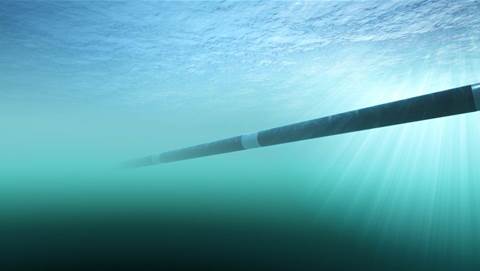
The Coalition committed to spend "up to $2.75 billion" creating a backhaul network that it said would enable telecommunications providers to enter areas of Australia where it "was uncommercial to go today".

The commitment would rely on the private sector also stumping up at least $750 million, Robb said.

The backhaul network was anticipated to cover some 60,000 to 70,000 km but may not be ready until at least 2016/17.

The Coalition anticipated that much of it wouldn't need to be built, just leased from its current owner under threat of having their network overbuilt using taxpayer money.

"If fibre can be leased where you have full rights over it and you're able to use it exclusively for open access, that will be done," Robb said.

"If it can't be leased it will be built.

"Telstra owns a significant network and Optus has significant fibre as well. In reality we're talking about Telstra's fibre network [in our plan]."

Interim measures

In the meantime, the Coalition said it would spend "up to $750 million" on what it called "fixed broadband optimisation".

It explained that this would involve committing funding to upgrade Telstra exchanges or otherwise enable faster speeds in areas where the existing copper network couldn't deliver.

"If you live near an exchange - you can get a decent speed, through ADSL or ADSL2+," Smith said.

"But for many Australians this is not possible because of network design or because the exchange hasn't been upgraded."

The optimisation fund will "try and give those people a decent service where we can", he said.

Smith promised that "optimisation" of the DSL network would happen "in the first year" of a Coalition Government, but could not say how many people would benefit.

He said that everyone else would get access to a "wireless" service that offered a "baseline measure... of 12 Mbps peak speeds".

The Coalition said it would provide a $1 billion grant for the wireless network to be installed in rural and regional Australia, but would rely on private sector funding to fill any gaps.

The plan also committed another $1 billion in funding to roll out a metro wireless network "which will principally deal with problems in outer metropolitan Australia."

Smith said those Australians that wanted higher speeds could look to Telstra and Optus' existing hybrid fibre coaxial (HFC) cable broadband networks, although he said they hadn't seen "wide take-up".

It proved, he said, that "people aren't prepared to pay for 100 Mbps at this point in time."

More to come...

Copyright © iTnews.com.au . All rights reserved.


Coalition NBN to "optimise" and lease Telstra network
""We are not doing what the Government is doing," Opposition communications minister Tony Smith said. "Not doing" must be the LNP policy, just like they have done for the last decade. You can ..."
By Tom Brown


Comments: 39
Willtry
Aug 10, 2010 12:25 PM
Yet again the people of Australia will be held to ransom over internet connection. The only way to have a good network it for it to be a wholesaler network not controlled by one company. The Liberals yet again are backing Telstra. One would wonder is it for the good of the people or the good of the share holders of Telstra. It would be a good idea to check the share holding of all the Liberal members and family
phkhong
Aug 10, 2010 1:47 PM
For sure, it is cheaper to get corporations like Telstra, Optus to build the network but if they do the financial analysis, it will not make any economic sense and if they do decide to build it, I am sure they will pass on the cost to the consumer.

If the argument is to there are significant fibre network (across all carriers), I would say this is a flawed assumption as this is only true in the core but not available to connect consumers.
laman
Aug 10, 2010 1:51 PM
This only shows that both Tony Smith and Andrew Robb have no vision of the future. The building of faster broadband network cannot be completed over night, and you have to prepare before it is needed. I am losig faith with the Coalition.
anonymous
Aug 10, 2010 2:00 PM

Why can't the politicians show some of the intelligent common sense displayed by the above three posters?

RDEFCON1
Aug 10, 2010 2:19 PM
@laman - that is yet to be seen. Perhaps their vision is of the Labor government spending $40bn+ to deliver something that is out of date in 10-15 years, and us being back to square one - with little to show for all those wasted taxpayer funds.

Perhaps their vision is one of lower levels subsidising the provision of 'adequate' services over time in areas that would be uneconomic without the subsidy? Perhaps this is the truly brave vision - being fiscally responsible and economically pragmatic.

It is easy to pretend that a government can efficiently run a 'world-best network' indefinitely. But do you really think this is sustainable? And do you think the taxpayer can continue to fund the ongoing technology investment required, well into the future.
block
Aug 10, 2010 2:23 PM
Vision? I would enjoy a national broadband network as much as the next person but I don't really think raiding the future fund to pay for it shows much 'vision'.

How do you propose we pay for the baby boomers retirement? At least they'll have internet, right?
MerariSchroeder
Aug 10, 2010 2:27 PM
RDEFCON1 - well said.

The $750 million to upgrade today's exchanges, will be much quicker in achieving higher speeds.

Using wireless for a baseline access is also a good idea and can be rolled out quickly.

This plan also addresses the problem of redundant backhaul fibre. The NBN plan was going to duplicate a lot of already existing links, was only going to be layer 2, and was not going to connect up stream to the internet.

This plan will definitely stir up more competition in the market, which is all that is required.
tzarnet
Aug 10, 2010 2:27 PM
The NBN would supply decent bandwidth (which scales) to rural Australia. Although if left to the corporate industries it’s never going to happen as they would never be able to justify the associated costs. If Australia plans to grow and compete with the rest of the world we need the NBN or a equivalent. The coalition’s $6bn wouldn’t come close to making a difference.
Digger11
Aug 10, 2010 2:28 PM
What a superb policy. The coalition will get my vote (and I am sure many many others) on this alone.

We need to remember that the NBN was a total con derived by the cunning Telstra's FTTN plan that was aimed at marooning all of its competitors DSLAM's - a trick that Rudd fell for before the last election.

We need FTTH like a hole in the head - good quality ADSL2+ with real competition is a great product that is all that is needed. Do we really need the ability to download porn and steal movies and music any faster than 10-15mbps ???? Obviously not.

We can then spend the saved money on 1. Paying back all of Labors debt and 2. Hospitals and infrastructure for the millions of new immigrants we are getting over the upcoming years.
RL_1985
Aug 10, 2010 2:28 PM
@RDEFCON1 - You do realise that a fibre broadband network is easily upgradable right? The NBN may provide 100Mbps now, but in 10-15 years from now, it will be providing speeds of 1Gbps, or 10Gbps, whatever is needed for broadband by then. Don't comment on things that you don't understand please.
RDEFCON1
Aug 10, 2010 2:36 PM
@RL-1985

Yes I realise that. Do you realise that in order to provide speeds of 1Gbps, or 10Gbps, that you need to reinvest in the equipment that makes that possible? And when you install new network equipment, you need to upgrade all the OSS/BSS IT infrastructure to support the new equipment.

My point is, the upgrade is far from free. How much will that cost? And will it be the taxpayer that again foots the bill? Will a future government show the same commitment to such large spending?

I'm just asking the questions. If you can't provide the answers - then at least recognise the questions are valid. Just because you can pen a 4-line comment doesn't make you more knowledgeable than me.
Jovial Monk
Aug 10, 2010 2:50 PM
I am on pair gain. this make-believe policy condemns me to slow wireless broadband!

No thanks, I will vote for the NBN!
rycrozier
Aug 10, 2010 3:02 PM
@ Jovial Monk - maybe the Coalition will pay to upgrade your RIM?
umbria
Aug 10, 2010 3:03 PM
This is plainly a first-term policy from the coalition and is a bit of a "curate's egg" (good in parts).

Half of the $6 billion is for fibre backhaul upgrades that are also envisaged by the NBN, and the satellite is in there, so that only leaves about a billion for the new wireless and ADSL "upgrades" that presumably mean some FTTN to a few places. This is not all bad, I suppose, as only the FTTN will be overbuilt when the FTTP rollout inevitably resumes after Labor's rash spending has been recouped.

As to the silly comments about FTTP going out of date, the posters really should get out more. It doesn't cost much to upgrade 3000 downstream premises - just upgrade one device at the exchange. The fibre in the ground is probably futureproof for much longer than the touted fifty years, and is the only way to deliver reliable VoIP further than the 6km range of ADSL. This plan will let regional Australia replace its STD call costs with mobile phone call costs - not much help, really.
umbria
Aug 10, 2010 3:08 PM
I agree, Ry and Jovial Monk, it would seem obvious that urban RIM-sufferers will at least see ADSL2+ under the coalition, and some may see hybrid-fibre-cable higher speed options. The predatory wholesale pricing of the infrastructure is the other issue not resolved, unless the ACCC's new teeth will be much sharper than we have seen in the past.
wjc
Aug 10, 2010 3:27 PM
Market Failure! Blind belief in the market is just downright misplaced, as Mr Obama has acknowledged in the finance area.

For we Telstra RIM/Pair Gain victims with no real access to any broadband, just dial-up at 31.2Kbits/sec, we have to understand just what the coalition is saying and offering.

1. Market failure has led to the abandonment of most pair gain victims, e.g. Gunghalin, Gold Coast, etc.. Just what is the coalition saying here? They will buy up those RIM/Pair gain asemblies? They will provide "backhaul" but to where? To an exchange will not help anyone on a RIM/Mux. Mr Smith - how will "market forces" work here? Are you planning to "gut" those RIMs or what?

2. 12Mbit/sec - wireless? I assume that they mean that 12mb/s applies to both upload and download - vital for small business servers. PLEASE CLARIFY MR SMITH.

3. Spectrum for wireless - where from - surely not the open spectrum area! and if not, just what receiver/transmitter standards are the coalition proposing?

Hard to really determine what is being proposed here...and any commitment to equity of access at equivalent price to the consumer wherever they are. With this rather vague proposal, at least the "digital divide" will be alive and well in Australia.
rycrozier
Aug 10, 2010 3:41 PM
Spectrum answer: http://www.itnews.com.au/News/224170,coalition-hedges-fast-broadband-bet-on-it-evolution.aspx
MichaelJM
Aug 10, 2010 3:45 PM
Here in the Adelaide Hills the copper pairs in the ground are so old that a Telstra tech that hasn't been around for at least 30 years will not have been trained on how to read the identification codes on the individual pairs. The NBN is the only way that we will get into the 21st century.
RDEFCON1
Aug 10, 2010 3:50 PM
to wjc rE: Market Failure

Am not going to defend pair gain/RIM systems, except to say that if over-regulation of the copper network had not created a non-incentive to invest in these areas - perhaps the market would have worked. Nevertheless, I agree that these are exactly the areas where the government should intervene - where the market has already failed.

That's what I like about the Coalition policy, that it recognises the need to intervene with subsidised investment in underserved regions, without going over the top and killing off the working, competitive parts of the market. To invest pre-emptively where the competitive market is working is bad policy and a very risky use of taxpayer funds.

The weakness of the Coalition policy is that it doesn't adequately define what should be interpreted as market failure, and therefore doesn't specifically address crucial areas of need (like all the RIM/pair gain areas).
Mabelode
Aug 10, 2010 3:53 PM
The "Market" isn't going to bother about me. Don't live in a high density area. Don't have DSL2+ competition. Don't download movies (but may like to have the option of IPTV). Do want to telecommute with zero lag for video conferencing.
As far as I'm concerned the coalition is just maintaining the status quo.
meski
Aug 10, 2010 5:08 PM
If you live near an exchange, you'll get decent ADSL2+ speeds. Go look at this graph, which will explode that for the lie it is.
http://www.internode.on.net/residential/broadband/adsl/extreme/performance/

Note that if you're further than 2.5 k from your exchange, you're going to get slower than 12M AT BEST. To get the maximum, you'll need to be within 700 meters of it. This is cable-run distance, too, not as-the-crow-flies. Tony, you've just guaranteed your spot at the bottom of the ballot paper.
phkhong
Aug 10, 2010 6:46 PM
"To get the maximum, you'll need to be within 700 meters of it." is spot on.

Basically, to provide 12M services, service providers will need to push fibre deeper into the network (closer to consumer) and have electronics sitting closer to homes. These fibres do not current exists and will need to be laid. The infrastructure cost of laying the fibre is more significant compared to the cost of fibre and equipment.

Assuming this strategy is sufficient in the short term and network provider builds this network (using DSL technology), the fibre design will most likely be sufficient to connect up the electronics.

If sometime in the future, it was deemed that we need FTTH, then guess what. The fibre that were placed to satisfy the 12M services (to serve the electornics) is actually not sufficient. Service providers will then need to redeploy fibres again which means they will have to pay for the infrastucture cost again.

Would the original cost of introducing such service be wasted?
bob_au
Aug 10, 2010 9:10 PM
for everyone that says wireless is the alternative, well As far as I can remember from school, wireless has a limited spectrum even with the additional spectrum released when TV's are converted to digital, which will lead to slower speeds when shared with a lot of other people trying to get the 12mbs speed. Even then it would appear that they are looking for a future solution to increase speeds. Optimisation of the DSL network I am sure would be for the marginals first and there is no doubt private companies will not be interested where there is no money.
HubertCumberdale
Aug 10, 2010 9:49 PM
Wow, it's almost as if the coalition want to lose this election but let's look at the choices here, you can have your NBN with a 18th century censorship scheme OR unfiltered internet with 18th century speeds. Well done Australia out of all the idiotic political parties to have battle it out in parliament you choose these two.
Mic
Aug 11, 2010 6:53 AM
Obviously they're paying attention to the NSW Government. Investment in Infrastructure? Beh, I'm sure the private sector will look after it.

The POTS is pretty much doing all it can. Although there are newer technologies than ADSL2 around that theoretically offer NBN-type speeds, they fade with distance to the point that the vast majority of Australians wouldn't see any benefit from them. Wireless? You've got to be joking. LTE works out to a range of about 1km from a base station, and in the areas where we've already got base stations <1km apart, we've also got the highest population densities that are sharing that spectrum. Wireless is an interim solution, and an expensive one at that.

Copper's on its last legs. Wireless is not suitable for "baseload" broadband. That leaves Fibre. It's the only feasible path into the future.

Though of course... you still need to get out of the country after that..
MerariSchroeder
Aug 11, 2010 9:38 AM
@RL_1985 "You do realise that a fibre broadband network is easily upgradable right?"

Consider this: FTTN $10bn for 100Mbps, then *if* and *where* required, extent fibre from notes to premises. That could even cost less - than an additional $33bn with new technologies such as micro-trenching.

Being a first moving is rarely economical.

@bob_au "for everyone that says wireless is the alternative, well As far as I can remember from school, wireless has a limited spectrum"

You need to consider wireless spectrum, in terms of spacial use. An omni-directional system of 5km diameter cells with 20Mhz of spectrum, has much less bandwidth per M2 (or user) than a omni-directional system of 1km diameter cells with 20Mhz of spectrum. A directional to directional radio of 20Mhz can provide full bandwidth.

Additionally, radio technology continues to progress. You can't model the future of wireless on current experiences.
tallgirl
Aug 11, 2010 9:56 AM
Damn, just when I'd decided to vote for the coalition, and they shoot themselves in the foot with this one.
I must admit that I don't fully understand the technological limitations, but doesn't the wireless network have to link into the existing terrestrial network at some point? and if so won't it's speed ultimately be bottle-necked by the lowest speed part of that network?
Given that the major cost associated with the NBN is the labour to actually lay the fibre, couldn't it be future proofed to a degree by laying additional (as yet unused) fibres in the same trench?
midspace
Aug 11, 2010 11:55 AM
"Market to decide whether you get 100 Mbps."
It's been market driven for the last decade, and look where it's gotten us? Telstra monopoly, Telstra blocks access to exchanges, Telstra plays with it's wholesale pricing to disadvantage competitors.

"wireless" service that offered a "baseline measure... of 12 Mbps peak speeds".

Have you seen the price of 12 Mpbs wireless services? It's outrageous compared to ADSL2+. There is no cost effective way to use Wireless, and installing and upgrading Wireless towers will keep tech companies in business for centuries as you would have to upgrade the ALL the towers every time there is a technology change (LTE?). The cost will be enormous.

And what is "12 Mbps peak speeds" effectively? 5Mbps? 8Mbps?
ADSL2+'s theoretical top of 24Mpbs doesn't guarantee anything either.
Fibres gives you 100Mps. Not peak. Not Burst rate. Not theoretical. It's rated 100Mps because that is exactly what it delivers, not questionable promises.

As for ADSL2+. I live in a suburban Metropolitan Area on ADSL2+. I get 3.5Mbps if I'm lucky. Can I run my home business on this effectively? No way in hell.
Cable? Optus won't on a subdivded lot. Telstra want my first born child to pay for it.

There is enough backhaul problems from exchanges, and now you want to force everyone onto the wireless network? Not only will the spectrum get congested, but so will it's backhaul.

I'd rather pay higher taxes now for a WORKING fibre NBN, then be paying for high cost wireless Internet for the next two decades.

"The Coalition anticipated that much of it wouldn't need to be built, just leased from its current owner under threat of having their network overbuilt using taxpayer money."
Which is effectively an un-costed approach.
Cause I can promise you now, very few of the companies will lease out their already congested infrastructure, as there are no incentives. Better to let the government build that new backhaul for them and buy it at a reduced cost.
deteego
Aug 12, 2010 12:33 PM
@midspace

A market that only really has one or two ISP's isn't that much of a market (this was the case in the 90's to early 2000 with Telstra/Optus). We now actually have a lot more ISP's that would be willing to invest in such technologies (TPG, iiNet and Internode). Hell TPG just recently bought PIPE networks (optic fibre business), so there is obviously much more interest from ISP's in regards to expanding networks then before, where Telstra really did have a monopoly

Also the liberals said they would give more powers to ACCC, to control companies like Telstra in regards to anti-competitive behaviors (we had nothing of that sort earlier)
anonymous
Aug 12, 2010 2:55 PM

@deteego - "we had nothing of that sort earlier".

Well, we did, but it wasn't very effective because a) the Libs didn't do much about anti-competitive behaviour, even though it was right under their nose; and b) Telstra was able to utilise its vast cashflow to legalistically (or not) use every delaying and spoiling trick in the book.
MerariSchroeder
Aug 12, 2010 5:09 PM
"Have you seen the price of 12 Mpbs wireless services? It's outrageous compared to ADSL2+"
No one would switch to wireless if they already have cost effective ADSL2+. Plus there will also be cable - and you can expect that the private sector will build 100Mbps FTTN which will eventually be built to FTTH - as the market demands and can afford it - not when the government wants to win more votes.

"And what is "12 Mbps peak speeds" effectively? 5Mbps? 8Mbps?"
They said at least 12Mbps peak speeds. LTE starts at 100Mbps.

FTTH would be nice, but it's an unaffordable luxury. Maybe there are some readers who would be able to afford it. But "everyone" needs to be able to afford it for it to be viable.
Mike_Sadler
Aug 12, 2010 8:14 PM
Unbelievable.

Let's park the total nonsense about the suitability of wireless for areas that COULD be served by a fixed line service (it isn't suitable, BTW) and ADSL, where the 'A' (and this goes for all planned, standards based, wireless deployments globally too) is for asymmetric - Google it people. Yeah... that MUCH smaller number? That's the upload speed. So, yes, you can see the nice Doctor in your little TV screen thingy, but the poor Doctor can't see your wart/rash/infection/broken leg/psyscotic stare properly on his 30" HD screen, even connected to the Hospital's 1 Gbps link into AARNET, because you voted Liberal.

I know "They said at least 12Mbps peak speeds. LTE starts at 100Mbps..." MerariS, but, boo-hoo, they lied. The up to a 100 Mbps? Lie. For those who are already served by Telstra and Optus' HFC network and can then get the 100Mbps DOCSIS 3 upgrade, they will get to SHARE in 100 Mbps. Everybody else? 12Mbps ADSL? Right. Look out for the asteriks on THAT one. Lies, lies, lies. Think of this as an election eve 'Children Overboard' stunt, but one that could consign your kids to the trash heap of the digital future.

You wanna argue these speeds, go ahead, just make sure you bring a physicist along to explain just what happened to his rule book while I slept last night. Utter rubbish.

Telecommuting, video conferencing, interactive training, virtual, geographically dispersed call centres aggregating areas of (previously) high youth unemployment, yeah... [cough] right :(

But let's not talk about that. Let's do a maths exercise. Let's take a really, really big number, say, 43 billion. Now let's take a smaller number, 22 million (the population of Australia, at worst, over the next 25 years, by coincidence) for instance and divide the first by the second. Let's see, that's about.. let's call it 2000. Lets add a bit, well quite a bit, say 25% to that just in case my first two numbers are not quite big enough, or small enough, respectively. So, make it 2500. Hey, that's neat... I can divide the 25 years that I averaged that population over into the 2500 real easy now. That's 100 right?

Tony Abbott and his supporters think so much of Australia's potential that they would abandon a plan to put us front and centre of the new economy because they obviously don't believe that Australians, the people they seek to represent, could leverage access to a ubiquitous and near universal 100 Mbps capable system and improve our productivity by increasing income or reducing costs, or some combination of the two, by $2500 (at worst) over the course of 25 years. $100 per person, per annum. That's what they think of you. Give you one of the best networks in the world and the knowledge that all your providers, suppliers, customers - the whole community - has access to this thing and you couldn't turn your hand to making $2 savings or $2 additional income a week (or a buck each way). That's what they think of you, me, us.

Well, Tony, coalition supporters, thanks. You basically don't think that the average Aussie could find a good use for this stuff to the tune of $2500 across 25 years? Don't trust us? Bit of a cringe thing happening is there? Don't think we could possible generate $100 each per year; if we had access to the best in the world, there's no way we could actually BE the best in the world, right? Absolutely bloody sickening.

More maths? Sure. Total employed, Feb 2010, was 10.97 million persons, about half the total population. Average weekly earnings was $969.40 or $50,400 p.a. Lets see how much extra productivity we need to fund the NBN. 10.97M (persons) x $50,400 (annual wages) x 25 (years) is... $13.8222 Trillion (in today's money) in wages for all workers for 25 years. So as a proportion of that, $43B is... 0.00311%. That seems very, very, very, low? Abbott said we could 'never' afford it, as have some folk here. Let's check... $50,400 p.a. x .00311% is $156.80, if only employed persons contibuted.

So, once again, Mr Abbott, his cronies and fanbois are saying that if we go from zero to hero in the Broadband world, Aussie workers couldn't leverage the NBN to produce $156.80 of additional revenue or reduced costs each year. Three bucks a week! Nice one Tony. Thanks for the vote of confidence mate.

Anyone who is liked minded with Tony is obviously not that confident the Australian worker can do anything like what's required to leverage world's best ICT to extract a, let's face it, tiny, 0.003% boost in productivity. Australians aren't capable of utilising this new darn-fangled glass-pipe contraption to create $3 of extra 'wealth' or $3 savings for themselves, on average, every week? Great message to send to our export markets luddites.

I think Tony should 'nick off', to put it nicely. If you're with him, if you feel you can't contribute a one-off productivity increase of 0.003% and then just maintain it, please, go join him under a rock. I'm afraid its YOU the country can't afford over the next 25 years, not the NBN.
Mike_Sadler
Aug 12, 2010 8:18 PM
Sorry about the triple post... moderator?
rwilliams
Aug 12, 2010 9:25 PM
no worries - extra posts removed.
MerariSchroeder
Aug 16, 2010 8:24 AM
@Mike_Sadler "the poor Doctor can't see your wart/rash/infection/broken leg/psyscotic stare properly on his 30" HD screen, even connected to the Hospital's 1 Gbps link into AARNET, because you voted Liberal."

Why does the doctor need to see it in HD video? They'll want it in their records as a HD picture. So what the doctor does is, tells the patient to hold still, presses take picture and a HD picture is transmitted.

So by spending another $37bn, you save on photography RSI? But of course, the alternatives will still be able to deliver.

We want affordable options.

"they will get to SHARE in 100 Mbps."
If the NBN is using 1.25Gbps lasers, and they use the minimum PON split of 32, then you still have contention. That should be a problem though, because you'll be lucky to have even one person in every PON using it, with the exhorberant prices. People will have to opt for the 25Mbps plans. Even though the government "promises" 100Mbps as a minimum, the fact is that everyone will be getting around 25Mbps.

Simply because it's more affordable.

"I can divide the 25 years that I averaged that population over into the 2500 real easy now. That's 100 right?"

Unfortunately you also have to add NBNCo wages, Low Take-up and Retail Markup amongst others.

"Anyone who is liked minded with Tony..."
A purely emotive paragraph....

Mike_Sadler, the point you're missing is that we can actually achieve faster communication *without* the high cost. The benefits from 50Mbps to 100Mbps aren't as big as the benefits of 25Mbps to 50Mbps - or 10 - 50Mbps for that matter. An exponential decrease. And the cost to reach 100Mbps are much greater. An exponential increase.

Attacking wireless is a completely naive act. The facts are
1) People want their data mobile: http://www.itnews.com.au/News/228781,ericsson-225000-tb-traverse-mobile-networks-each-month.aspx.
2) Wireless has heaps more kick left in it to deliver beyond 100Mbps

You also fail to mention FTTN. For the next 10 or so years we could be using a $15bn FTTN network. Not upgradeable you say? Of course you do, that's what the Government said when they broke their promise for the NBN costing $5bn.

FTTH - $43bn:
* ~$2bn / year in interest (not compounding 5%)
* 100Mbps (but everyone will be using 25Mbps)
* Upgradeable with ~$500 new device in each premises (you need a new laser)

FTTN - $15bn (probably less):
* ~$.75 / year in interest (not compounding 5%)
* 100Mbps (but everyone will be using 25Mbps)
* Upgradeable to FTTH when it's needed - for less than the difference. Why? Because there will be more cost effective means of delivering it, such as micro-trenching.
* Or the use of another new technology which comes available in the next 10-20 years.

When comparing FTTH $43bn to FTTN $15bn, you need to consider that peak debt is decreased without sacrificing speed. And upgrade-ablility is still retained with even less peak cost!
RDEFCON1
Aug 17, 2010 12:20 AM
Response to @tallgirl:

Yes, a wireless network needs to connect to a terrestrial network 'at some point', typically behind the base stations. This part of the network is 'backhaul' as opposed to the 'access' part of the network.

NBN is providing fibre technology (GPON)access network, which also requires 'backhaul' just like a wireless network (although NBN proposes to provide some backhaul also where sufficiently competitive backhaul doesn't exist).

Basically, in comparing wireless vs FTTH, you can discount the backhaul requirements as being roughly equivalent and just compare the 'access' or 'last mile' technologies on speed, flexibility, scalabaility, cost, etc.

Hope that helps...?

golfman
Aug 17, 2010 10:10 AM
With new technology breakthroughs creating previously unheard of copper speeds over short distances (<1000metres) shouldn't we be investigating Fibre To The Node again.

Details of breakthroughs as recent as April and commercially available next year achieve 100Mbps over existing copper pairs for distances up to 1000 metres (385Mbps for distances <400 metres).

https://sites.google.com/site/didjuliafoolya/nbn-already-redundant

This changes the entire ball game and would enable the Coalition's much cheaper option to reach 100Mbps should they choose FTTN, bypassing the theoretical limitations of wireless.
golfman
Aug 17, 2010 10:12 AM
Oh yeah, I forgot to mention that we'd all be receiving 100Mbps many, many years earlier under a coalition FTTN plan than if we had to wait for technicians to run fibre cable to every house in the country under the NBN FTTH plan.
Tom Brown
Nov 16, 2010 12:53 PM
"We are not doing what the Government is doing," Opposition communications minister Tony Smith said.

"Not doing" must be the LNP policy, just like they have done for the last decade.

You can argue all this rubbish about cost and technology but the Qld Gov't is finding 124Bn for infrastructure so a tiddly 43Bn what a joke.

The LNP policy is to give it to someone else hey that's exactly what we had. They talk of backhaul which is now going ahead, they talk of wireless der if that is the solution why is that not a solution today. Wireless has been with us a while and the growth of that infrastructure is not providing the solutions, when did you last see a someone want to run their fixed location systems on a wireless connection. They talk of Telstra separation but did nothing now when there is something being done they oppose it.
Comments have been disabled for this article.


Top Stories
Vito Forte: A CIO for tough times
Fortescue Metals CIO talks vendor management and innovation.
 
Tech staff spared in ANZ's 1000 job cuts
Cost cutting hits middle management.
 
Telstra shifts BigPond email to Windows Live
All data to be migrated to Microsoft cloud.
 
Sign up to receive iTnews email bulletins
   FOLLOW US...

Latest VideosSee all videos »

Latest Comments
Polls
Would you be concerned about your business' email data being hosted offshore?

   |   View results
Yes
  83%
 
No
  17%
TOTAL VOTES: 245

Vote