Former NBN expert panellist Reginald Coutts has called on the Government and NBN Co to state a clear position on how they expect to serve the 10 percent of Australians not receiving a fibre-to-the-home connection under the NBN plan.
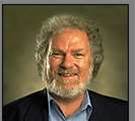
Speaking with iTnews, Coutts expressed concerns that the question of the "last ten percent" had all but disappeared from public commentary.
In particular, Coutts expressed concern that NBN Co had given "no indication" as to what type of backhaul it intends to use to service wireless connections in regional Australia.
“I’m concerned about the backhaul issue,” Coutts said. “Because a key part of ensuring people in the 10 percent area of Australia get potentially equivalent services and prices to the rest of Australia [requires] a thorough discussion about backhaul.
“The problem at the moment is ... they’re thinking of it as backhaul links,” Coutts said.
Coutts commended the Federal Government on making a number of "excellent" decisions to fund the provision of additional backhaul links in regional Australia, but he said it remained “unclear” as to whether there was “any strategy of how to address the whole network”.
“It's not this link and that link," he said. "It's how they all come together so that [whether] you're in Darwin, Hobart or Mildura, a service provider could connect into the network at equivalent pricing to someone in Melbourne or Sydney,” Coutts said, referring to Senator Conroy's stated ambition for the NBN Co to provide uniform wholesale pricing.
Coutts believed microwave technology was better suited than optical backhaul for the last 10 percent.
But he conceded optical technology made sense for the links for which the Federal Government has already announced funding.
"It depends on the amount of traffic," he said.
Cross subsidisation confusion
Coutts was also irritated by a “degree of difference” between NBN Co CEO Mike Quigley and the Minister for Broadband, Senator Stephen Conroy - the latter having an "ambition" to offer wholesale uniform pricing across fibre, wireless and satellite connections, the former dismissing such ambitions as impractical.
Coutts said he was more aligned to the Minister's stated ambition than to the vision Quigley gave Senate Estimates.
“For someone in telecommunications, and I’ve got immense respect for Mike [Quigley], to say they’re not considering cross subsidies - I’d have to say, you know, you have to be joking,” Coutts said.
“I’ve obviously got, having been part of deliberations of the previous process for twelve months, some ideas of how that could be done. But I’m not part of government, I’m not part of NBN Co and of course they’re keeping their own private council so to speak,” Coutts said. "And for the first time I’m saying there needs to be some public discussion about this.
"It can’t just be something cooked up in a back room," he said.
Coutts said there were a number of different ways to approach cross subsidisation.
"It comes down to looking at how much you would need to increase pricing by in the cities," Coutts said.
He said he knew there was “a lot of thinking going on” around how to keep prices equivalent across the nation but said the government’s thinking and NBN Co’s thinking was not as “productive as it needs to be”.




.jpg&h=140&w=231&c=1&s=0)
.jpg&h=140&w=231&c=1&s=0)
.jpg&h=140&w=231&c=1&s=0)


 iTnews Resilience, Rewired Breakfast
 RIMPA Live Convention 2026
 What’s Next?
 iTnews Benchmark Security Awards 2026
 iTnews State of Security Breakfast Sydney


.jpg&h=271&w=480&c=1&s=1)



.jpg&h=140&w=231&c=1&s=0)
.jpg&h=140&w=231&c=1&s=0)
.png&h=140&w=231&c=1&s=0)
.jpg&h=236&w=349&c=1&s=1)