Aussie miners confront real-time data deluge


Rio Tinto's 3D mine the public face for resources' Big Data embrace.

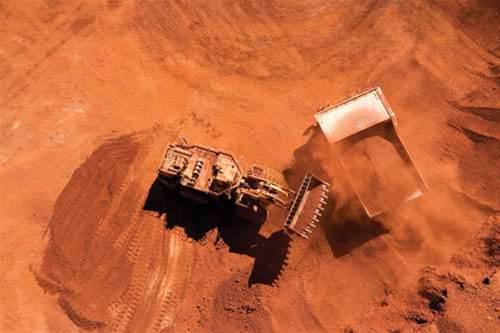
Rio Tinto has emerged as the pioneer of a new movement aiming to harness burgeoning data volumes generated in real-time by equipment at remote mine sites across Australia.

The company is investing in a system codenamed VirtualEYES, which it says will "generate a virtual representation of operations on the ground in real-time".

"This system combines survey and weather data, aerial photos and vehicle telemetry, with information on mine design, geological models and infrastructure plans to simulate an accurate three-dimensional representation of events at the site," Rio Tinto revealed in a white paper last month [pdf].

"VirtualEYES will enable the sharing of real-time information to improve problem solving and collaboration."

Rio Tinto did not respond to several requests for further comment on the project.

However, their silence - and that of the other major miners on the subject of Big Data analytics - is indicative of the level of competitive advantage they see in the projects, according to Deloitte Consulting technology lead partner, Robert Hillard.

"The fact that they're very strategic about the way they talk about it indicates that this isn't something that they're doing as a side project," Hillard says.

"This is absolutely core to them."

Analytics renaissance

The trend towards semi- and completely automated mine sites is driving a renaissance in data analytics in the sector.

As the big miners automate more parts of their infrastructure, they will increasingly have access to larger arrays of sensors capable of generating and transmitting data to back-end IT systems.

Combined with other unstructured data, it could produce patterns and correlations that aid planning, plant utilisation and ultimately profitability.

Rio Tinto is a key proponent of automation through its 'Mine of the Future' program.

Rivals BHP Billiton, Fortescue Metals and the Gina Rinehart-backed Roy Hill Mine have also announced automation intentions or projects. Several are known to be working on Big Data analytics projects.

Fortescue Metals is deploying pod data centre infrastructure at mine sites to enable analysis of sensor data from remote equipment. It is also drawing that data from the Pilbara region to Perth via private fibre optic links, where it can be analysed in a private cloud environment.

Roy Hill is planning an automated mine system that is integrated from pit-to-port. It is already scoping the integration of a number of data-producing systems under the project; recent job advertisements have sought experience in SAP's netWeaver process integration module, which typically facilitates data exchange between systems.

During an interview with iTnews, Oracle's APAC senior sales consulting director for systems, Stuart Long, made several references to an unnamed coal seam gas miner in Queensland that is working with Oracle on the "data portion" of a "distributed mining" project. He would not confirm or deny it was Santos - an Oracle customer that has already bought Exadata components of Oracle's Big Data analytics suite.

Others, such as BHP Billiton, have not publicly announced Big Data plans. However, Big Data is considered by Deloitte's Hillard and others to be an implicit component of any automation project and is likely to be factored into current projects.

Real-time battleground

Although Rio Tinto has made real-time analysis a key characteristic of its VirtualEYES projects, opinion is divided on where to draw the line on real-time data capture, considered a defining characteristic of Big Data.

It is unclear where Big Data based on such real-time access stops aiding decision making, and begins contributing to complexity and information overload.

"What we have to do is work out how far we have to come down to real real-time data to be able to make decisions and make sense of [the data]," SAP Australia's mining and resources industry principal Peter Hodgins says.

"Do we really need a figure to be coming from every piece of SCADA and telemetry on every piece of kit every second? Where do we draw that line? The definition of how far you come down to that real-time real data is critical."

Although "no definitive answer" has emerged in early discussions and proof-of-concepts, SAP Australia high performance analytics director Doug Gibson says taking telemetry data inputs "every three-to-four minutes" is currently seen by some customers as an acceptable compromise on data availability versus the cost to transmit it back to a central system.

"[Real-time integration] puts pressure on the network and... [for] what benefit? Will every second give you that much more incremental benefit as opposed to every three to four minutes?" he says.

"What are you going to do if it's every three to four seconds? Are you going to be there physically watching it? That's where as a business you've got to look at the cost justification to say yes or no."

Oracle's Stuart Long is more bullish on real-time data integration. He talks up the prospect of combining structured and unstructured datasets for predictive analytics to aid real-time decision-making in mines. For example, the data would be used to aid decisions around whether to ramp up or down production of coal seam gas to fire a power station based on weather forecast data.

However, it's unclear if customers are currently that advanced in their thinking.

SAP's Hodgins says preventive or predictive equipment maintenance is seen as a potential future benefit of analysing real-time telemetry feeds from driverless trucks or trains.

"It's becoming even more critical to do analysis of that data because there's physically no-one sitting in the truck or operating the equipment who can smell, see hear, feel the vibrations, smells, noises and prevent a breakdown," he says.

"Most of the resources companies [are] certainly looking at condition-based maintenance strategies using [real-time telemetry] information."

Real-time predictive analytics will likely usher in more widespread use of in-memory analytics platforms like SAP's HANA and Oracle's Exalytics. These platforms are designed to enable transactional data to be read from a variety of sources and analysed in real-time.

Gibson says SAP had one customer in Australia examining the potential to write and integrate data into its systems "in near real-time".

It was unclear if Oracle had any miners performing proof-of-concepts with Exalytics, which has been generally available for less than a month.

Stay tuned to iTnews tomorrow for Big Data in Australia's geothermal industry.

Copyright © iTnews.com.au . All rights reserved.


Aussie miners confront real-time data deluge


Top Stories
Photos: HTC One vs Samsung Galaxy S4
Android giants battle it out.
 
Project management lessons from the QLD Health payroll inquiry
Analysis: How not to run a major IT project.
 
Review: Asus Fonepad
Calling on the Big Phone.
 
 
Sign up to receive iTnews email bulletins
   FOLLOW US...

Latest VideosSee all videos »

Bankwest builds continuous delivery capability
To automatically deploy test/dev sandboxes by mid-year.
Veterans' Affairs sets sights on modernisation
Data safe with Human Services, CIO says.
Citi Australia drops platform customisations
Technology chief shifts focus from building to leveraging systems.
VicRoads restructures IT team
Department moves to align with industry benchmarks.
Zurich Australia extends IT team offshore
Malaysian staff served from Australian data centres.
Leigh Berrell - Utilities CIO of the Year
Yarra Valley Water CIO Leigh Berrell accepts his Benchmark Award for Utilities CIO of the Year.
Wayne McMahon - Retail CIO of the Year
Domino's Pizza CIO Wayne McMahon accepts his Benchmark Award for Retail CIO of the Year.
Inside Perpetual's ongoing IT transformation
CIO Jenny Levy discusses how outsourcing will help the firm "simplify, refocus and grow".
Managing Complexity - Defence's Daniel McCabe
Daniel McCabe, Assistant Secretary of Australia's Department of Defence, provides the audience at the iTnews Data Centre Strategy Summit with a deep dive into the organisation's data centre consolidation program.
How Facebook designed the data centre from scratch - Marco Magarelli
The full keynote by Facebook data centre architect Marco Magarelli at the Australian Data Centre Strategy Summit. Magarelli details the design considerations behind the social network's Prineville, Oregon; North Carolina and Luleå, Sweden data centres.
Modernising Legacy Data Centres - Telstra's Jon Curry
Telstra general manager of managed data centres Jon Curry guides the audience at the iTnews Australian Data Centre Summit through the build of the telco's Clayton, Victoria data centre.
NSW Government launches NABERS data centre rating tools
Matthew Clark from the NSW Department of Environment guides facilties managers through the details of the new NABERS data centre energy rating tool at the Australian Data Centre Strategy Summit.
NABERS launch panel: Australian Data Centre Strategy Summit
Matthew Clark (NSW Dept of Environment), Greg Boorer (Canberra Data Centres), Glenn Allan (National Australia Bank), Mike Andrea (Strategic Directions) and Bob Sharon (Green Global Consulting) discuss the impact of the NABERS data centre rating.
Judges notes: Fortescue Metals [The Benchmark Awards]
iTnews' panel of judges discuss Fortescue Metals 'New World of Work" project, one of three shortlisted finalists for the Industrials category of the CIO Benchmark Awards.
Judges notes: Retail [The Benchmark Awards]
iTnews' panel of judges discuss the shortlisted finalists for the Retail category of the CIO Benchmark Awards.
Judges notes: Pacific Aluminium [The Benchmark Awards]
iTnews' panel of judges discuss Pacific Aluminium's lightning fast service desk refresh, one of three shortlisted finalists for the Industrials category of the CIO Benchmark Awards.
Judges notes: Domino's Pizza [The Benchmark Awards]
iTnews' panel of judges discuss Domino's Pizza's shift to hosted services, one of three shortlisted finalists for the Retail category of the CIO Benchmark Awards.
Judges notes: McDonald's Australia [The Benchmark Awards]
iTnews' panel of judges discuss McDonald's Australia's new self-service portal for employees, one of three shortlisted finalists for the Retail category of the CIO Benchmark Awards.
Judges notes: ING Direct [The Benchmark Awards]
iTnews' panel of judges discuss ING Direct's 'Bank in a Box', one of three shortlisted finalists for the banking and finance category of the CIO Benchmark Awards.
Judges notes: Yarra Valley Water [The Benchmark Awards]
iTnews' panel of judges discuss Yarra Valley Water's insourcing project, one of three shortlisted finalists for the Utilities category of the CIO Benchmark Awards.
Latest Comments
Polls
Do you prefer the Coalition's NBN policy?

   |   View results
Yes
  19%
 
No
  81%
TOTAL VOTES: 1668

Vote