Still no business case for Aussie NFC: analyst


Banks, telcos face prisoners' dilemma on near field communications.

Australia may lack the scale and “burning need” to support a business case for contactless mobile phone payment technology, an industry analyst has suggested.
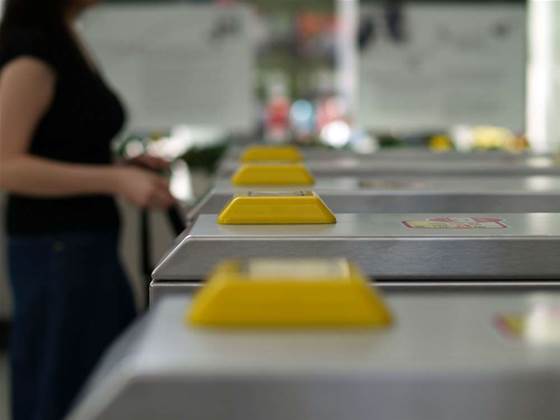
According to Lance Blockley of financial services consultancy Edgar, Dunn & Company, local banks and telcos faced the theoretical prisoners’ dilemma, refusing to cooperate fully on NFC.

NFC (near-field communications) was playing a growing role in facilitating transit, bill payments, and marketing elsewhere in the Asia Pacific region, with Japan and South Korea leading the charge.

More basic, SMS-based technologies are being used in the transfer of more than US$1 billion a month across the Philippines’ 7,107 islands, where 80 percent of residents were unbanked.

“Asia has pioneered the use of mobile phones for payments,” Blockley told a Sybase customer conference in Sydney this week.

But while individual telcos, governments and financial institutions have led international rollouts, the local industry was “dancing around” Australia’s relatively small market, 99 percent of which use banks.

Blockley said there were 16 million Australian adults with payment devices, “only a segment” of which would use contactless mobile phone payment technology.

Banks and telcos claimed to be deterred by a lack of NFC standards, but according to Sybase’s mCommerce senior Vice President Matthew Talbot, “that’s not stopping them”.

“There are enough standards out there now to get that to happen,” he told iTnews at the conference. “There are examples [of NFC offerings] around the world, but it takes a lot of time.”

Blockley blamed a lack of cooperation between Australia’s finance and telecommunications sectors for preventing the takeoff of NFC despite various local trials since 2007.

He described the prisoners’ dilemma, in which players were rewarded if they all cooperated, rewarded more if they did not cooperate while others did, and punished if they cooperated but others did not.

“If everybody clubbed together, so we have all carriers and all the banks on one ecosystem, then maybe you’d get a critical mass [of customers] much faster,” he told iTnews.

“Banks have to be telco-agnostic. Telcos have to be bank-agnostic. But each player wants an advantage over the other.”

Defining a business case for NFC was complicated by the fact that benefits would be shared by merchants, technology vendors, mobile network operators, banks, and users.

The Philippines’ GCash service – now used for salary remittance and bill payments – was launched in 2004 by Globe Telecom in attempts to grow SMS traffic, Blockley said.

Last week, Google unveiled contactless payment app, Google Wallet, from which the search giant could profit by combining it with coupon listing service, Google Offers.

Blockley said NFC proponents needed to identify “what the gap in the market is”, noting that “you don’t see people walking around the streets in Australia wondering how to pay for things”.

Sybase’s Talbot said new mobile payment offerings had to add value to existing services in developed markets, where “you aren’t going to replace the Visas and Mastercards of the world”.

He highlighted an Austrian SMS-based parking payment method that contacted drivers before their permits expired, and cigarette vending machines that could use stored data to verify customers’ ages.

“There’s always a value-add there,” he said.

Neither Talbot nor Blockley were aware of industry-wide NFC discussions. Both declined to speculate on when the technology would take hold in Australia.

“As the need is a bit nascent, hard to quantify, and hard to build a business case around, everyone is dancing around the perimeter without grasping at it,” Blockley said.

“When that’s going to happen is anyone’s guess.”

Talbot said contactless credit cards from Visa and MasterCard would likely pave the way for mobile phone NFC – especially after retail giant Woolworths rolled out contactless terminals this year.

“You may find that we’re being led in this country by the MasterCards and the Visas,” he said. “This market is going to be driven by the cards initially, and slowly, [mobile NFC is] going to happen.”


Copyright © iTnews.com.au . All rights reserved.


Still no business case for Aussie NFC: analyst
"We have the technology but why would anyone deploy it unless it brough competitive advantage? The answer is big brother can legislate or regulate to provide that all public transport road tolls ..."
By BaysNet


Comments: 1
BaysNet
Jun 4, 2011 11:22 AM
We have the technology but why would anyone deploy it unless it brough competitive advantage? The answer is big brother can legislate or regulate to provide that all public transport road tolls governemnt departments must accept a defined NFC standard
Comments have been disabled for this article.
 
 
Top Stories
Photos: AusCERT 2013 day two
The second day of the Queensland security conference.
 
The illusion of cognitive computing
Opinion: IBM's Watson is a marketing success.
 
CenITex to move from IT provider to broker
Documents reveal new strategy.
 
 
Sign up to receive iTnews email bulletins
   FOLLOW US...

Latest VideosSee all videos »

Bankwest builds continuous delivery capability
To automatically deploy test/dev sandboxes by mid-year.
Veterans' Affairs sets sights on modernisation
Data safe with Human Services, CIO says.
Citi Australia drops platform customisations
Technology chief shifts focus from building to leveraging systems.
VicRoads restructures IT team
Department moves to align with industry benchmarks.
Zurich Australia extends IT team offshore
Malaysian staff served from Australian data centres.
Leigh Berrell - Utilities CIO of the Year
Yarra Valley Water CIO Leigh Berrell accepts his Benchmark Award for Utilities CIO of the Year.
Wayne McMahon - Retail CIO of the Year
Domino's Pizza CIO Wayne McMahon accepts his Benchmark Award for Retail CIO of the Year.
Inside Perpetual's ongoing IT transformation
CIO Jenny Levy discusses how outsourcing will help the firm "simplify, refocus and grow".
Managing Complexity - Defence's Daniel McCabe
Daniel McCabe, Assistant Secretary of Australia's Department of Defence, provides the audience at the iTnews Data Centre Strategy Summit with a deep dive into the organisation's data centre consolidation program.
How Facebook designed the data centre from scratch - Marco Magarelli
The full keynote by Facebook data centre architect Marco Magarelli at the Australian Data Centre Strategy Summit. Magarelli details the design considerations behind the social network's Prineville, Oregon; North Carolina and Luleå, Sweden data centres.
Modernising Legacy Data Centres - Telstra's Jon Curry
Telstra general manager of managed data centres Jon Curry guides the audience at the iTnews Australian Data Centre Summit through the build of the telco's Clayton, Victoria data centre.
NSW Government launches NABERS data centre rating tools
Matthew Clark from the NSW Department of Environment guides facilties managers through the details of the new NABERS data centre energy rating tool at the Australian Data Centre Strategy Summit.
NABERS launch panel: Australian Data Centre Strategy Summit
Matthew Clark (NSW Dept of Environment), Greg Boorer (Canberra Data Centres), Glenn Allan (National Australia Bank), Mike Andrea (Strategic Directions) and Bob Sharon (Green Global Consulting) discuss the impact of the NABERS data centre rating.
Judges notes: Fortescue Metals [The Benchmark Awards]
iTnews' panel of judges discuss Fortescue Metals 'New World of Work" project, one of three shortlisted finalists for the Industrials category of the CIO Benchmark Awards.
Judges notes: Retail [The Benchmark Awards]
iTnews' panel of judges discuss the shortlisted finalists for the Retail category of the CIO Benchmark Awards.
Judges notes: Pacific Aluminium [The Benchmark Awards]
iTnews' panel of judges discuss Pacific Aluminium's lightning fast service desk refresh, one of three shortlisted finalists for the Industrials category of the CIO Benchmark Awards.
Judges notes: Domino's Pizza [The Benchmark Awards]
iTnews' panel of judges discuss Domino's Pizza's shift to hosted services, one of three shortlisted finalists for the Retail category of the CIO Benchmark Awards.
Judges notes: McDonald's Australia [The Benchmark Awards]
iTnews' panel of judges discuss McDonald's Australia's new self-service portal for employees, one of three shortlisted finalists for the Retail category of the CIO Benchmark Awards.
Judges notes: ING Direct [The Benchmark Awards]
iTnews' panel of judges discuss ING Direct's 'Bank in a Box', one of three shortlisted finalists for the banking and finance category of the CIO Benchmark Awards.
Judges notes: Yarra Valley Water [The Benchmark Awards]
iTnews' panel of judges discuss Yarra Valley Water's insourcing project, one of three shortlisted finalists for the Utilities category of the CIO Benchmark Awards.
Latest Comments
Polls
Do you prefer the Coalition's NBN policy?

   |   View results
Yes
  19%
 
No
  81%
TOTAL VOTES: 1714

Vote