
Communications Minister Stephen Conroy has partially backed down on contentious uniform pricing rules to secure the support of key lower house members for the NBN Companies and Access bills.
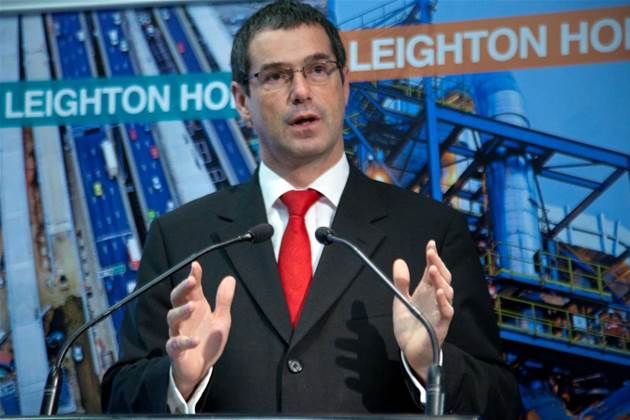
The bills - which included substantial Senate-led amendments thrashed out in late-night sittings last week - came before the House of Representatives for one last time on Monday.
They were passed into law despite Coalition attempts to shut down and prolong debate and amid claims the Government was pursuing a backroom deal with the independents to get the amended bills across the finish line.
Conroy had been dogged in both houses of parliament by a controversial amendment to the Access bill that did not guarantee uniform national prices for fibre, wireless and satellite services beyond the base 12 Mbps down/1 Mbps uplink service to be offered by NBN Co.
"The price for NBN Co's entry level service must be the same across Australia and across NBN Co's fibre, wireless and satellite networks," a revised explanatory memorandum stated.
"However, the prices for higher-speed services only need to be uniform within a specified technology, and not across all technologies."
Country MPs had been concerned the clause would mean their constituents paid more than city counterparts for equivalent higher-speed NBN services launched in the future.
But the MPs - independents Rob Oakshott, Tony Windsor, Andrew Wilkie; the Greens' Adam Bandt; and Nationals' Bob Katter - late yesterday agreed to a deal that represented a partial compromise on the clause.
The deal meant the Government would have to prepare a "community impact statement... on all future policy decisions on technology, speed and/or price to assess impacts and opportunities on those unable to be serviced by fibre to the premises".
The Government did not provide a concrete commitment to apply uniform wholesale national pricing to future wireless and satellite technologies, saying only it would so "where possible" without elaborating.
"The NBN has achieved uniform national entry level pricing across technologies, and where new technologies become available will seek to maintain this principle at other product levels," the House of Representatives resolution stated.
The resolution gained enough support to sink a fresh round of Coalition-led amendments to the bills, which could have prolonged their passing and forced a second recall of both houses of parliament.



.png&h=140&w=231&c=1&s=0)
.jpg&h=140&w=231&c=1&s=0)

.jpg&h=140&w=231&c=1&s=0)


 RIMPA Live Convention 2026
 What’s Next?
 iTnews Benchmark Security Awards 2026
 iTnews State of Security Breakfast Sydney
 iTnews Executive Retreat - Security Leaders Edition - VIC




.jpg&h=140&w=231&c=1&s=0)


.jpg&h=140&w=231&c=1&s=0)


