Telstra, Optus oppose 'special' NBN rules for utilities


Electricity companies should buy from us, telcos say.

Australia's largest telcos have spoken out against proposals to allow utilities to bypass retail service providers by buying a wholesale fibre service directly from NBN Co.
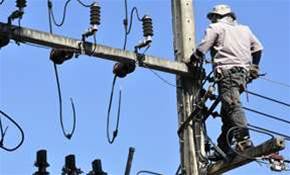
In the current draft of NBN legislation before parliament, utilities would be allowed to take a direct wholesale service from NBN Co to underpin services like smart metering.

The Energy Networks Association had argued [pdf] that buying NBN services from a retail service provider would add unnecessary cost with few benefits to those services, potentially driving utilities to deploy their own duplicate fibre infrastructure.

"Maintenance of this exemption is very important to the ability of electricity and gas network businesses to meet 21st century expectations around affordability, reliability and quality of energy supplies," the association argued in its submission to parliament.

"It is clear that the nature of the service that energy network businesses require from NBN Co would be very different in its scope and features from the services supplied by retail service providers to standard retail consumers of the NBN."

But representatives of Australia's major carriers disagreed, arguing they were well equipped to service the utility sector.

Telcos argued the exemption, as it stood, would allow NBN Co to move outside its definition as a "wholesale-only" business.

"We're not persuaded by the [utilities'] argument at all," Optus general manager of interconnect and economic regulation Andrew Sheridan said.

"We have products and services that can be tailored specifically for their needs. Optus and others will look at providing those services to utilities.

"If we allow the electricity industry to do some carve-out, it pushes that door open to anyone who wants to plead a special case."

Optus government and corporate affairs director Maha Krishnapillai believed that providing an exemption to the electricity sector would lead others to follow the lead "to buy straight fibre".

"I think everyone will argue they're special," he said.

"It's a matter of once you open that door it's very to shut it and very hard to preclude how it gets used in the future.

"What we want to preclude here is a market structure that doesn't work."

Telstra director of government relations James Shaw agreed.

"We don't think utilities have made a sufficient case to be treated separately," Shaw said.

"We believe RSPs [retail service providers] will want to provide services to utilities. We believe there will be a market there for RSPs to provide the type of service that utilities want and that it can be done in a way where we can add value.

"There should be no need for these organisations to deal directly with NBN Co."

Shaw said that telecommunications history showed that telcos would invest in tailoring services where "we think we can make a buck out of it". Servicing utilities using NBN infrastructure fit that bill.

He said that utilities that were unhappy with a bitstream service taken from one provider could always change to a rival.

Alternatively, the utilities could apply for a carrier license and buy a direct service from NBN Co, but that would subject them to the same "level playing field" rules as all other access seekers.


Copyright © iTnews.com.au . All rights reserved.


Telstra, Optus oppose 'special' NBN rules for utilities
"Two things. This is nothing more than the Telco's protecting 'their' patch and trying to make money out of a potentially huge market. Water, electricity and gas meters all need to be read in one ..."
By scooter


Comments: 10
horst
Mar 9, 2011 5:22 PM
oh,yes,would that be the biggest con that was ever created !
THOSE BUGGERS just waiting to torment the pure home owner.
see victoria !plus the extra charges for the power meters !
of $250 !
packet
Mar 9, 2011 6:24 PM
With everyone whining about the price of electricity, having Telstra and Optus gouge utilities will only add to the problem. It's not as if utilities can resell the bandwidth, and reliable comms is required for continuous service supply.
Full disclosure: I work for a utility, and we don't get access to fibre from Telstra or Optus.
Mordd
Mar 9, 2011 9:55 PM
Personally I have to agree with the utility companies on this one. They clearly have a vastly different intended use - backbone for their smart metering - will not be reselling the access either, and I think you can argue that a utility service like that is different enough to "normal" to justify a special exemption. The argument that other cases will be allowed if this is allowed is rubbish I think, as the government can legislate to prevent that. I honestly cannot see what benefit the retailers would bring to what the utilities need either that actually justifies the extra cost - which will only end up being passed on the consumer of course.
Francis
Mar 10, 2011 6:39 AM
I Totally agree with the NBN Philosophy even if I am totally opposed to the means by which they are erecting parts of their network overhead and thereby putting it in harms way at times when it its operation is critical such as we have recently seen in bush fires, storms, cyclones and floods, not to mention wayward vehicles severely disrupting services when they hit a power pole. Ask yourself what we would have gotten if the same mind set were used to build the Sydney Harbour Bridge or Opera House. Likewise if the same mindset were used for transport, in Sydney we would still be riding around in "Red Rattler” Trains instead of relatively modern and comfortable air-conditioned carriages. This is something NBN should turn their minds to when selling bulk services to major uses such as utilities, reliability is everything as without it both the utility and its customers will suffer if there is a billing problem due to lack of reliability of the system.
Also for the sake of reliability there needs to be a direct line of contact between the equipment installed at the customers premises and the utilities control and billing equipment in their head or regional offices. Not so long ago there was a direct line of contact between the electricity generator and the consumer, which was managed by the State utility “ELCOM”. By contrast, due to political meddling we have power stations owned by one entity supplying power through another entity (Transgrid) who in turn supply the commodity (electricity) to a wholesaler/ retailer, such as “Energy Australia.” This can be complicated further still as you can also buy your electricity from someone else (as an example AGL) whereby Energy Australia still owns the poles, wires and meters, which they still read and for which you pay an access fee for separate to your energy consumption. If this is not complicated enough you can now add the “Gen Traders” which were the subject of a recent sale by the NSW State Labor Government who add nothing to the system except to add another layer of complexity to the system, a layer which also needs to also make a profit and therefore increase the cost of electricity to the consumer. Yet these “Gen Traders” do nothing more than purchase and then on sell the energy without so much as even laying a hand on it.
Now we have the likes of Optus and Telstra wanting to “Value add” by selling bulk (Read Wholesale.) goods and services supplied by NBN to the utilities in much the same manner as the “Gen Traders”.
With so many middlemen all introducing layers of complexity and making profits, reliability can only go down and cost increase until the average consumer will eventually no longer be able to afford to purchase this staple commodity.
This raises the question, when will this price gouging and complexity end and sanity once again prevail?
Ezy2Confuze
Mar 10, 2011 9:06 AM
Mordd wrote:

The argument that other cases will be allowed if this is allowed is rubbish I think,

Maybe not, I can definitely see schools and Government Departments asking for special exemptions too. In the case of Govt. Departments, I mean smaller offices that don't have dark fibre connections to them like head office would. Then you have departments like FESA with many fire stations etc spread around the place, St. John's Ambulance service...
ARF102
Mar 10, 2011 10:02 AM
OK then, let's cut all the bulldust and let everyone, that is, all retail customers go NBN direct and cut out the profit taking middlemen.
After all, they are basically all just reselling an NBN service with add on costs.

Let's go back where we were 20 years ago!


Tom Brown
Mar 10, 2011 12:29 PM
Some big issues
The big Telco's who are well placed to onsell to Utilities are in an advantageous position over small players who do not have that capacity.

And the Utility Co will have to deal with each ISP independently.

And every time a customer churns ISP there will have to be a similar churning at the utility end and we all know how many problems that will cause. This will lead to reticence of customers to change and this advantages the effectiveness of big advertising, bring the customer in with a carrot then they can go hang.
grump3
Mar 10, 2011 1:28 PM
I can see it now: "Hello electricity supplier, my meter is on the blink & I have no power"
"Sorry you'll have to contact your overseas Telstra or Optus call centre's support service"
"Have a Nice Day".
meski
Mar 10, 2011 3:27 PM
All retail customers really buy from Optus and Telstra are the international connections. The utilities just want local loop access, so why are they even being considered to be potential customers of Optus and Telstra?
scooter
Mar 11, 2011 2:03 PM
Two things.
This is nothing more than the Telco's protecting 'their' patch and trying to make money out of a potentially huge market. Water, electricity and gas meters all need to be read in one way or another. The Telco's will add nothing but cost but you can't blame them for trying.

Secondly, reliability really isn't an issue. If the meter gets read today or tomorrow it really doesn't matter as long as it happens sometime before your next bill. As it stands it is usually a guestimate and it only gets actually read once a year.

Utilies are a special case and as long as the condition is they can't provide a connection to the wider internet (against their interests for a whole raft of reasons) then nobody really has anything to complain about ... except the Telco's about lost profits.
Comments have been disabled for this article.


Top Stories
Australia turns to homegrown drones
Debating the finer points of unmanned aerial vehicle design.
 
The New Zealand telco problem
Opinion: Could Telstra save Kiwi telcos?
 
IT price probe to 'name and shame' gougers
Industry ducking the issue, committee claims.
 
Sign up to receive iTnews email bulletins
   FOLLOW US...

Latest VideosSee all videos »

Latest Comments
Polls
Should the Government enact new legislation to protect copyright holders in the digital age?

   |   View results
Yes
  20%
 
No
  80%
TOTAL VOTES: 516

Vote