Telstra has set up an 1800 MHz Long Term Evolution (LTE) special interest group to pool operator enthusiasm for deploying next-generation mobile broadband services in that spectrum band.
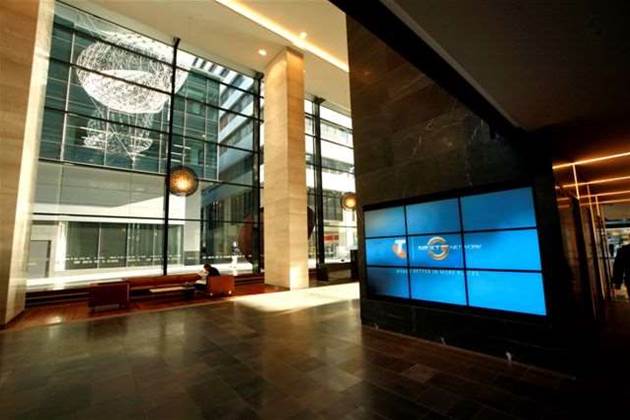
The carrier convened the first meeting at the Mobile World Congress in Barcelona, according to Telstra's executive director of network and access technologies Mike Wright.
The group aimed, in part, to show the world's makers of handsets, dongles, and other access devices that there was operator demand for those products.
"We want to provide a conduit back from [mobile network] operators to show there's interest [in the technology]," Wright said.
"Handset makers like to build devices but they usually want an indication from the ecosystem that the interest is there."
Last month at the Barcelona event, Telstra revealed plans to commercially deploy Long Term Evolution (LTE) mobile technology on its Next G network by the end of the year.
The carrier banked on re-farming its 2G 1800 MHz spectrum for use by the LTE portion of its network.
All three of Australia's major mobile carriers had recently tested network equipment capable of providing LTE services using the 1800 MHz band, but only Telstra had committed to use it locally.
However, Wright said that he would be "surprised" if Telstra was the only carrier globally to use the 1800 MHz band as part of a hybrid LTE/3G HSPA network.
"I think a lot of people are thinking and talking about it," he said.
"Sometimes there needs to be a catalyst to move people into action. Once we started having discussions, we thought, 'Why couldn't we be that catalyst?'
"We're talking with a number of vendors and we've had good reception from vendors and operators.
"Ultimately it's demand that will push a handset maker or dongle maker to tool up."
Telstra pursued a similar strategy when it launched its 3G Next G network in the 850 MHz band in 2006 to build a critical mass of operators - and ecosystem of access device makers to support them.
"When we launched Next G we had four handsets," Wright said.
"We kicked off an 850 MHz user group back then. Now there's many tens of 850 MHz [3G] networks around the world."
Wright said that he expected to see the first LTE-capable smartphones to emerge "inside 12 to 18 months".
The most common spectrum bands for LTE were 700 MHz and 2.5/2.6 GHz, although different flavours of LTE could operate in different bands.



.jpg&h=140&w=231&c=1&s=0)

.jpg&h=140&w=231&c=1&s=0)


.png&w=100&c=1&s=0)


 iTnews State of Security Breakfast Melbourne
 NiCE World APAC 2026
 Sydney Cloud & Datacenter Convention 2026
 iTnews Executive Retreat - Security Leaders Edition
 Can Testing Keep Up? Quality in the Age of Accelerating Delivery


.jpeg&h=140&w=231&c=1&s=0)