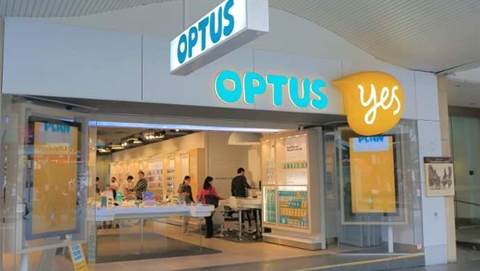
CCC weighs into NBN uptake debate


Dry cleaners didn't put washing machines out of business.

The Competitive Carriers Coalition has derided suggestions that Telstra's LTE upgrade will have any impact on the uptake of NBN fibre services.

The fear of wireless substitution was raised by corporate advisory firm Greenhill Caliburn after assessing assumptions in NBN Co's business plan.

Telstra's decision this week to upgrade parts of its network with next-generation Long Term Evolution (LTE) technologies by the end of the year further raised concerns that the high-speed wireless service would be pitched as a fixed-line equivalent service to lure customers ahead of NBN availability.

Communications Minister Stephen Conroy added to fears the that fixed and wireless networks might not be so complementary by attempting to promote the benefits of fibre over wireless.

"Sure, there are some small categories of households for which a mobile service might be preferred to a fixed connection – eg, temporary short term renter," a CCC spokesman told iTnews.

"But in what way is a single Next G connection -- 4th generation or otherwise -- somehow going to be preferred over a 24-plus Mbps pipe into a home with, say, four occupants that want to use digital services including 2 TVs, 4 computers, voice services, digital radio, video-conferencing etc?

"The two offerings (Next G and NBN) just do not compare on quality, performance and price. That is why fixed will be complemented by wireless mobile – not substituted.

"At the very fringes of the market you may well see choice of one over the other – just as a few people chose the dry cleaner over having their own washing machine - but that doesn't mean that dry cleaners will put washing machines out of business even though they both clean clothes."


Copyright © iTnews.com.au . All rights reserved.


CCC weighs into NBN uptake debate
"Advocate, many people have made the same error in interpreting the ABS raw connection numbers for wireless and fixed broadband. You cannot just add them up to get the total number of broadband ..."
By umbria


Comments: 36
AB
Feb 16, 2011 7:49 PM
Interesting analogy from the CCC. From my view point they have it the wrong way around. Dry Cleaners are a premium service in a fixed location similar to the NBN. A Washing Machine provides a lower quality clean but is more convenient, much like 4G.

The single biggest reason washing machines are more popular is convenience, the same reason Mobile connections see most of the growth.

Even though mobile will never be a substitute for all fixed line services, it is very likely to be a substitute for enough of them to blow a big hole in the cloak and dagger NBN business case.

This is the argument from Grenhill Caliburn, that they would risk alienating the ALP government that commissioned the report (and risking the potential for future work)speaks volumes about its validity.
Ace
Feb 16, 2011 11:33 PM
Re: the 'blow a big hole' comment @AB, I don't see it. Surely if a hole was going to be 'blown', it would have happened already? We have a lot of wireless right now, and be have a lot of fixed line right now. The only thing changing is the speed of what gets delivered down those connections. What is happening that is going to blow a hole?
MerariSchroeder
Feb 17, 2011 8:45 AM
Are these CCC guys serious? I assumed they were industry professionals!

"temporary short term renter"
Clearly none of them have a blackberry, iPhone or Android phone. I've got 2GB of allowance on mine *currently*, and that lets me check my email, watch the occasional you tube vid and tether to my laptop for internet browsing. I can even RDP for work! Imagine what LTE-A will do to enhance my experiences. Sub 5ms latency, 1Gbps peak downloads! Clearly the CCC mob are ignorant of both the present and future of wireless technology and have no place in making comment.

"But in what way is a single Next G connection"
"The two offerings (Next G and NBN) just do not compare on quality"
Telstra announced the emergence of LTE. Why reference the current technology - 3.5G? To me this makes the CCC yet another political puppet. Another (what I assume to be) professional body, for whatever reason misrepresenting what is the truth.

A dry cleaner analogy? How ridiculous! If anything, the NBN is like the dry cleaner - you pay more! Trust me, I know analogies - http://nbnoptions.org/Analogies.aspx
sparks_3096
Feb 17, 2011 9:13 AM
My NextG coverage is very patchy out doors and unreliable to non-existent in the home. With this capital expenditure I still see no assurance of filling in the current black spots in NextG or subsequent wireless offerings. Living less than 25 Km from the CBD of Melbourne, I am told by the "Big Boy" that this is as good as it gets.

Roll on Fibre to the home. Help us NBN Co, you are our only hope.
schneider
Feb 17, 2011 10:54 AM
Wow I haven't seen an IT site so ill informed... Simply put your assumptions are incorrect. Into the future everyone will have their OWN network connection (It's called a phone) They won't share it if two people in a house are watching steaming video they will have two LTE connections. Telstra aren't even fight against selling their physical network. have you ever asked why? If physical networks were the future why would they be dumping theirs and have spent no money on it in the last five to ten years! They see the writing on the wall and are glad the government are buying back there legacy. Fibre is a backbone technology not a last mile technology. It's that simple.
deteego
Feb 17, 2011 11:03 AM
""But in what way is a single Next G connection -- 4th generation or otherwise -- somehow going to be preferred over a 24-plus Mbps pipe into a home with, say, four occupants that want to use digital services including 2 TVs, 4 computers, voice services, digital radio, video-conferencing etc?"

*yawn*. False premise

And in what way do you think such people represent a majority? Me thinks the CCC didn't do their research well, because if Telstra's 4G LTE is a threat, it will be to a completely different market of people.

They are also ignoring the fact that around the world, wireless only homes have increased to figures of around 20-25% (UK is 20%, EU is 25%, America is ~20%) etc etc, and Australia is currently at 13%, rising at ~1-2% a year in the past couple of years.
Bazwalt
Feb 17, 2011 12:53 PM
MerariSchroeder wrote:
Are these CCC guys serious? I assumed they were industry professionals!

"temporary short term renter"
Clearly none of them have a blackberry, iPhone or Android phone. I've got 2GB of allowance on mine *currently*, and that lets me check my email, watch the occasional you tube vid and tether to my laptop for internet browsing. I can even RDP for work! Imagine what LTE-A will do to enhance my experiences. Sub 5ms latency, 1Gbps peak downloads! Clearly the CCC mob are ignorant of both the present and future of wireless technology and have no place in making comment.


That's great. You're forgetting the limiting factor that wireless is dependant on the coverage of the provider. Your provider either has exceptional coverage or you're close to the tower. My guess is that you are lucky enough to be close to the tower. A limitation not present in a fibre world :) Don't forget that microwave frequencies also play an important factor. Also a limitation not present in a fibre worlds

schneider wrote:
If physical networks were the future why would they be dumping theirs and have spent no money on it in the last five to ten years! They see the writing on the wall and are glad the government are buying back there legacy. Fibre is a backbone technology not a last mile technology. It's that simple.


Your interpretation of Telstra's move is vastly misguided. Telstra have decided to dump their copper infrastructure because they recognise that they are no longer able to upgrade it to higher speeds without spending a fortune on a technology that is already costing them an arm and a leg in maintenance alone.

Telstra now wish to pursue wireless because 1) They hold the monopoly in this market and 2) because the technology has huge growth potential, unlike copper. Fibre however, still has growth but Telstra simply cannot afford it PLUS wireless.

deteego wrote:
They are also ignoring the fact that around the world, wireless only homes have increased to figures of around 20-25% (UK is 20%, EU is 25%, America is ~20%) etc etc, and Australia is currently at 13%, rising at ~1-2% a year in the past couple of years.


Yet again pulling figures from thin air without referencing a source. If you're going to make reference to figures than please include your source. Otherwise this is simply seen as BS.

Edited by bazwalt: 17/2/2011 12:54:02 PM
deteego
Feb 17, 2011 12:57 PM
"Yet again pulling figures from thin air without referencing a source. If you're going to make reference to figures than please include your source. Otherwise this is simply seen as BS."

Check the ABS figures, you can find them out yourself. Australia is sitting on 13% wireless only, its even in the NBNCo's business case....

US is here
http://www.ctia.org/media/industry_info/index.cfm/AID/10323

And for UK I will need to find the source again

Edited by deteego: 17/2/2011 01:09:27 PM
Bazwalt
Feb 17, 2011 1:25 PM
deteego wrote:
"Yet again pulling figures from thin air without referencing a source. If you're going to make reference to figures than please include your source. Otherwise this is simply seen as BS."

Check the ABS figures, you can find them out yourself. Australia is sitting on 13% wireless only, its even in the NBNCo's business case....

US is here
http://www.ctia.org/media/industry_info/index.cfm/AID/10323

And for UK I will need to find the source again

Edited by deteego: 17/2/2011 01:09:27 PM


That's actually rather funny, because 3G has actually been available since late 2001 yet it remained stale until the iPhones emergence in 2008 and since that point 3G has picked up and continues to do so as more and more smartphones arrive on the market. Keep in mind, the first smartphone arrives in 1992.

I noticed that in the article from the CDC (http://www.marketingcharts.com/interactive/one-fifth-of-us-households-use-wireless-only-phones-11552/) that they only use the term "wireless" and they never mention fixed wireless services. I also noticed that the ABS report also shows fixed wireless services having little to no increase.

The point I'm making, is that there is no denying that mobile wireless continues to grow. But you cannot possibly argue that mobile wireless is ever going to be a viable substitute over a fixed fibre service.

Once we get some decent competition in the market I assure you - there will be a huge change. As Conroy has already said, fixed mobile services are great in conjunction with a fixed fibre service.
deteego
Feb 17, 2011 1:44 PM
"The point I'm making, is that there is no denying that mobile wireless continues to grow. But you cannot possibly argue that mobile wireless is ever going to be a viable substitute over a fixed fibre service."

No, but what wireless will do is eat into NBNCo's much needed revenue from the lower 12/1 services, and with NBNCo's high AVC/CVC charges that is a real threat

There are for example, already plans (on both wireless and wired internet) for $25-30 a month. That won't be possible on NBN, unless the ISP's will run on a loss
Bazwalt
Feb 17, 2011 2:43 PM
deteego wrote:

No, but what wireless will do is eat into NBNCo's much needed revenue from the lower 12/1 services, and with NBNCo's high AVC/CVC charges that is a real threat

There are for example, already plans (on both wireless and wired internet) for $25-30 a month. That won't be possible on NBN, unless the ISP's will run on a loss


Eating up the revenue from what target market? Certainly not the fixed-service market.

I still fail to see how a mobile market which uses wireless as the transport medium is going to steal revenue from a fixed-service market that targets a different audience.

The idea itself makes no sense.
umbria
Feb 17, 2011 3:49 PM
@Bazwalt and deteego, a $25 wireless broadband option will never deliver good-quality VoIP calls. If you buy a $25-30 ADSL connection, you still need a $21+ line rental, so you cost is at least $41 and the average speed of ADSL is 2.8 Mbps, with the median speed only 2 Mbps.

And you CAN get a 12/1 always-on fibre connection for less than $41 according to the NBN Corporate Plan. For this you will also be able to call other NBN users (i.e. everybody in Australia) using VoIP with excellent call quality, and VoIP-to-VoIP calls cost nothing. And your broadband will run at the full speed you pay for, six times faster than the 2 Mbps of the median ADSL user today.

Health card holders will presumably also get their quarterly telephone rebate or equivalent.

Finally, 99% of the time smartphones will roam to the WiFi that will be available in every building, and the low latency will permit them to use VoIP or video without jitter for free. Only when away from a building with WiFi will they ever need to use wireless broadband.
umbria
Feb 17, 2011 3:52 PM
@Bazwalt, only two types of household have wireless-only broadband - transient occupants and those out of reach of a better service. Put three students in digs and they will even pool their resources to get Foxtel, so you can bet they will get fibre. There will be no installation costs, either, since the fibre box is on the wall already. I reckon only 7% of premises will be wireless only - those not connected to fibre. NBNCo also expects about 12% of premises to have no connection at all at any point in time.
AB
Feb 17, 2011 6:25 PM
@ace
How can a hole be blown in the financial plan of a project before it starts?

The other fallacy you and just about every other proponent of the NBN perpetuate is to compare todays situation to tomorrows. Just because lots of people use fised line today doesn't mean they will tomorrow. People flock to things for lots of different reasons and a business plan must account for this.

Thats why underwriting $56 bill + with a plan that requires 80% takeup rate is poor business and a poor use of scarce taxpayers money.
Ace
Feb 17, 2011 8:03 PM
I don't know where you're buying your NBN @AB, but I would suggest you try the Aust govt instead. They're paying some $20billion less!

Were not looking at 100-years-from-now-future. Just 10 to 20 years. While you can't see how your prediction of the near-future could possibly be wrong, it seems a great deal more people (of those how have an inkling about technology) have a conflicting prediction of the near future.

If maybe you're indicating that the government should stay out of the whole picture and let market forces take care of it, then perhaps you are unaware of Australia's geography and that fact that the government is kicking in because market forces are failing to deliver modern netwwork services to the population.

Perhaps you're thinking the current infrastructure could just be patched up and pathced up and patched up? Surely this is going to be far more expensive, less reliable and at a constant shortage of capability?

I would have thought that of all possibilities, a solid, fixed fibre link would be a safest and most reliable option. I can more or less tell you exactly what bandwidth you'll get over a fibre link. Could you do the same for wireless? Obviously not - it's a fairly risky solution because it relies upon uncontrolled space - and you can never get around that fact.
AB
Feb 17, 2011 9:37 PM
Umm @Ace, no their not. You're just not counting the cost to buy Telstra's network or the accounting fiddle Conroy has pulled to try to make the incestment look smaller.

Please reread what I've said I make no mention of 100 year time frames. Although I note the NBN won't be complete for another 10 years and thei ROI is not projected by most experts until 40-50 years.

I make no assertions about either the free market or which option is best, just note that if someone is to make a large investment and choose a technology all the stakeholders should be transparently informed. In this instance the Taxpayers are the key stakeholder yet can't even get access to the Greenhill report they've paid for without stumping up $3k. Or axcess to a cost benefit analysis. Basic stuff.

@Ace, please tell me, since you're such an expert, without the benefit of hindsight what would your estimate of the ceiling of the current copper network been if you'd been asked the question in 1990?
Ace
Feb 17, 2011 11:48 PM
Actually, the Telstra deal needed to be done, NBN or not, but I see you're keen to lump it in there. Still seems to leave you $10B out. If Conroy had his way, he'd probably filter your 'incestment fiddle' comment.

You certainly appeared to be going on as if the entire future of the country was doomed, and this relatively minor investment was the end of all future investment. Obama wants to spend US$18B hooking up a few rural communities via wireless. Makes Australia's investment in a national infrastruture look rather minor in comparison doesn't it?

I understand your 'basic stuff' frustration, but the government are dealing with a highly competitive and somewhat cut-throat industry. If everything was done in the open, they would be shooting themselves in the foot. This is why they formed the NBN Co as a business, so that it could negotiate individual deals with private companies. This is not ideal for a government who as you point, out have a need for transparency. But how else do you ensure confidentiality and thereby the best deals?

It's true I am somewhat of an expert, but it's more in the area of smelling a rat. Things you comment on don't add up, or fail to consider reality. I believe if 21 years you had asked me about the ceiling of the current copper network, I would have asked you if you were an Amway salesperson.
advocate
Feb 18, 2011 9:40 AM
[quote=umbria]@Bazwalt and deteego, a $25 wireless broadband option will never deliver good-quality VoIP calls.

Never say never umbria - complete BS.

If you buy a $25-30 ADSL connection, you still need a $21+ line rental, so you cost is at least $41 and the average speed of ADSL is 2.8 Mbps, with the median speed only 2 Mbps.

You omitted to mention Naked DSL for obvious reasons, which includes the much lower ULL charge and most of them include VoIP calls.

And you CAN get a 12/1 always-on fibre connection for less than $41 according to the NBN Corporate Plan.

What NBN Corporate Plan you talking wholesale or retail here?

For this you will also be able to call other NBN users (i.e. everybody in Australia) using VoIP with excellent call quality, and VoIP-to-VoIP calls cost nothing.

VoIP to VoIP calls are free if everybody uses the same VoIP provider, the NBN Co is not a retail company that will sell VoIP plans, your point is like most of your post content complete rubbish.

Finally, 99% of the time smartphones will roam to the WiFi that will be available in every building,

It will?? where did you get this fanciful notion from? - do you spend most of your day dreaming fanciful stuff about the NBN then decide to post it in here?
advocate
Feb 18, 2011 9:53 AM
umbria wrote:
@Bazwalt, only two types of household have wireless-only broadband - transient occupants and those out of reach of a better service.

Another simplistic fantasy no fact argument from you, that is complete rubbish, many tens of thousands of permanent occupants have wireless only BB and thousands are ditching fixed line for wireless only every week.

Put three students in digs and they will even pool their resources to get Foxtel, so you can bet they will get fibre.

Hang on a sec, students are 'transient occupants' you said that would have wireless BB you are getting confused with your own arguments, and you are not the only one.

There will be no installation costs, either, since the fibre box is on the wall already.

Really? what if the owner of the premises had decided to opt-out?

I reckon only 7% of premises will be wireless only

You 'reckon' do you - so how many dice rolls did you make before that figure came up? - better tell Apple HTC, Nokia etc, to hold back on smartphone and tablet production then - what complete and utter rubbish (again).

Bazwalt
Feb 19, 2011 12:51 PM
advocate wrote:
@Bazwalt, only two types of household have wireless-only broadband - transient occupants and those out of reach of a better service.

Another simplistic fantasy no fact argument from you, that is complete rubbish, many tens of thousands of permanent occupants have wireless only BB and thousands are ditching fixed line for wireless only every week.


I'd like to see the some decent statistics that actually prove this. I somewhat doubt that people are ditching fixed services specifically for a wireless service.

There are 2 scenarios where people will get Wireless BB:

1) They aren't at home during the day and require Broadband on-the-go. So they get mobile broadband.
2) Their current or future premises does NOT support xDSL service. So they get wireless as the next best option instead of Dial-up.

At no point, in my line of work, have I ever seen people choose to actively move from fixed xDSL service to a Wireless only service. To surmise such a thing is ludicrous.

Edited by bazwalt: 19/2/2011 12:52:40 PM
Ace
Feb 19, 2011 5:52 PM
The ABS have some stats:
http://www.abs.gov.au/ausstats/abs@.nsf/mf/8153.0/

So you can see a steady increase in DSL usage, and a big increase in wireless usage. This is likely to indicate many people supplementing their home DSL with mobile wireless. Fixed wirless is not really a player.

Oops, one other little note is the volume of data downloaded indicates that DSL is by far the most preferred type of connection for downloads.

Edited by Ace: 19/2/2011 05:57:05 PM
advocate
Feb 21, 2011 10:59 AM
Some more stats for the CCC to ponder.

IDC figures show that for the third quarter 2010 the number of smartphones sold in Australia was 1.78 million.

Telstra connected 400,000 Iphones in the last six months, and 290,000 Android based smartphones.

'The Competitive Carriers Coalition has derided suggestions that Telstra's LTE upgrade will have any impact on the uptake of NBN fibre services.'

Yeah right CCC, the above figures are without LTE and are of course Telstra only, they are not the only wireless carrier.

CCC you are dreaming, every fixed line service canceled and there are thousands every week is another loss to NBN revenue.

Edited by advocate: 21/2/2011 11:04:26 AM
Ace
Feb 21, 2011 12:34 PM
I can't find these 'fixed line cancellations' @advocate. Do IDC have these numbers/stats?
Maxxi2
Feb 21, 2011 12:57 PM
Hi @advocate, I cannot locate or correlate any validated numbers documenting much less proving that there are fixed line Internet and telephone cancellations that are anywhere even remotely near the number of new smart phone purchases and connections.

Please supply these. Actual and validated market statistics show a significant growth in fixed line Internet usage, **in addition to** wireless connectivity.

Are you trying to somehow suggest that Australia, against the market developments in every comparable market globally, is going to go backwards in fixed line Internet and public/private network usage?


Edited by Maxxi2: 21/2/2011 01:00:05 PM
umbria
Feb 21, 2011 1:05 PM
@advocate, Telstra's Anthony Goonan also says the LTE rollout will not affect the NBN. He also stated that high-bandwidth applications will be throttled as needed to maintain service to all users. This is the nature of wireless.

When all but 7% of premises have fibre (granted, apart from a few nutters who refuse it), their occupants and visitors will all use their smartphones and tablets on Wi-Fi shared from fixed fibre. Why on earth would they use expensive data on a high-latency, lower speed wireless broadband service when they could even do free VoIP and video calls without jitter over the Wi-Fi in the building.

Smartphones will only need to roam back to wireless broadband when they are actually moving from one Wi-Fi enabled building environment to another.

Oh, and I know students who have Foxtel but no landline. You are quite correct that a lot of landline rentals have been cancelled, but the availability of fibre in large towns is a different ballgame, facilitating both high bandwidth, high data allowances (e.g. unmetered Foxtel for Bigpond customers) and wireless using Wi-Fi for a very reasonable price.
advocate
Feb 25, 2011 12:05 PM
Ace wrote:
I can't find these 'fixed line cancellations' @advocate. Do IDC have these numbers/stats?

I am going from the trend as shown by Australia's major fixed line supplier Telstra and their Financial reports, fixed line revenue is falling BOTH wholesale and retail and ARPU's from wireless data is dramatically increasing, don't take my word for it, have a read, their present and past financial reports are available on the Telstra website.

You don't sell 400,000 iPhones and 290,000 smartphones just in the last six months without it having zero impact on the fixed line revenue and connections.
advocate
Feb 25, 2011 12:40 PM
umbria wrote:
@advocate, Telstra's Anthony Goonan also says the LTE rollout will not affect the NBN.

But it will take revenue away from the NBN just in the same way wireless today takes revenue away from fixed line services.

He also stated that high-bandwidth applications will be throttled as needed to maintain service to all users. This is the nature of wireless.

Yes and?... so this will stop customers buying it?

When all but 7% of premises have fibre (granted, apart from a few nutters who refuse it),

... or those that don't need it, they are 'nutters' why?

their occupants and visitors will all use their smartphones and tablets on Wi-Fi shared from fixed fibre.

You can do that today.

free VoIP and video calls without jitter over the Wi-Fi in the building.

Where in any NBN business plan or in the NBN plans provided by the four ISP's selling it today are their FREE VoIP and video calls and the NBN will magically eliminate 'wireless jitter' how?

Smartphones will only need to roam back to wireless broadband when they are actually moving from one Wi-Fi enabled building environment to another.

So more government and private commercial premises than today will provide a open public access Wi-Fi system under the NBN why?

but the availability of fibre in large towns is a different ballgame, facilitating both high bandwidth, high data allowances (e.g. unmetered Foxtel for Bigpond customers) and wireless using Wi-Fi for a very reasonable price.

What forward notification from BigPond are you reading that states they will provide unmetered Foxtel for their customers, and the provision of wireless WI-Fi for a 'very reasonable price' in large towns?

Your pro-NBN fantasy world is unbelievable, especially when you keep parroting the same rubbish and totally ignore any points made to the contrary

Ace
Feb 25, 2011 1:11 PM
@advocate said: "You don't sell 400,000 iPhones and 290,000 smartphones just in the last six months without it having zero impact on the fixed line revenue and connections."

Why? The stats at the ABS show a steady increase in fixed line connections. You're not getting phone connections confused with data connections are you? The B in NBN stands for "Broadband".
advocate
Mar 1, 2011 9:57 AM
@Ace,

I said revenue and connections, and what stats from the ABS are you referring to here, link please.

Edited by advocate: 1/3/2011 09:58:26 AM
Ace
Mar 1, 2011 11:27 AM
Again @advocate? If I must I guess: http://www.abs.gov.au/ausstats/abs@.nsf/mf/8153.0/

Edited by Ace: 1/3/2011 12:41:27 PM
advocate
Mar 1, 2011 12:08 PM
@Ace,

The link doesn't work but I found it anyway.

You mean this summary?

# Digital subscriber line (DSL) continued to be the major technology for connections, accounting for 44% of the total internet connections. However, this percentage share has decreased since December 2009 when DSL represented 47% of the total connections.
# Mobile wireless (excluding mobile handset connections) was the fastest growing technology in internet access, increasing to 3.5 million in June 2010. This represents a 21.7% increase from December 2009.


I found no trend from the other stats indicating fixed line connections were increasing.

The ABS stats indicate and backed up by the trend in Telstra and SingTel Financial Reports wireless connections both voice and data are eating into fixed line connections and revenue bigtime.

Edited by advocate: 1/3/2011 12:10:38 PM
Ace
Mar 1, 2011 12:50 PM
No, well I wouldn't expect you to bother to read past the summary @advocate.

The other interesting trends besides the increase in all broadband connection types, is the massive increase in data downloads, and the trend to faster broadband. No wonder it's impossible to consider wireless as a possible NBN alternative. Even in the best conditions, it simply wouldn't be able to deliver.
advocate
Mar 1, 2011 3:03 PM
@Ace
Well I did read past the summary, and the trend is as I stated which you ignored.

I noticed your not so subtle change of argument where you now talk about 'increase in data downloads' and the trend to 'faster broadband', rather than fixed line connections increasing, well if people are ditching dial-up internet for ADSL, HFC cable and wireless it would have to be faster with higher data downloads.

It is possible to consider wireless as a NBN alternative, just in the same way wireless today is a viable alternative for fixed line BB.

It depends on how you want to use BB, the trend indicates that wireless is how the consumer increasingly wants to use it.
Ace
Mar 1, 2011 3:47 PM
Well @advocate, seeing as your summary of "It depends on how you want to use BB, the trend indicates that wireless is how the consumer increasingly wants to use it" completely ignores the reliable stats, and therefore as close to the facts as we can ascertain, I can only assume you are stating an opinion, which appears to be devoid of any proof.

For example, you say "the trend is as I stated". Where did you read this? Is it a top secret report I don't have access to?

I and other have repeatedly asked for any little nibble of information, a link, anything, that might backup your opinion, but you continue to ignore these fairly reasonable requests. I can't work out why, as you don't appear to have any compelling agenda (unlike @MS). Do you have some 'gut feeling' that you are right and the facts are wrong? I remain baffled.
umbria
Mar 1, 2011 3:58 PM
Advocate, I happily repeat that "Only when away from a building with WiFi will [mobile devices] ever need to use wireless broadband." Heck, even public transport is getting WiFi now, further reducing the data demand on scarce, expensive wireless bandwidth.

You ask what evidence I have. Well, der, it's because smartphones and tablets already do it now!

In a few years, when only 7% of premises lack fibre, you will be in range of WiFi any time you are in or near a building. Telcos ration wireless bandwidth with higher data charges, so of course devices will continue to prefer WiFi when available.

Almost every expert in the industry is now on record over the past week asserting that wireless complements fibre, so what unique expertise do you bring to this debate to claim that wireless without fibre is mysteriously better, especially when blind Freddy knows the opposite is true?
umbria
Mar 1, 2011 4:08 PM
Advocate, many people have made the same error in interpreting the ABS raw connection numbers for wireless and fixed broadband. You cannot just add them up to get the total number of broadband users, because about half of the Bigpond wireless broadband customers also have a fixed broadband account at home or work for their heavier data needs. Figures for other ISPs are not public, but you get the idea.

In the six months to June 2010, wireless accounts increased 22%, but wireless data usage decreased 2% (ABS, 20 September 2010). This makes sense, because most tablets and smartphones now roam to WiFi when available, with this data delivered over a fixed broadband service, even though they have the convenience of receiving it on their mobile device.
Comments have been disabled for this article.


Top Stories
Australian miners send drones to work
In-depth: Unmanned aerial vehicles in the resources sector.
 
The New Zealand telco problem
Opinion: Could Telstra save Kiwi telcos?
 
IT price probe to 'name and shame' gougers
Industry ducking the issue, committee claims.
 
Sign up to receive iTnews email bulletins
   FOLLOW US...

Latest VideosSee all videos »

Latest Comments
Polls
Should the Government enact new legislation to protect copyright holders in the digital age?

   |   View results
Yes
  19%
 
No
  81%
TOTAL VOTES: 511

Vote