NBN3 Wireless plan needs 4G spectrum fast-track


Dark fibre and wireless coalition issues new proposal.

A wireless National Broadband Network proposal aired late yesterday [pdf] called for the expedited release of 4G spectrum by regulators as well as access to Telstra backhaul and mobile towers to cut out further costs.
A coalition of dark fibre owners and ISP chiefs from Pipe Networks, BigAir, Vocus, AAPT and others issued the manifesto under the guise of the Alliance for Affordable Broadband.

The Alliance sought to take advantage of the uncertain future of the NBN in its current form and proposed changes it claimed could cut the network cost to as low as $3 billion.

Its plan relied on the creation of a national fibre backhaul network and a "ubiquitous" wholesale 4G network to provide broadband speeds of "up to 100 Mbps" to most Australians.

And it would be funded in a private/public partnership arrangement, according to the document.

BigAir chief executive Jason Ashton told iTnews the proposed backhaul network "could be partially funded with private money and - where it's uneconomic - the Government would chip in."

"The alternative that should be explored first up is to cut a deal with Telstra to get wholesale access to their backhaul infrastructure to both avoid the delay and also avoid the costs if they will come to the table," Ashton said.

He also disputed suggestions that the 4G proposal could delay the rollout of high-speed internet to Australians until at least 2014.

Fourth-generation wireless services using Long Term Evolution (LTE) required spectrum allocation in the 2.5 GHz and/or 700 MHz bands.

The Government in June announced that it would release a block of spectrum between 694 and 820 MHz that would be freed up by the analogue to digital television switchover at the end of 2013.

It was unclear when it would do the same for spectrum in the 2.5 GHz band.

The Alliance for Affordable Broadband essentially wanted the Australian Communications and Media Authority (ACMA) to fast-track its release of spectrum to ensure 4G services could be rolled out sooner.

"The ACMA can accelerate the clearing of the 2.5 GHz and 700 MHz bands with a focus on regional and rural areas that are in need of broadband services first," Ashton said.

"Alternatively some spectrum is already available now (Austar) and a deal could be done to access this spectrum."

Pay TV provider Austar held 98 MHz of contiguous spectrum in the 2.3 GHz band and 65 MHz in the 3.4-5GHz band [pdf].

Deployments of WiMAX - an alternate 4G technology - were being targeted commonly in the 2.3 GHz, 2.5 GHz and 3.5 GHz spectrum bands.

Austar had previously attempted to sell some of its spectrum licenses to the Optus-Elders (OPEL) consortium tasked with building a broadband network that was dumped by Labor for its NBN.

The spectrum was to be sold for $65 million in 2008.

Ashton said the alliance had not formally pitched its idea to either side of government or the four independents with whom negotiations to form a government were continuing.

The plan had not been formally costed although the alliance's manifesto said the cost could be "$3 billion or less with a large part of this driven by private investment."

Ashton proposed that the plan be costed by "industry experts that have real world experience deploying fibre-optic networks and wireless networks, not just academics."

He did not respond to questions of whether or not members of the alliance stood ready to form a consortium and fund the proposed network.

Tower trouble?

The Coalition's $6 billion broadband policy, revealed prior to last month's election, was criticised because it could rely on the rollout of more mobile towers to facilitate the peak internet speeds it promised.

Ashton didn't believe the alliance's plan would face delays from 'NIMBY-ism' - the Not In My Back Yard syndrome that had accompanied some rollouts of mobile networks in the past.

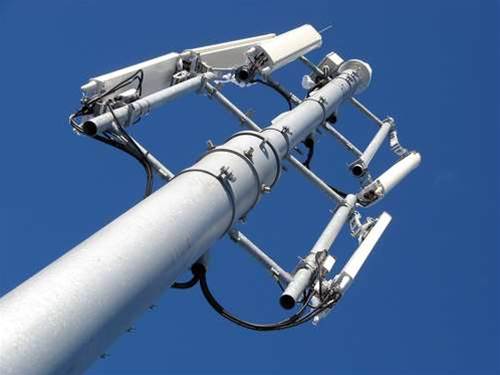
He said the new network would "co-locate on all the existing towers -- Telstra alone has 10,000+ -- using the Low Impact provisions of the Telecommunications Act."

"The total number of towers is not expected to change materially in residential areas," he said.

"We will only be building new towers in areas that are not currently serviced by mobile networks which are largely rural and regional and we will not likely have any objection to getting planning permits given the benefits that will be derived."


Copyright © iTnews.com.au . All rights reserved.


NBN3 Wireless plan needs 4G spectrum fast-track
"Bazwalt wrote: Does anyone know how much will the government charge each house for the use of NBN services? In the second peoples forum in QD, Gillard heavily implied that the FTTH ..."
By deteego


Comments: 19
Rondo
Sep 1, 2010 2:17 PM
Yep, this the language of the future. I was wondering why Labour gets so much air time to justify the NBN which is in serious conflict with the Teleco industry. This article clearly demonstrates the willingness of the Telcos to build the fibre infrastructure and sort out the Last Mile in their own way. My view is that whoever wants a fibre feed into their organisation, office or home can apply for it and get it from whoever they want, not from a monopoly Government.

Does anyone know how much will the government charge each house for the use of NBN services?

On the lighter note, my neighbour is 80 year old and asking everyone if she should have a mobile phone. She thinks it is far too complex for her. Surely my neighbour does not need a fibre feed into her house.
beantown
Sep 1, 2010 2:54 PM
What happens when your 80 year old neighbour dies and a family moves in? Do you think they might want highspeed internet access?

The NBN should be a long term investment not a short term fix.
Griff
Sep 1, 2010 3:51 PM
I hope that the independant's are able to see through this thiny veiled proposal. Quite simply put, "NBN 3.0" would be a boost for the businesses owned or operated by the authors. The Labor "NBN 2.0" plan would have anegative impact on their business.

This submission has nothing to do with technical merits, or what is best for Australians. It's to do with what's best for their own personal wealth.
franko12345
Sep 1, 2010 5:11 PM
What's stopping these wireless companies from building their towers now. They do not need any Government plan to do this. They are talking crap. They want the network to stay private but they want the Government to chip in for it.

I would rather spend tax dollars on the NBN then hand it over to private wireless companies.
doobinator
Sep 1, 2010 7:07 PM
Soooo who is going to fix things when infrastructure breaks down as it will. I don't seen anything in there about that. I agree that this is just a wish list from a bunch of companies who feel threatened by the NBN is the Labor government proposed it.
Bazwalt
Sep 2, 2010 9:33 AM
"Yep, this the language of the future. I was wondering why Labour gets so much air time to justify the NBN which is in serious conflict with the Teleco industry. This article clearly demonstrates the willingness of the Telcos to build the fibre infrastructure and sort out the Last Mile in their own way. My view is that whoever wants a fibre feed into their organisation, office or home can apply for it and get it from whoever they want, not from a monopoly Government.

Does anyone know how much will the government charge each house for the use of NBN services?

On the lighter note, my neighbour is 80 year old and asking everyone if she should have a mobile phone. She thinks it is far too complex for her. Surely my neighbour does not need a fibre feed into her house."

You're not thinking of the bigger picture - It's not about what I need or what you need, it's about what Australia needs now and into the future.

If we delay a national fibre network, than 5-10-25 or 30 years from now what we actually do need the network we will be sitting there slapping ourselves wondering why we didnt do it when we had the chance. Delaying the NBN simply means that when the time comes for us when we need it - we'd have to wait another 8-12 years before we see anything come of it. And that is simply unacceptable.

Take-up will be small at first, but once people realise what they can do with 50 or 100Mbps you will start to see things pick up.

Back when the internet browser first came out, people didn't NEED pretty pictures or flash movies but look at it now...it's bursted into the market.

This isn't so much a personal attack on you, but i'm just trying to point out that people with your kind of thinking are the reason that Australia has and will continue to stagnate and sit around in the past.

Too many individuals are only thinking of their needs and their future and not about the rest of Australia.
EMwyres
Sep 2, 2010 9:53 AM
Anyone who thinks that there won't be a need for more towers in residential areas is kidding. Anyone who supports the concept that this can all be done with wireless should put their hands up right now, and offer their own backyard for their local tower to be built in.
EMwyres
Sep 2, 2010 9:54 AM
And why has this consortium waited until RIGHT NOW to come out with this? Surely if they were serious they would have proposed it long before now...
advocate
Sep 2, 2010 9:58 AM
franko 12345 writes:

I would rather spend tax dollars on the NBN then hand it over to private wireless companies.

The plan for the NBN in the future is to hand it over to a private company, and you as a consumer buy NBN plans off a private company, the support of ISP's for the NBN is obvious, all profit no risk, everyone is looking after No 1.

Edited by advocate: 2/9/2010 10:00:11 AM
umbria
Sep 2, 2010 11:05 AM
@advocate, the Senate Commmittee recommendation is to wait until the fibre network is substantially built and then decide whether it should remain publicly owned.

Yesterday's attempt by sneaky telco execs was for taxpayers to built thousands of towers so it can continue to collect $1 per STD call and $10 per gigabyte for wireless data. With fibre, they will only get a few cents per gigabyte and all phone calls will be included in the monthly $50 broadband bill, so no line rental either. The big bandwidth demand will be from video, and the NBN's multicast protocal aggregates IPTV streams locally so the backhaul only has to deliver one stream for thousands of local users. Wireless simply won't do it.
advocate
Sep 2, 2010 11:17 AM
I was not commenting on the technical aspects of wireless vs FTTH, merely the proposition that somehow that the NBN is some kind of magic social network that doesn't have to be paid for, I repeat those ISP's that support the NBN are also looking after No 1, and No 1 is who you and I will be buying it from (assuming we need it in 2014). :)
umbria
Sep 2, 2010 12:06 PM
@advocate, the NBN is a costless magic social network? Who made any such proposition? The OECD has identified that a 1% cost saving in health, education and transport would pay for ubiquitous fibre. Sounds like an ideal government investment to me, and oh yes, you may still need broadband in 2014. (Sigh, who is this character, folks?)
advocate
Sep 2, 2010 1:09 PM
It is interesting that any projected cost savings from those industry sectors are based on a NBN build figure that has yet to be finalised.

However, the PEFO also notes that the exact timing and amount of NBN funding, including the Telstra deal, will be determined as part of the government's as of yet unreleased response to the implementation study and also the final Telstra agreement.

http://www.zdnet.com.au/costings-claim-900m-coalition-nbn-hole-339305723.htm

1% cost saving on [insert any figure here] on the fibre rollout payback is unknown as at September 2010.

My comment about 'if we need it in 2014' relates more to the current boom in wireless BB sign ups and the flat demand for fixed line BB and the extrapolation of those trends to 2014.


Edited by advocate: 2/9/2010 01:13:14 PM

Edited by advocate: 3/9/2010 08:25:50 AM
RL_1985
Sep 3, 2010 11:39 AM
"My comment about 'if we need it in 2014' relates more to the current boom in wireless BB sign ups and the flat demand for fixed line BB and the extrapolation of those trends to 2014."

advocate, how many people in this country have access to fibre? That's the reason why wireless is becoming popular, because copper has reached its use-by date. If you had a choice between wireless and copper, you would definitely choose wireless. But if all those people had access to a fibre network, they would be connecting to fibre rather than wireless.
advocate
Sep 3, 2010 12:26 PM
RL_1985, I am just telling it as the market is, the reason the likes of Telstra Optus, Vodafone and Three are signing customers up as fast as possible is because that's where the demand is coming from driven by the wireless products, IPhone, IPad, other Smartphones, Netbooks etc.

Even if FTTH was available in every residence in Australia today it would have no effect on wireless sign-ups.

Fixed line sign-ups has virtually flat lined, in other words ISP's are looking at trying to entice customers from other ISP's or in iiNet's case frantically buying ISP's for their customer base, there is not the boom market of the previous years for NEW fixed line customers anymore.

The boom is wireless data and it will continue that way, look at the latest Telstra and Optus financial reports, you can see where the $$ are increasingly coming from in the broadband sector.
EMwyres
Sep 3, 2010 3:11 PM
Too many people in this argument are falling into the train of thought that broadband is all about internet...it is not...internet can be delivered by broadband, but broadband can deliver a lot more than internet...
longsword
Sep 3, 2010 3:40 PM
As always Labor is obscuring the facts re the NBN. Nowhere in the NBN plan does it mention that the government is paying for your house to be connected to the fibre. It came out late in the Election that Labor expects you to pay the approx $3K it will cost to do this yourself, or if you're buying a new house/block of land it will be factored into that.

Mike_Sadler
Sep 7, 2010 12:28 PM
Rondo, Advocate, Longsword (there's probably others)...

I know its hard to read pro-NBN news, so I'll re-cap for you.

* Telstra has done a deal with NBNCo to migrate its entire broadband customer base, all its ISDN, PSTN, PAPL, Frame Relay, etc, services on to the NBN, in concert with the NBN rollout. They are vending all their backhaul physical (pipes, poles, pits and ducts) and ROW/access assets to NBNCo. Telstra will also decommision all the exchanges in FSA's as a part of that migration, effectively stranding the ULL other telcos use for all sorts of services. So, that's every Telstra customer (>50% market share and, my guess, 70% of all fixed line voice and data revenue) and every customer whose 'competitive' provider buys access from Telstra (ULL, SSS, ISDN/PSTN resale, etc). Now, unless there's 'secret' local loops and exchanges we don't know about, that covers pretty much everybody, certainly those with premises in a FSA.
* The FUD around subscriber pricing for users of NBN RSP products could only last until someone published actual pricing. So, the jig is up, the goose cooked. NBN Tassie RSP's have published retail prices. Internode have $29.95, 25/2 Mbps, 15GB pm. Thirty bucks folks! Interestingly, this is cheaper, better than their WiMax plans. Better value than a Naked ADSL2+ plan. And w-a-y faster. The top end SOHO plan (Perm IP, 256/256 throttling, 100/8 Mbps, 200GB) is $150.
* It hasn't 'come out' that each FTTP 'premise' will "have to pay $3K" to hook into an NBN RSP. I seem to recall it being "some bloke reckoned". Name your (preferably credible) source. Utter nonsense. More FUD. However, you could check out (Internode's) WiMax install price... >$1000, albeit offset by the BGS in the 'right' areas. If you could be bothered getting the facts.

Take-up? Done deal, close to 100% in FSA's. Price? From $30 pm. Wiring? From $0 - big $$ if you want. Exactly the same as for every other technology.
deteego
Sep 8, 2010 1:32 PM
Bazwalt wrote:

Does anyone know how much will the government charge each house for the use of NBN services?


In the second peoples forum in QD, Gillard heavily implied that the FTTH connection would only be for the people who can afford it, so realistically speaking I wouldn't see how it would be any different compared to the Coalitions plan, which would also bring FTTH through private vendors. Even if the NBN did go through, as planned, I could easily see 95%+ of the population still using ADSL2+ for fixed lines for residential purposes.

And Advocate is 100% correct in regards to wireless technology. That area of the market is booming ridiculously in the past 5 years, for most people it would be much more beneficial to have an above average speed with different technologies (fixed line, wireless and possibly satellite) then having FTTH and a shitty wireless network

America still has the vast majority of residential users using ADSL2+, so does almost every other developed country. The only exceptions are densely populated small countries (singapore,japan,korea) for obvious god damn reasons. Its true that America has much better plans in terms of usage/price (this is actually causing them issues now), but thats because America acts as a hub for the internet, the majority of content is stored on American servers and a lot of networking transfers also go through America (believe it or not, its more expensive for ISP's to deliver data thats from another country halfway across the globe then nationally, that is why iiNet/Internode have freezones for Australia local content)

People using analogies for rail/electricity, well other countries had those same technologies installed earlier then Australia and they were proven to be very cost beneficial. No country with the geography/population characteristics of Australia has done an NBN plan, and the closest country we have to compare to is Africa...(I could say America, but they have 15 times our population in an only very slightly larger land mass)
Comments have been disabled for this article.


Top Stories
Allianz taps finance IT overhauls for Cobol skills
Insurer commits to legacy investments.
 
NSW Government signs mega data centre deal
iTnews gets the skinny on the IT deal of the year.
 
Illawarra Coal plants fibre optics in Hume Highway
BHP subsidiary monitors impact of longwall mining on road.
 
Sign up to receive iTnews email bulletins
   FOLLOW US...

Latest VideosSee all videos »

Latest Comments
Polls
Should the Government enact new legislation to protect copyright holders in the digital age?

   |   View results
Yes
  18%
 
No
  82%
TOTAL VOTES: 372

Vote