iTnews caught up with Telstra's acting chief information officer Ashley Lazaro to discuss the carrier's data consolidation and cloud computing plans.
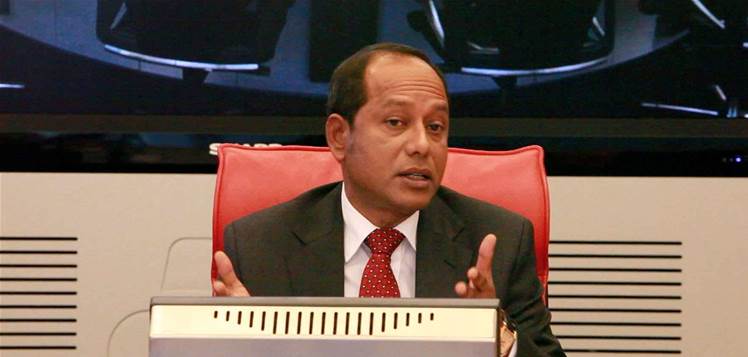
iTnews: You are thinking about consolidating your data centres down to two. Can you tell us a little bit about this project?
Ashley Lazaro: A number of things are driving that. Basically we are virtualising, so when you're virtualising you want a minimum number of platforms so you can get better utilisation for servers and storage. In addition to that, it brings down our unit costs -- less power, less footprint.
iTnews: You have data centres in St Leonards, and you're kitting out a facility in Clayton (Victoria)?
Lazaro: Yes, we have an existing facility - and Clayton [which] is where we are expanding... generally, [in] St Leonards, there is capability to expand as well, but not as much.
iTnews: Can you tell about the server and storage platforms that you're kitting out datacentres with?
Lazaro: Essentially, in terms of our mid-range [platform], we run two categories of servers. We have the SPARC Unix platform - the heavy load is based on those servers and so we are going through a virtualisation program to consolidate those servers and improve our utilisation capabilities. Then it is the x86 server which is more [what] people are commonly offering cloud computing services [on]. We are well advanced in terms of virtualising those platforms. We've done a lot in terms of what we call our non-production or non-business critical load onto that platform already.
iTnews: The x86 platform continues to grow - some analysts say soon x86 will be as powerful as SPARC - can you see some applications moving off SPARC onto x86 over time?
Lazaro: Yes. Basically, the market is moving that way, mainly because the x86 platform -- in terms of servers, comparatively -- is much lower cost. It's of a grade people normally worry about, [in terms of] reliability and up-time. [But] our experience to date has been fairly good: we think it's fairly reliable and we've built out our x86 business critical platform.
Obviously you need more capability in terms of running business-critical applications and so we can do a cross site replications - high availability for those business-critical needs. It's a separate platform, mainly because of the extra components you've got to put around it to have your business critical platforms or applications run on it.
iTnews: Tell me about network connectivity between two datacentres -- will it be active-active? Once complete, will it be designed such that any application that fails in one datacentre will immediately fail over to the other?
Lazaro: It depends on the characteristics of the application. For example, a billing application -- although it needs high availability -- is largely a crunch batch process and so there is no need to have active-active across datacentres in terms of full replication because we can restart it.
On the other hand, a Siebel application, or our customer front-of-house application, or online applications ... require very high availability, so for those applications we can provide cross-site application with full redundancy.
iTnews: What is the cooling design of the new data centre? There are concerns for operating in a green manner, to save a lot on cooling. Are there any new tricks in Clayton?
Lazaro: Yes, definitely. We've got the hot isle/cold isle scenarios. As well, we'll be exploiting free air cooling. We are also looking at tri-gen [power] capabilities, so we're building like an energy centre that will be state of the art in terms of power consumption.
iTnews: You'll be generating power with gas turbines or something of that nature and feeding back into the grid?
Lazaro: Yes.
iTnews: For cloud computing services, it's all about scale. In Australia there isn't many enterprise cloud computes as there is in Singapore - do you expect much demand? What kind of impression of scale can you give?
Lazaro: The beauty of it is you can add scale very quickly these days, whether its storage or server capacity. The advantage we have over most companies is we can bring both the IT infrastructure and the networks together as a seamless infrastructure service to a particular customer, so a customer doesn't have to invest in datacentres and boxes and servers and storage and worry about power and failures. They can focus on their value-add in terms of applications which, largely, most customers are concerned about.
If you have your own [servers], you have to buy server capacity to the peak you're going to run at, even though that peak might be once a month, once a year or whatever it is. In a cloud computing environment, they don't have to do that; they can pay-as-you-go. They will be able to say, "every six months, we'll have a peak and therefore we'll buy additional storage and the following month it kind of drops off to what we are normally running at." That's one advantage.
The other big advantage is that all our data is onshore and as you probably know, companies worry about their data offshore. It's not only [the] offshore [issue]; in some cases, [they] don't know where it is in the world and so when things go wrong or you have to recover, what capabilities do other companies have in terms of data recovery, data access, data ownership issues? If the data is located offshore, it's also possible that the data comes under the laws of that specific country. And so there are issues that companies worry about and therefore they like to keep their data onshore.
iTnews: What kind of network infrastructure will an enterprise have to consider to tap into the cloud computes that you're building?
Lazaro: A number of options and again, depending on the application and the security levels that companies want. Obviously large enterprises will want their own things like their own virtual networks hooking into our networks. Other smaller companies may want to access through internet based access mechanisms. It really depends on what we are hosting on their behalf -- the applications and the security levels they want.
iTnews: You said in your presentation today that something as complex as an SAP app could be offered using this cloud compute once its built. Are there any limits to what apps can be offered?
Lazaro: No, generally any applications that are certified to run on x86 platforms can run on our environment. From what I understand, SAP is certified to run on x86, so certainly we can host those kinds of applications.
But what we're not going to do is manage the configuration of those applications. We're not in the business of doing that, but we have an arrangement now with Accenture, for example, that will assist customers to migrate their services onto the platform and manage where possible or -- depending on what the customer wants -- to install and configure and manage [such applications].
iTnews: When will the Clayton data centre be completed? When will silver lining cloud compute services be available to customers outside of the first few that are trailing it?
Lazaro: A lot of the cloud computing services are already available today. We are building out a more strategic platform for our customers.
About Clayton, buildings take a long time to build, but we are modularising it. You can build the shell and then fit it out in increments and as I mentioned, we are currently designing two buildings. We'll do the first one, and -- depending on how things are going, where the technology is going, how the consolidation is going, [and] how the demand is for our cloud services coming from customers -- we can incrementally [add to it]. So we are planning broadly but executing as we need to do it.



.jpg&h=140&w=231&c=1&s=0)

.jpg&h=140&w=231&c=1&s=0)




 iTnews State of Security Breakfast
 iTnews State of Data & AI Breakfast
 The 2026 iAwards
.jpg&w=120&c=1&s=0) Integrate 2026
Integrate 2026
 Security Exhibition & Conference





_(1).jpg&h=140&w=231&c=1&s=0)