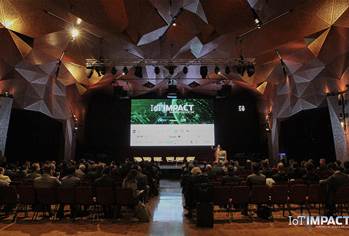
Frustration at perceived delays in implementing a national e-health agenda boiled over at the Government’s broadband future forum yesterday where a discussion on NBN possibilities could not get past basic issues like funding availability.
In a session where imaginations were supposed to run wild and free on the e-health applications made possible by the National Broadband Network, the whiteboard and butcher’s paper went unused.
Dialogue instead took for granted applications made possible by the NBN, such as human genome mapping, as issues of financial sustainability and scalability of more basic e-health proposals currently on the table took centre stage.
That prompted at least two delegates - including a representative of the CSIRO e-Health Research Centre - to pass comments that they “thought the purpose of this session was to look into the future of what we could do with the NBN.
“We seem to be having a discussion on what the issues are today. We need to challenge ourselves a little bit more,” the representative said.
The observation drew support from some delegates and defensive responses from some of the assembled panel of experts.
“The reason this group is about barriers is because there’s an element of frustration from a technology point of view,” said Adam Powick, a Deloitte partner and primary author of the national e-health strategy.
“Now that the technology is available, how do we break through? Right now we can’t share information between a hospital and GP [general practitioner] 100 metres away for God’s sake. We have to put in place the basic building blocks.”
Powick was supported by Department of Health and Ageing secretary and National E-Health Transition Authority (NEHTA) board member Jane Halton.
“We have to deal with some of the barriers in a way that respects they are real,” she said. “We have to work through [them].”
Dr Mukesh Haikerwal, a GP and professor at Flinders University’s school of medicine, stopped short of labelling the attitude of the room as “negativity”. But he recognised there was “more we can do."
He believed initiatives such as the future forum were a positive. “[By] pulling together people I think we can make this happen,” he said.
Budde’s burst
Tensions were raised from the first opportunity for audience participation as telecommunications analyst Paul Budde criticised the Government over what he saw as a lack of “high-level strategic policy” and frameworks on their part to drive the e-health agenda forward.
“Jane, let’s be honest. The problem is we don’t have good Government policy on e-health going forward,” Budde said.
“We [need to] start with a high-level strategic policy on what we’re going to do with e-health and set a framework so individual silo's point in the same direction. I think we need some leadership from the Government in setting some high-level policy.”
The suggestion immediately appeared to put the panelists on the defensive.
Dr Haikerwal pointed Budde to the national e-health strategy released by the Federal Government last week, while Halton told the packed room, “I think you’ve seen a significant level of leadership from the Government on this.
“NEHTA has been relentlessly swotting away, with some controversy I acknowledge,” she said.
“The bottom line is we do have a strategy. You can’t expect a revolution on this in 20 seconds.
“It does require a bunch of software [and funding] which we don’t have. We all acknowledge we could do more which is why we’re here.”
Powick acknowledged the “absolutely critical” importance of policy but believed the “bigger issue has been the readiness of the [health] sector to take it up.
“The current situation is diabolical,” Powick said, referring to issues of care professionals not being able to share records such as x-rays between facilities.
But he pointed to a “generational change in the medical profession” that recognised it “couldn’t got anywhere without understanding e-health is part of the way forward.
“I’m seeing a real groundswell shift right now,” Powick claimed.
“The trick is funding. If you’re not funding this you’re funding something else. You can pull levers but you never quite know how things are going to play out.”
Show me the money
Funding was brought up as a consistent barrier to the progress of e-health in Australia.
Halton was quick to point out the difficulty in achieving better outcomes for patients if the system proposed was unworkable by health care professionals or was economically unfeasible.
She said there was “no magic pudding” to fund all of the industry’s wishlist when it came to the e-health agenda.
“I don’t have a magic pudding under my desk in terms of dollars we can spend on health,” she said.
Halton said that e-health project funding would have to be “reallocated” from other areas of healthcare funding.
“I’ve got to have a dialogue with people [such as the Health Minister] about reallocating money,” she said.
“It’s a difficult conversation to have. [The project has] got to be scalable, [economically] sustainable and deliver benefits to people across the country.”
NBN priorities
Powick believed that a successful e-health strategy was underpinned by a publicly-accessible national broadband network.
“It’s about connectivity,” Powick said. “80 percent of [the technical] problem is solved by connectivity, but then there’s a bunch of other things that [also] have to be solved.”
The other 20 percent of technical challenges included making sure the NBN was secure and that e-health services across it could be delivered “at a cost point feasible enough to be used by Australian health care service [providers].”
iSOFT chief Gary Cohen said that work had to be undertaken to guarantee “certainty of access” to NBN resources if the health industry was to rely on the infrastructure to deliver next-generation patient outcomes.
He also believed that the development of security, authentication and privacy protocols were “a very important part of national broadband” strategy.
Despite the challenges, panellists still believed in the importance of e-health in Australia.
“At the end of the day electronic health care is a great leveller,” Powick said.
“We have to use it to reduce inequalities in the Australian health care sector.”
E-health future on NBN derailed by lack of basics

Passions spill over at broadband futures forum.





Add iTnews as your trusted source


Got a news tip for our journalists? Share it with us anonymously here.

Partner Content

State of Security 2026: Data Security
.jpg&h=140&w=231&c=1&s=0)
Promoted Content
Unmanaged SaaS is now a compounding liability. Can your governance keep up?
.jpg&h=140&w=231&c=1&s=0)
Partner Content
Delivering healthcare AI success with sound foundations and a systemic approach

Partner Content
How Canberra Institute of Technology and Cisco put students at the centre of campus design


.png&w=100&c=1&s=0)
 Sydney Cloud & Datacenter Convention 2026
 iTnews Executive Retreat - Security Leaders Edition
 Can Testing Keep Up? Quality in the Age of Accelerating Delivery
 iTnews Resilience, Rewired Breakfast
 RIMPA Live Convention 2026