

International payment providers have flagged payment data as a means of encouraging merchants to take up new contactless and mobile banking technology.

Despite various local trials since 2007 and the roll-out of contactless point-of-sale equipment at supermarkets, Australian banks have yet to support contactless mobile phone payments.
Industry experts have highlighted the lack of a compelling business case for the Near Field Communications (NFC) technology in Australia’s developed market.
Panellists at the Australian Consumer Finance Forum questioned who would bear the cost of developing and deploying NFC secure modules and who would stand to gain.
“Who’s going to own the secure module and who’s going to own the costs?” asked Jeff Nicholas, Singapore-based head of channel innovations at Standard Chartered.
“Will Apple try to take a piece of the pie or will Google try to take a piece of the pie for using that NFC secure module? Where’s going to leave the rest of us?”
Simon Millett, director of banking at technology company CSC, blamed the cost of new technology for merchants’ continued use of cash and traditional payment methods.
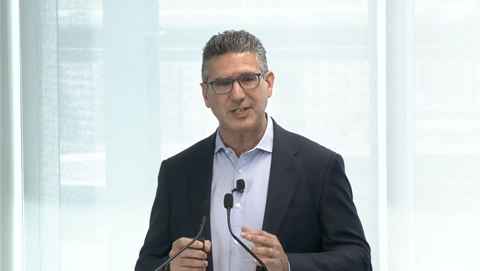
But according to PayPal Australia’s managing director Frerk-Malte Feller, the slow uptake of NFC indicated a lack of benefits to merchants.
Feller argued that today’s contactless point-of-sale payment technology hadn’t “really gone anywhere”.
“For any innovation, there must be a benefit. I’m not saying it should be more expensive; I’m more challenging the idea that is [NFC] innovative enough,” he said.
“Frankly, there isn’t enough of a difference in customer experience whether you tap or swipe or insert the card into a reader. How that technology has evolved is not really addressing merchant or customer need.”
The “secret sauce” of innovation, Feller said, was to identify and address pain points like queueing or having to collect and store paper receipts with customers’ signatures.
In June, PayPal and Hoyts launched an iPhone application that located the closest cinema to a customer and allowed them to book and pay for movie tickets, which arrived as a barcode on their mobile phones.
“It’s a fantastic experience that cuts out the pain of waiting before the point of sale in a movie theatre,” Feller said, highlighting a similar application that allowed Starbucks customers to order and pay for drinks on their devices in the US.
“I don’t necessarily think that all the point-of-sale innovation that we’ll see will necessarily happen at the point-of-sale register.”
Feller suggested that merchants could benefit from digital payment records that would allow them to engage with their customers and understand their behaviour.
“Payments are a great way to understand purchasing behaviour and that’s hardly been put together,” said
“There are problems these [bricks and mortar] merchants are facing that we can think about using payments data to really help them have a better picture of their customers and naturally, they’ll look to that.”
Social commodities
Feller and Standard Chartered’s Nicholas held up popular social buying site Groupon as an example of successful customer engagement.
The multinational bank combined Groupon-like social networking and gamification techniques in its Breeze mobile application, which allowed customers to set up “wish lists” of future purchases.
Customers could allocate portions of their savings to their future purchases and share their progress with friends. Standard Chartered could also use this information to offer personal loans or deals through merchant partners.
In China, where Western social networking sites like Facebook were unavailable, Standard Chartered also offered the English-language “Breeze Living” app, which encouraged customers to log on to discover nearby discounts and share deals with their friends.
“Discovery is an extremely valuable currency in today’s social market place,” Nicholas said. “People want to be the first to find a deal, and they do that by checking in, liking, following and sharing.
“What we need to do is enable them to do that and what that does is it bring more customer interaction back to us.
“If I know what a customer wants to do with their money, I can help them get there.”



.jpg&h=140&w=231&c=1&s=0)


.jpg&h=140&w=231&c=1&s=0)


 iTnews State of Security Breakfast
 iTnews State of Data & AI Breakfast
 Forrester's AI Forum Sydney
 The 2026 iAwards
.jpg&w=120&c=1&s=0) Integrate 2026
Integrate 2026







_(1).jpg&h=140&w=231&c=1&s=0)
