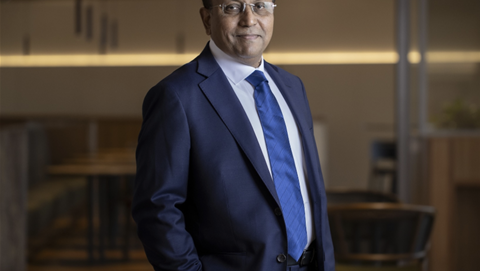
Launch issues still plague Macquarie Uni Hospital IT


In-house team inherits tech sprawl.

Macquarie University Hospital's in-house IT team is still suffering consequences of its failed partnership with private operator Dalcross Holdings.
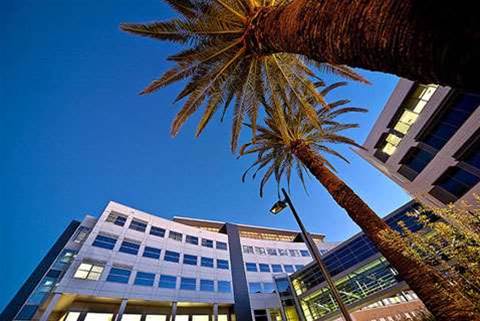
The self-styled "IT hospital" opened last June, but had no dedicated IT staff under chief information officer Geoff Harders until May that year.

Harders joined the hospital in March 2010; prior to that, the hospital relied on outsourcers, nurses and clinical managers to make IT decisions.

Enabling technology services manager Kevin Koelmeyer, hired by Harders along with three other IT managers last May, described early 2010 as a "murky era" for the hospital.

"We're revisiting a lot of those [decisions]," he said at the Chilli IQ Technology in Health Administration Conference today.

"We've been writing policy after policy and it's been a never-ending battle. The hospital is so IT-centric, and the clinical side doesn't seem to be in tune with [change control]."

Harders left Macquarie University Hospital this April. It has been without a chief information officer since.

The four IT managers currently report to chief operating officer Evan Rawston and manage 12 service desk and system administration staff from outsourcer Oriel Technologies.

Decisions are made "as a collective group", Koelmeyer said.

'Bad and ugly'

Koelmeyer said the team faced "bad and ugly" challenges in administering the hospital's 200 distinct networks, 76 applications and more than 300 thick clients established since the hospital began construction in 2009.

IT staff managed 160 virtual servers deployed on disparate platforms, including Windows Server 2003, Windows Server 2008 and Centos.

Core applications including Integra, iSoft's webPAS, MetaVision, and HealthView required a total of four database platforms, including two versions of Oracle and two of Microsoft SQL.

Applications were also based on old or poor architecture, with Koelmeyer noting any updates to MetaVision clinical software required reinstallation.

Though desktops were initially equipped with the 64-bit version of Windows 7, few clinical applications supported the newer operating system, forcing IT staff to re-configure systems to run on the 32-bit version of Windows 7 instead.

Although the hospital had some 600 kilometres of Cat 7 networking cable, at 1 Gbps bandwidth to the desktop, end points were only equipped for Cat 5 and Cat 6.

"Unfortunately, we inherited a lot of this stuff," Koelmeyer said. "By the time IT came on board, all the applications were actually in build."

He blamed the sprawl of platforms and applications on a combination of confusion relating to the Dalcross partnership and mismanagement of outsourcers.

"Even [infrastructure vendor] HP had issues with the initial [Dalcross] guys," he said.

Since then, the hospital had become more wary of over-reliance on outsourcers and advice from vendors. However, he allayed blame away from the hospital's current primary outsourcer, Oriel.

"It's not really [Oriel's] fault; there's been a lot of water under the bridge," Koelmeyer said. "We never could have built the hospital in such a short time if we did not have IT outsourced."

High-tech healthcare

Despite its administrative issues, the hospital claims to be one of the most technologically advanced health institutions in Australia.

Koelmeyer said Macquarie University Hospital spent of $3 million a month on IT operations, and an additional $1.5 million in the past year on "nice to have" projects.

Its two on-site data centres contained HP blade servers that were 99 percent virtualised, using HP iSCSI and fibre-channel storage area network technology.

A facility-wide wi-fi network with more than 160 access points provided additional connectivity for VoIP telephony, drug dosage and AeroScout asset tracking systems.

All operating theatres were equipped with Polycom high-definition video conferencing equipment.

Within two months, personal video conferencing would also be enabled on Siemens HiMed patient entertainment units that also served internet access, television, and clinical records.

Staff, patients and their visitors used smartcards to pay for meals and services and staff kept track of their work hours using biometric human resources technology by Kronos.

The team currently faced ten projects, including systems integration, an e-learning implementation and improvements in remote access for clinicians via Citrix virtual desktop technology.


Copyright © iTnews.com.au . All rights reserved.


Launch issues still plague Macquarie Uni Hospital IT


Top Stories
Photos: AusCERT 2013 day two
The second day of the Queensland security conference.
 
The illusion of cognitive computing
Opinion: IBM's Watson is a marketing success.
 
CenITex to move from IT provider to broker
Documents reveal new strategy.
 
 
Sign up to receive iTnews email bulletins
   FOLLOW US...

Latest VideosSee all videos »

Bankwest builds continuous delivery capability
To automatically deploy test/dev sandboxes by mid-year.
Veterans' Affairs sets sights on modernisation
Data safe with Human Services, CIO says.
Citi Australia drops platform customisations
Technology chief shifts focus from building to leveraging systems.
VicRoads restructures IT team
Department moves to align with industry benchmarks.
Zurich Australia extends IT team offshore
Malaysian staff served from Australian data centres.
Leigh Berrell - Utilities CIO of the Year
Yarra Valley Water CIO Leigh Berrell accepts his Benchmark Award for Utilities CIO of the Year.
Wayne McMahon - Retail CIO of the Year
Domino's Pizza CIO Wayne McMahon accepts his Benchmark Award for Retail CIO of the Year.
Inside Perpetual's ongoing IT transformation
CIO Jenny Levy discusses how outsourcing will help the firm "simplify, refocus and grow".
Managing Complexity - Defence's Daniel McCabe
Daniel McCabe, Assistant Secretary of Australia's Department of Defence, provides the audience at the iTnews Data Centre Strategy Summit with a deep dive into the organisation's data centre consolidation program.
How Facebook designed the data centre from scratch - Marco Magarelli
The full keynote by Facebook data centre architect Marco Magarelli at the Australian Data Centre Strategy Summit. Magarelli details the design considerations behind the social network's Prineville, Oregon; North Carolina and Luleå, Sweden data centres.
Modernising Legacy Data Centres - Telstra's Jon Curry
Telstra general manager of managed data centres Jon Curry guides the audience at the iTnews Australian Data Centre Summit through the build of the telco's Clayton, Victoria data centre.
NSW Government launches NABERS data centre rating tools
Matthew Clark from the NSW Department of Environment guides facilties managers through the details of the new NABERS data centre energy rating tool at the Australian Data Centre Strategy Summit.
NABERS launch panel: Australian Data Centre Strategy Summit
Matthew Clark (NSW Dept of Environment), Greg Boorer (Canberra Data Centres), Glenn Allan (National Australia Bank), Mike Andrea (Strategic Directions) and Bob Sharon (Green Global Consulting) discuss the impact of the NABERS data centre rating.
Judges notes: Fortescue Metals [The Benchmark Awards]
iTnews' panel of judges discuss Fortescue Metals 'New World of Work" project, one of three shortlisted finalists for the Industrials category of the CIO Benchmark Awards.
Judges notes: Retail [The Benchmark Awards]
iTnews' panel of judges discuss the shortlisted finalists for the Retail category of the CIO Benchmark Awards.
Judges notes: Pacific Aluminium [The Benchmark Awards]
iTnews' panel of judges discuss Pacific Aluminium's lightning fast service desk refresh, one of three shortlisted finalists for the Industrials category of the CIO Benchmark Awards.
Judges notes: Domino's Pizza [The Benchmark Awards]
iTnews' panel of judges discuss Domino's Pizza's shift to hosted services, one of three shortlisted finalists for the Retail category of the CIO Benchmark Awards.
Judges notes: McDonald's Australia [The Benchmark Awards]
iTnews' panel of judges discuss McDonald's Australia's new self-service portal for employees, one of three shortlisted finalists for the Retail category of the CIO Benchmark Awards.
Judges notes: ING Direct [The Benchmark Awards]
iTnews' panel of judges discuss ING Direct's 'Bank in a Box', one of three shortlisted finalists for the banking and finance category of the CIO Benchmark Awards.
Judges notes: Yarra Valley Water [The Benchmark Awards]
iTnews' panel of judges discuss Yarra Valley Water's insourcing project, one of three shortlisted finalists for the Utilities category of the CIO Benchmark Awards.
Latest Comments
Polls
Do you prefer the Coalition's NBN policy?

   |   View results
Yes
  19%
 
No
  81%
TOTAL VOTES: 1715

Vote