Inside an NBN fibre access node


A tour of Australia's exchange of the future.

View larger image
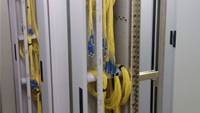
Welcome inside the fibre-access node (FAN). Equipment racks waiting to be fully populated. You ...
View larger image
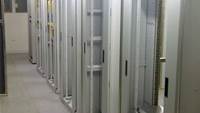
Here we see a rack for optical line terminals yet to be fitted. That there are no OLTs fitted ...
View larger image
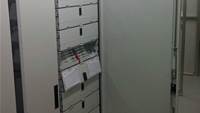
This FAN is in Kiama, NSW a first-release site. Typically, a FAN services some 3000 houses. But ...

See all pictures here »

Today iTnews reveals the innards of Australia’s future communications exchange – with the industry’s first look inside an NBN Co fibre access node.
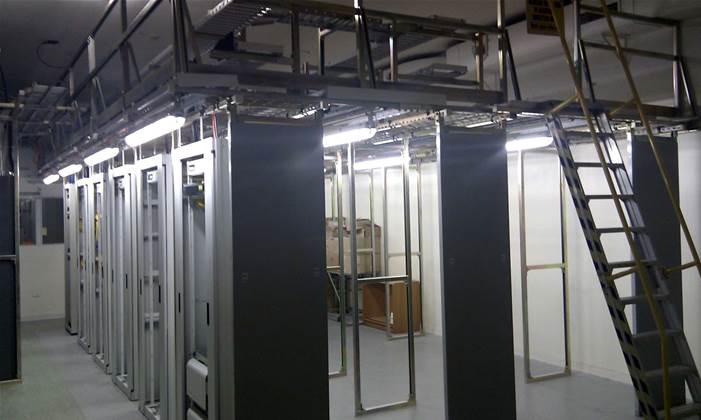
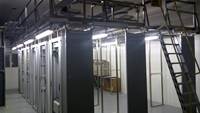
According to NBN Co, a fibre access node or 'FAN' in industry parlance is an exchange-like facility that houses the active equipment (optical line terminals) servicing a fibre-serving area.

In the case shown in the we are looking at a fibre serving area at NBN Co’s first-release site in Kiama, NSW, which according to our tour of the area in February serves 16 fibre distribution areas of about 288 houses each.

Can't see the photo gallery? Try here.

A typical fibre access node would serve about 3000 homes – but last July NBN Co said it would extend the Kiama/Minnamurra Downs area by an undisclosed number of sites – which might help explain the sheer volume of fibre and equipment inside this facility.

First-release sites were fitted out by global electronic components vendor TE Connectivity (formerly Tyco Electronics) with ADC. TE bought ADE in December and was awarded a $100 million contract to supply second-release sites and potentially a $300 million extension to fit out the network.

The photographs iTnews has published add to a collection of images sourced from readers, sent anonymously to add to our coverage of the network build.

We have worked to remove all identifying serial numbers, names, marks and codes that could constitute a threat to NBN security.


Copyright © iTnews.com.au . All rights reserved.


"I was looking at the photo gallery and was disappointed. Everything in sight was familiar to me, as I installed identical rack layouts, ironwork trays and cabling 12 years ago in Telstra exchanges ..."
By FLashy


Comments: 7
Rossyduck
Apr 21, 2011 8:19 AM
Big iron copper type exchange. Pity the designers have treated fiber as if were copper. We will now have these single points of failure just waiting for the trunk fibers to be cut, airconditioning to fail, building to burn down etc. Far beter they had designed to the strengths of a fibre netwrok - a paradigm shift if you have never designed FttH but none-the-less offering some real advantages over this expensive attempt.
ARF102
Apr 21, 2011 9:44 AM
Well,what a surprise!! Looks no different to the existing fibre optic racks in Telstra exchanges now!

Further, in response to the above statement, how would you design it then, Rossyduck?

itsmine
Apr 21, 2011 9:51 AM
Looks like the inside of the existing Telstra exchange at Kiama
BrettWinterford
Apr 21, 2011 10:10 AM
@Rossyduck - indeed it looks like a retro-fitted Telstra exchange, which I imagine will be the case with many areas if the Telstra/NBN Co deal goes ahead? Can you tell us more about why this would lead to more single points of failure? cheers.
ARF102
Apr 21, 2011 10:11 AM
I fully agree, itsmine, but I would add the "hijacked" Telstra exchange.
As a Telstra shareholder, I certainly hope Telstra extracts every last "penny" (and more) from the NBN and this government for the use of it's existing facilities in return for trashing it's network.
I ask how the once national carrier could have planned for the future when governments of both sides and the ACCC keep changing their minds.
A national disgrace!!
umbria
Apr 21, 2011 11:05 AM
ARF102, the commercial arrangement whereby Telstra leases NBNCo access to its pits, ducts and exchanges (where they are suitable) is but one of its new revenue streams. It is also liberated of the costly Universal Service Obligation, and of all future maintenance of copper lines wherever fibre is laid, much of which it should have replaced years ago.

Telstra (and Optus, Soul, etc) will inevitably lease longhaul fibre capacity to NBNCo and other clients.

Its Foxtel subsidiary will gain access to 10+ million customer premises instead of fewer than two million that have adequate broadband for IPTV today.

Plus nothing stops Telstra deploying new wireless anywhere it wants to.

In November 2010 I tipped the Telstra share price to quickly double when shareholders approve this game-changing deal to propel their company into the 21st century. Since the legislation passed a few weeks back it has already risen from $2.66 to $2.84, but the real rocket will happen after shareholder approval.

In return, NBNCo saves $8 billion on construction, plus a few years of construction time, and gains Telstra as a partner instead of an adversary. So it is win-win-win, including very much for Telstra and its shareholders.
FLashy
Apr 22, 2011 12:52 AM
I was looking at the photo gallery and was disappointed.
Everything in sight was familiar to me, as I installed identical rack layouts, ironwork trays and cabling 12 years ago in Telstra exchanges for Bigpond and other products.
I could see the fibre tails already to be fanned out into fibre trays with standard connectors.
Nothing of interest really for me.
The most important thing would be to ensure a logical provisioning of fibre trays in racks, start at the bottom and work up.
This makes it easier to add further optic fibre cables later, including trays.
If the fibres are put on spools, it is a pain later to re-run the fibres when all ducts are nearly full.
Comments have been disabled for this article.


Top Stories
Australian miners send drones to work
In-depth: Unmanned aerial vehicles in the resources sector.
 
The New Zealand telco problem
Opinion: Could Telstra save Kiwi telcos?
 
IT price probe to 'name and shame' gougers
Industry ducking the issue, committee claims.
 
Inside an NBN Co Fibre Access Node.
Sign up to receive iTnews email bulletins
   FOLLOW US...

Latest VideosSee all videos »

Latest Comments
Polls
Should the Government enact new legislation to protect copyright holders in the digital age?

   |   View results
Yes
  19%
 
No
  81%
TOTAL VOTES: 510

Vote