Researchers have successfully transferred spin information from an electron to a more robust atomic nucleus, accessing the information 2,000 times in 100 seconds before it decayed.
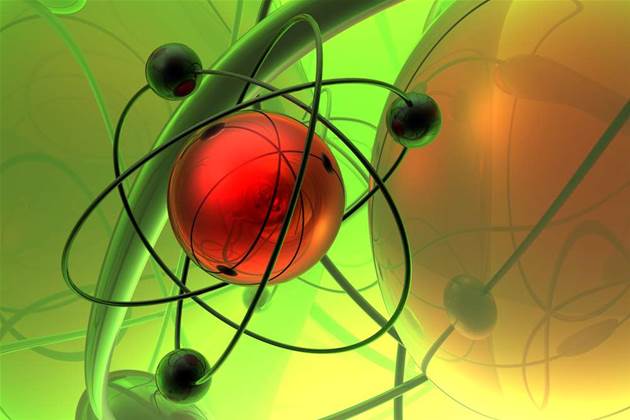
It was believed to be the first demonstration of electrically readable nuclear spin memory, and could pave the way for spin-based electronic devices - or 'spintronics' - of the future.
While conventional electronics used the flow of electrons to transfer information, spintronics stored information in an electron's spin and magnetic moment.
Spintronic devices thus generated less heat from electron transport and were expected to require less energy to run.
In a paper published in the journal Science today, the researchers explained that current methods of detecting nuclear spins relied on optical or microwave technology.
"However, coupling these systems to classical electronic devices requires transduction between optical and electrical signals," they wrote.
Research leader Dane McCamey said their demonstration of electrically reading nuclear spin hinged on unique equipment at the National High Magnetic Field Laboratory in Florida.
The team stored information in phosphorus nuclei in phosphorus-doped silicon, following up on US researcher Ian Applebaum's work on silicon and spintronics.
They used a custom-built 240 GHz pulsed electron paramagnetic resonance spectrometer to control the spin of nuclei in a highly magnetised, low-temperature environment (8.59 Tesla, -269.5 degrees Celsius).
"We're trying to mimic future [spin-based] electronic devices that haven't been made," said McCamey, a quantum physicist at the University of Sydney.
"Finding a system compatible with silicon, the main material used in the semiconductor industry is particularly useful as it has the potential to be incorporated into existing technology.
"We could then integrate spin based information storage and processing devices onto a single chip."
McCamey said future ferromagnetic contacts could generate a suitable magnetic field for the method. The team also was investigating lowering the amount of magnetism required.
In 1959, Bell Labs researchers George Feher and Ed A. Gere achieved nuclear spin lifetimes of 30 hours using phosphorus-doped silicon in a magnetic field of 0.3 Tesla.
While McCamey noted that nuclear spin was unlikely to be a long-term memory solution, he said it could act as random-access memory (RAM) in future spintronic computers.
Those future computers - "more than a decade, less than a century" away - would likely involve a hybrid of spin-based and classical electronics, with spintronic components performing a bulk of processing, and classical electronics acting as long-term storage, he said.



.jpg&h=140&w=231&c=1&s=0)
.jpg&h=140&w=231&c=1&s=0)

.jpg&h=140&w=231&c=1&s=0)


.png&w=120&c=1&s=0) HPE Networking Day Sydney
HPE Networking Day Sydney
 iTnews Resilience, Rewired Breakfast
 RIMPA Live Convention 2026
 iTnews Benchmark Security Awards 2026
 iTnews State of Security Breakfast Sydney