Canberra's IT skills crisis blamed on Gershon cuts


High price to re-hire culled workers.

Analysts have blamed the culling of IT contractors during the Gershon Review and an exodus of talent from Canberra during the global financial crisis for an alarming shortage of technology skills in Australia's public service.
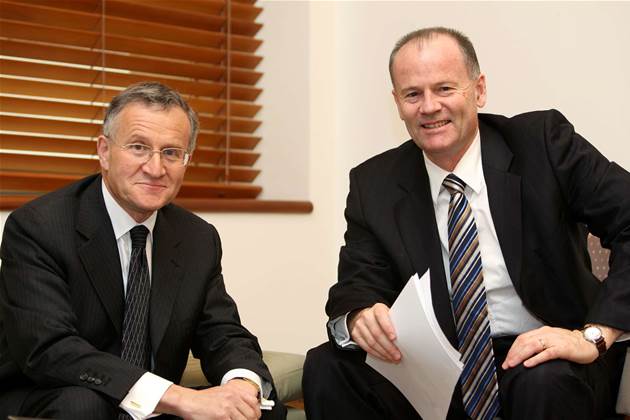
The Federal Government's 2010 State of the [Public] Service Report released late last week revealed recruiting ICT staff continued to be the Federal Government's biggest skills headache.

The report found ICT skills shortages hampered the capability of almost 70 percent of government agencies in doing their job. 

"It is highly likely ICT will continue to be a problem for at least another three years," said Ovum Research Director, Geoff Noonan.

Peter Acheson, chief executive of recruiter Peoplebank, believed the problem was self-inflicted.

He said large IT projects in 2006-07 attracted talent to Canberra - with the capital territory's contractor rates the highest in the country.

That reversed during the GFC, as the first tranche of IT workers left Canberra, he said.

"All of a sudden these projects were either being scaled back or [projects] had less funding. This had an immediate effect on contractors originally from interstate."

He asserted that the Federal Government's Gershon review made the position toxic for IT contractors.

"We should be under no illusion that Gershon was a pretty blunt instrument in terms of delivering further cost savings and further reductions in headcount to Federal Government," Acheson said.

Time for a change in policy?

Noonan queried whether it was now time to move away from Gershon's recommendation to cut contractor numbers by 50 percent.

In the light of consistent evidence, it might be better to focus on attracting skills from all sources to secure the delivery of government services, he said.

Since the beginning of 2009, Government agencies have attempted to convert a reasonably large number of contractors to full-time employees to meet Gershon targets.

But at the same time, private sector giants such as the NAB and the Commonwealth Bank have launched major IT redevelopment projects, which accelerated the exit of IT people out of Canberra, Noonan said.

Noonan predicted the Government would find the going tough in its efforts to tempt highly paid contractors to become permanent staff. The State of the Service Report found that contractors accounted for 19 percent of the Government's ICT workforce in 2009-10.

"This means government ICT budgets continue to be tightly linked to movements in contractor pay rates," he said.

Acheson said the more "street-smart" CIOs in Canberra recognised there was a Federal election coming earlier this year and decided to top up their staff.

"That's one reason we saw a substantial spike in July that we have not seen sustained in August, September or October." Acheson said.

He now estimates that only a "thin layer of IT talent" is available in Canberra at present.

"If we see a couple of large Federal Government projects scale up, then demand will get very strong," he said. "Supply is relatively short. In that environment we will see larger rate increases."

Both Noonan and Acheson considered decentralising IT operations beyond Canberra was an option, noting that agencies such as Centrelink have moved part of their IT operations out of Canberra to cities like Adelaide.

"They do some of their IT development and IT systems integration in Adelaide and that works pretty well for them," Acheson said.


Copyright © iTnews.com.au . All rights reserved.


Canberra's IT skills crisis blamed on Gershon cuts
"As a manager of an IT company in Canberra I met Mr Gershon. He did not demonstrate a genuine interest in Canberra or Australia. As his review rolled out, it took literally years for it to be ..."
By vikingolly


Comments: 10
Corsair
Dec 1, 2010 1:27 PM
I've never agreed with the whole "make everyone staff" strategy.

Considering contractors would need to submit an application for the job they are currently doing in order to become staff (since ALL jobs have to advertised) you have some serious time delay, as well as the risk of not getting the job, adding to it all.

I will have do this very thing soon myself (working for NSW Government agency, and with an election coming, they want to make everyone staff by February) as will others in my office.

I will be applying, of course, but I will also be applying for positions elsewhere.

Personally, I cannot believe people haven't learned that you can't just turf out IT staff in order to save money, since you always need to re-hire them again.
kristofferjon
Dec 1, 2010 2:16 PM
Amazing that they couldn't see this from the start!

They deserve everything they have reaped.
Mabelode
Dec 1, 2010 3:33 PM
And the shortfall could be taken up by cheaper overseas providers meaning that the skills will be lost forever.
RaTTyRaTT
Dec 1, 2010 3:38 PM
@kristofferjon: Hear Hear.

I am looking at exiting Canberra for Brivegas or Melbourne myself, as the extremely 'hostile' Canberra market is ridiculous. I say the word Hostile, as simply the governance currently in place whether it be contractors, procurement or the rendering of services makes the ACT a ridiculous place to work and live now. The government is considering decentralization (ie: moving departments out of Canberra,) hoping to follow the talent to where they reside currently. What a Crock! They're prepared to kill the economy of the ACT, all on a self-created issue of following the Gershon review, and banging their drum for cost-savings (yeah right) centralization of procurement (hahahahaa) and the ability to reduce head-counts (supposed streamlining?)

What people aren't seeing is that the PS is now 'top-heavy' as IT staff must be paid at high levels (PS grade EL1 & 2 minimums usually) due to the APS mandated salary thresholds, combined with many specialist skills needing to be funneled back in at ridiculous prices. Cutting of competition by raising the bar through PANELS, that must be applied to by Tender - and in turn, centralizing these Panels thereby restricting trade outside of them. My sources in Government pretty much say that they are working 'against' small business, unless we go nearly broke gambling on tender responses, and in favour of the multi-nationals.

The Gillard Government is a completely broken place to work, and frankly if their unable to govern due to ICT shortages - HAHAHAHAA, I will laugh at them and throw the unbiquitous rotten tomato. It's because of her government, and the previous one that we are in this mess. Since dusting off a review that the Howard Government commissioned (as a sop to the Opposition at the time) and saying "we will enact this in it's entirety" being one of the stupidest things ever. Honestly, I was totally shocked that people voted for them (oh yeah, they voted Green - which was a vote for Labor hahaa... greens were liars - we knew that!)

This town sucks now, will be interesting the next 6 months or so.

Note: I have seen work go simply because the response "But AGIMO says we can't anymore, sorry." And that's that! Luv ya Gershon - please find a cliff and use it ta!
DavidJordan
Dec 1, 2010 4:12 PM
The Federal Government is paying too much for overseas rubbish that costs a fortune to modify and maintain. They could have spent a 10th of the cost using High Standard Australian firms with better solutions that would require less staff to maintain.
DJ
Dec 1, 2010 4:19 PM
When you combine the short-sightedness of Gershon's amazing solution to cut IT expertise headcount, followed closely by the Tax Office's ridiculous PSI legislation which punishes contractors financially for trying to do their jobs, it's no wonder you are now in a mess.

Looks like you will now need to re-write the rules so Government Departments can deliver on projects.

Looks like it's too late, all the talent you "didn't need" has now gone elsewhere.

Maybe you should have consulted with the industry and thought a little before managing your own outcomes.

Now you have an important player in your project deliverables (IT) not interested in helping you or the Tax Office.

Maybe you can outsource to India. Good luck with that.

No sympathy here.
RaTTyRaTT
Dec 1, 2010 4:21 PM
@DavidJordan: Completely agree. Much of what the government purchases, and also contracts can be sourced locally from small and mid sized enterprises that are owned by local Australian people, who are offering good pricing and a return of the funding back into Australia too (via taxes, etc..) but they refuse to take onboard this practice, preferring Multi-nationals and large corporations. The difference between the two is chalk & cheese to be honest, with big corporates always able to throw $$$$ at tenders to get them written, and smaller businesses forced out as they can't commit to $$$$ for a potential 'zero' return. Sad state of affairs.
wallabyted
Dec 1, 2010 7:14 PM
I don't think there would be a problem keeping IT people permanent if they revised the archaic view in Government that Technical staff aren't as important or worth as much as Managerial staff. This is one of the reasons contracting and outsourcing boomed in the first place. Its also one of the reasons so much knowledge drains out of Government departments.
If AGIMO really want to keep control of the IT purse strings across Federal departments, maybe they should redefine their role and manage the IT Resource pool (Permanents, Casuals, IT Outsourcers and Contractors) for the whole of Federal Government. This way they would be able to engage and redirect IT resources to areas of highest priority and perhaps keep control of numbers more sensibly.
deonast
Dec 1, 2010 10:33 PM
I saw a different scenario when I was working for a small federal agency, to meet cost savings they actively reduced not just contractors but permanent staff pushing for staff to take Voluntary Redundancies or just encouraging a climate where people wanted to leave with their positions then not being replaced.

It takes all kinds but usually ends up at the same place.
vikingolly
Dec 2, 2010 6:58 AM
As a manager of an IT company in Canberra I met Mr Gershon. He did not demonstrate a genuine interest in Canberra or Australia. As his review rolled out, it took literally years for it to be finalised or activated, if at all. It has clearly COST the Commonwealth more than it saved. Even today, my Sydney based business is unlikely to re-enter the ACT Market until natural market forces are allowed to compete for IT services openly and fairly. This includes contractors. Lastly, if you count the true FULL costs of an employee (Particularly in the APS), you will find that contractors are actually NOT more expensive. Wake up Canberra and smell the roses.
Comments have been disabled for this article.
 
 
Top Stories
ATO commits to complexity
Greater demand, fewer apps.
 
Photos: AusCERT 2013 day two
The second day of the Queensland security conference.
 
The illusion of cognitive computing
Opinion: IBM's Watson is a marketing success.
 
 
Sign up to receive iTnews email bulletins
   FOLLOW US...

Latest VideosSee all videos »

Bankwest builds continuous delivery capability
To automatically deploy test/dev sandboxes by mid-year.
Veterans' Affairs sets sights on modernisation
Data safe with Human Services, CIO says.
Citi Australia drops platform customisations
Technology chief shifts focus from building to leveraging systems.
VicRoads restructures IT team
Department moves to align with industry benchmarks.
Zurich Australia extends IT team offshore
Malaysian staff served from Australian data centres.
Leigh Berrell - Utilities CIO of the Year
Yarra Valley Water CIO Leigh Berrell accepts his Benchmark Award for Utilities CIO of the Year.
Wayne McMahon - Retail CIO of the Year
Domino's Pizza CIO Wayne McMahon accepts his Benchmark Award for Retail CIO of the Year.
Inside Perpetual's ongoing IT transformation
CIO Jenny Levy discusses how outsourcing will help the firm "simplify, refocus and grow".
Managing Complexity - Defence's Daniel McCabe
Daniel McCabe, Assistant Secretary of Australia's Department of Defence, provides the audience at the iTnews Data Centre Strategy Summit with a deep dive into the organisation's data centre consolidation program.
How Facebook designed the data centre from scratch - Marco Magarelli
The full keynote by Facebook data centre architect Marco Magarelli at the Australian Data Centre Strategy Summit. Magarelli details the design considerations behind the social network's Prineville, Oregon; North Carolina and Luleå, Sweden data centres.
Modernising Legacy Data Centres - Telstra's Jon Curry
Telstra general manager of managed data centres Jon Curry guides the audience at the iTnews Australian Data Centre Summit through the build of the telco's Clayton, Victoria data centre.
NSW Government launches NABERS data centre rating tools
Matthew Clark from the NSW Department of Environment guides facilties managers through the details of the new NABERS data centre energy rating tool at the Australian Data Centre Strategy Summit.
NABERS launch panel: Australian Data Centre Strategy Summit
Matthew Clark (NSW Dept of Environment), Greg Boorer (Canberra Data Centres), Glenn Allan (National Australia Bank), Mike Andrea (Strategic Directions) and Bob Sharon (Green Global Consulting) discuss the impact of the NABERS data centre rating.
Judges notes: Fortescue Metals [The Benchmark Awards]
iTnews' panel of judges discuss Fortescue Metals 'New World of Work" project, one of three shortlisted finalists for the Industrials category of the CIO Benchmark Awards.
Judges notes: Retail [The Benchmark Awards]
iTnews' panel of judges discuss the shortlisted finalists for the Retail category of the CIO Benchmark Awards.
Judges notes: Pacific Aluminium [The Benchmark Awards]
iTnews' panel of judges discuss Pacific Aluminium's lightning fast service desk refresh, one of three shortlisted finalists for the Industrials category of the CIO Benchmark Awards.
Judges notes: Domino's Pizza [The Benchmark Awards]
iTnews' panel of judges discuss Domino's Pizza's shift to hosted services, one of three shortlisted finalists for the Retail category of the CIO Benchmark Awards.
Judges notes: McDonald's Australia [The Benchmark Awards]
iTnews' panel of judges discuss McDonald's Australia's new self-service portal for employees, one of three shortlisted finalists for the Retail category of the CIO Benchmark Awards.
Judges notes: ING Direct [The Benchmark Awards]
iTnews' panel of judges discuss ING Direct's 'Bank in a Box', one of three shortlisted finalists for the banking and finance category of the CIO Benchmark Awards.
Judges notes: Yarra Valley Water [The Benchmark Awards]
iTnews' panel of judges discuss Yarra Valley Water's insourcing project, one of three shortlisted finalists for the Utilities category of the CIO Benchmark Awards.
Latest Comments
Polls
Do you prefer the Coalition's NBN policy?

   |   View results
Yes
  19%
 
No
  81%
TOTAL VOTES: 1738

Vote