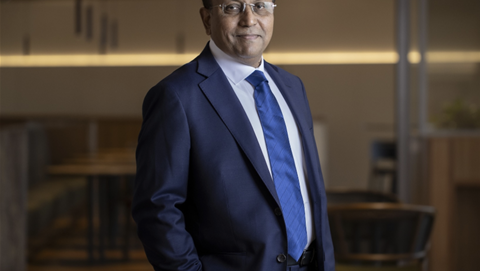
Newly appointed chief information officer Paul Madden will step into Australia's Department of Health and Ageing (DOHA) at a crucial juncture, as the agency looks to reel in IT spending and consider its outsourcing future. Madden, appointed as DOHA's first CIO in five years, will within months have to decide whether the department continues with an outsourcing partnership with IBM GSA which has not been market tested in over a decade. As reported on iTnews last month, departmental representatives have sheltered behind "commercial-in-confidence" to avoid informing Parliament of whether it intends to offer IT services on the open market when its current agreement with IBM ends in June 2011. Today, iTnews can reveal that DOHA spent over $1.5 million this year alone on external consultants for advice on whether to put its IT services requirements up for tender, but has not yet used that advice to make any decisions. Legacy
Prior to Madden's appointment, IT strategy had been left to the chief operating officer of DOHA's business group, Margaret Lyons, with the assistance of several third party consultants and advisory groups including IT Newcom, Gartner and Preemptive Consulting.
The department first signed on IBM Global Services as its outsourced technology provider in 1999 and has extended the agreement for an additional three years twice in 2005 and 2008.
It has faced significant IT challenges during the last three years, such as the fit-out of its consolidated headquarters at Canberra's 'Sirius' building, plus attempts to virtualise systems and reel in the cost of running an ageing mainframe environment.
Tender documents reveal that the agency has paid top dollar for several of these projects. For example, in 2009, DOHA paid IBM $3.5 million for a Cisco Local Area Network (LAN) at the Sirius building. This equates to over $1000 per seat.
It paid $5.5 million for a VoIP solution over the same network with $1 million per year maintenance fees - which climbs to a further $2000 per seat. It also paid $770,000 for the rollout of an adjoining wireless LAN.
The tender documents state that all of these three deals were contracted directly to IBM without other market options being considered.
Under review
The Department has confirmed with iTnews that an internal evaluation of its IT sourcing options was established in October 2009. This evaluation recommended a number of options.
"These options include selective sourcing; accessing relevant Government procurement panels; direct source with existing provider or open market tender for either sole supplier or bundled approach," a DOHA spokesman said.
External groups have since been hired to help choose one of these options.
Tender documents reveal that this year the Department hired consultancy group IT Newcom to provide "ICT Consultancy Services" and implementation of "an ICT Sourcing Project".
In total, IT Newcom was paid in excess of $1.5 million for these services.
IT Newcom was also contracted for a similar volume of money in 2008 to advise DOHA. In that year, Health extended its agreement with IBM for a further 30 months at a cost of $70 million - without market testing the contract.
Time is running out
That the department has spent several million dollars with IT Newcom, or several hundred thousand dollars with analyst group Gartner, is not controversial in itself.
But that it can spend this money to investigate sourcing options while avoiding obligations under the Commonwealth Procurement Guidelines to opt for open tenders will no doubt be a source of concern for Madden.
Well-placed sources have told iTnews that DOHA's 2007 decision to renew its IT infrastructure outsourcing with IBM for $70 million came down to the agency simply "running out time" to prepare for open market.
But a spokesman for DOHA said that although the details of this agreement remains commercial in confidence, "appropriate approvals were obtained and there was strict adherence to the Commonwealth Procurement Guidelines."
Read on to Page 2 for DOHA's justification.




.jpg&h=140&w=231&c=1&s=0)

.jpg&h=140&w=231&c=1&s=0)


 Personetics Executive Forum 2026 — Sydney
 Personetics Executive Forum 2026 — Auckland
 Can Testing Keep Up? Quality in the Age of Accelerating Delivery
.png&w=120&c=1&s=0) HPE Networking Day Sydney
HPE Networking Day Sydney
 iTnews Resilience, Rewired Breakfast