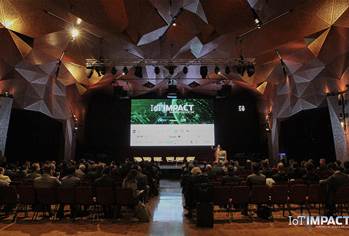
Queensland Privacy Commissioner Linda Matthews has criticised Facebook for deceiving potential users about its purpose.



Speaking on a panel at the World Computer Congress in Brisbane, Matthews highlighted the "enormous power" wielded by the social network with more than 500 million users.
Facebook promoted itself as a community; a place to share and connect with other human beings. But like most companies, its goal was to make money, she said.
"There's nothing wrong with making money; what's wrong is that it deceives potential users about that," Matthews said.
"There's a big difference [to users] between choosing to share your personal information to make friends, and sharing your personal information to make someone lots of money."
Corporate advisory lawyer Anna Sharpe, who was also on the panel, described her work on brand networks, which companies used to build rapport with their customers.
Rather than the vague, oft-used statement, "we will use your information for marketing", Sharpe said companies should disclose the information stored, its use and the parties that may access it.
"Given the complexity, I think the onus is on organisations to be a lot clearer on their privacy wordings," she said.
Although companies like Facebook, Google and Sun Microsystems have previously claimed that privacy was a thing of the past, panellists said the case for privacy still could be won.
"The auction is in full swing," said Goethe University professor Kai Rannenberg, addressing the session's theme: "Privacy ... going, going, gone?"
Rannenberg highlighted "privacy gateway infrastructure components" used by mobile telcos T-mobile Germany and Deutche Telekom that allowed users to determine how their information was used and with whom it was shared.
Personal information, he said, was an asset, and privacy required: the minimisation and decentralisation of data; empowering users; user-controlled identity management; privacy by design; and privacy standards.
Fellow panellist and Australian Privacy Foundation chair Roger Clarke observed that privacy would become more of a concern for those born after 1995, the i-Generation.
He observed that as Generation Y - those born between 1980 and 1995 - faced the impact of having their information stored and published online, 'iGen' would become more careful.
"Youth have always been risk-talkers," Clarke said. "The big thing that's changed is not the behaviour; it's the impact of the behaviour, how long that data exists and how many people have access to it."
"iGens are already absorbing those messages ... What will actually happen is that the young generation of right now will be more privacy conscious and more privacy demanding than their predecessors were."
Former Australian Privacy Commissioner Malcolm Crompton noted, "privacy is a cloudy term", highlighting linked elements of control, trust, risk and accountability.
He said users could exercise "people power" by deciding whether or not to use Facebook, and any other consumer services that came with privacy risks.



.jpg&h=140&w=231&c=1&s=0)

.jpg&h=140&w=231&c=1&s=0)
.png&h=140&w=231&c=1&s=0)


 iTnews Resilience, Rewired Breakfast
 RIMPA Live Convention 2026
 What’s Next?
 iTnews Benchmark Security Awards 2026
 iTnews State of Security Breakfast Sydney





.jpg&h=140&w=231&c=1&s=0)
.jpg&h=140&w=231&c=1&s=0)
.png&h=140&w=231&c=1&s=0)