One of Australia's foremost data centre technologists has offered some pragmatic advice to those organisations considering high density builds: do your sums first.

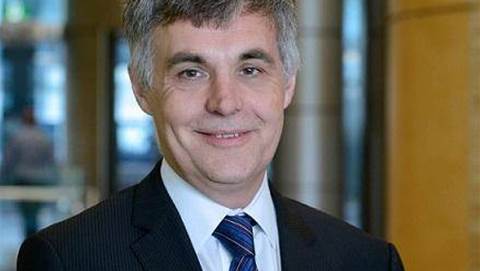
Verghese Jacob, director of data centre consultancy FMEvolution has toured facilities across the globe, and has program-managed telecoms and data centre engineering delivery for many of Australia's largest companies. He believes he has found the sweet spot for powering data centres.
"The state of the art data centres make a trade-off between the loads of IT equipment and the cost of infrastructure to support it," he told iTnews.
Verghese said those organisations pushing beyond 1500 watts per square metre are moving into territory where higher infrastructure costs far outweigh the benefits of the density.
"Between 1200 and 1500 watts per square metre (3 - 3.5 kW per rack) is the sweet spot," he told iTnews. "The core issue is, if you load up the racks too much, the power and cooling infrastructure costs go through the roof exponentially.
"There is no need to go over 1500 watts per square metre for most applications," he said. "Over 1500 and you start moving into non-standard territory in terms of cooling and power equipment. You also need more structural support for higher density computing - which could involve re-enforced concrete slabs and a damn good raised floor."
Verghese said it is uncommon for commercial data centre providers to move into densities any higher than 1200 watts per square metre because "people simply won't pay over $5000 per square metre for leased space.
"Nobody is taking up or asking for that kind of space," he said.
Most co-location facilities in Australia are offering around 1000 watts per square metre - "a price people are happy to pay," he said.
"If they need higher density, most customers just pay for more space they don't use. You don't have to fully load up your racks - just spread them over a wider area."
Planning essential
Verghese appeared at the Data Centre Dynamics conference last month to educate his peers on how to approach capacity planning.
Infrastructure managers need clear lines of communication into IT management, business management and application teams to get a high-level view of the trends, he said.
Surprises are expensive, he said.
"Data centre space is incredibly expensive to build," he said. "And it can take a couple of years to build. You need to get approval and get budget with sufficient time in hand."
Leasing space in a co-location facility, meanwhile, is "expensive if it's requested at the last minute," he said. "It will cost you enormous amounts of money."
"Good capacity planning enables a business to grow when they need to or exploit new business opportunities," he told attendees. "Poor capacity planning brings businesses to their knees."
What do you think? Are there applications for powering a data centre above 1500 watts per square metre in which the benefits outweigh the costs? Comment below...









 iTnews State of Security Breakfast
 iTnews State of Data & AI Breakfast
 Forrester's AI Forum Sydney
 The 2026 iAwards
.jpg&w=120&c=1&s=0) Integrate 2026
Integrate 2026







_(1).jpg&h=140&w=231&c=1&s=0)