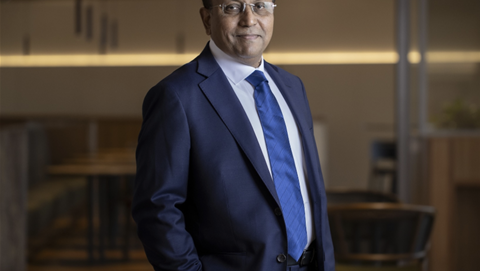
Video: Plans afoot for mass merger of Government IT

 
Page 1 of 2 | Single page

Centrelink to offer compute and storage grunt as-a-service.

The Federal Government plans to share Centrelink's excess compute and storage capacity with other government agencies beyond the Human Services portfolio, including a potential future consolidation of IT resources with the Australian Tax Office and Department of Immigration.


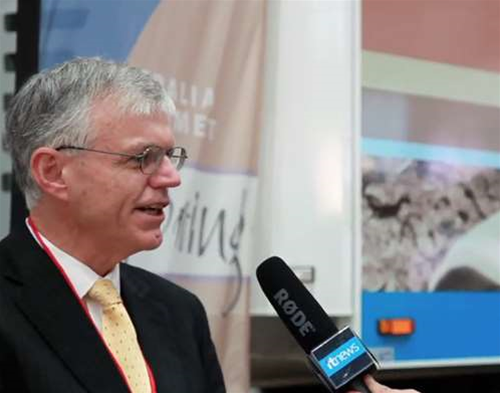
Speaking with iTnews at the CeBIT Australia trade show today, former Centrelink CIO (now Deputy Secretary of ICT Infrastructure at the Department of Human Services) John Wadeson [pictured] confirmed that Centrelink's excess compute power and 788.5 terabytes of spare SAN storage capacity will be offered as a service to other federal agencies under a plan being formulated by the Government.


"We are going to try and create a single piece of infrastructure that will house the data centre environments for all these agencies. That's the plan," Wadeson said.

"But we're not going to get there next week. It's going to take time. First of all we have to get Centrelink's data centre issues in a better position."

Legislation to support the integration of ICT within Human Services agencies - including Centrelink, Medicare and Child Support Agency - is slated for the Autumn sitting of Parliament this time next year. Should it be passed, Human Services expects a three-year integration effort to follow from 2011-2014.

According to Catherine Rule, national manager, strategy and service delivery partnerships at Centrelink, the Government is assessing whether to then bring the Australian Tax Office, Department of Immigration and various State Governments into the same shared services pool, which would take a further five years between 2015-2020.


"If you look at what's going on around the world, everyone is consolidating and wants to be in a modern, well-supported data centre environment," Wadeson told iTnews. "You can't get there on your own. You are better [off] to get together.

"Virtualisation is making what was the impossible possible. Why wouldn't we be doing it as well? I would expect everyone is having these kinds of thoughts. My expectation is the way the technology is moving, the task of getting there will get easier over time."

Privacy concerns are "childish"


Wadeson brushed off concerns that a consolidated Human Services IT portfolio - and potential tie-ups with the ATO and Immigration departments - present a privacy risk.
"Privacy is an issue we will always have to watch," he said. "But [Human Services] Minister [Chris Bowen] made it breathtakingly clear in his talk in December. We are not building a single database here. We are going to use a consent model if we share data."

Wadeson said some privacy arguments are based on "childish" notions of how enterprise computing is delivered.

"People in IT understand that you can house things on one mainframe, and there is no risk of leakage from one part of it to another."

Read on to Page Two for a status update on the integration so far...


Video: Plans afoot for mass merger of Government IT
John Wadeson, Human Services.
"gee go figure, the govt having a small amount of excess capacity that can run the world on..... Pink batts and the school building program seems like something the govt spent loose change on ..."
By Johnnnny


Comments: 4
Psuedo
May 25, 2010 3:31 PM
I like the sounds of it all, though I don't hold my breath for how quickly everything will happen. Maybe the federal government should also be investing in allowing Local Government (in particular state by state) to host their infrastrucutre in a shared data centre. Obviously it is more complex than "just do it", but the cost savings to the community are astronomical.
JSONY
May 25, 2010 4:23 PM
You know what this article or at least the content angers me as an IT professional and more so as a tax payer. which government is responsible for this latest monstrosity of gross waste of taxpayers money.

QUESTION 1 - WHY DOES CENTRELINK HAVE SUCH A SURPLUS OF HARDWARE RESOURCES. Seriously is anyone not asking this basic fundamental question. Those excess resources its so "nicely" offering to other departments would have cost the taxpayer a fortune!! Who planned and budgeted this huge machine??????? Who authorized it??? what did it cost us?????? Why was it even commissioned (I mean did the capacity planner for centrelink over estimate that much???)

QUESTION 2 - Why is the CEO of Centrelink not being investigated for the same questions above, clearly this is a mis-management issue ?????!!!!
STATEMENT 1 - Ummm virtualization is nothing new to the joker making the comment, centralized resources are nothing new you either. They both were called mainframes! They did the job cheaper more effectively then these hugely expensive "new age storage systems" pretty as they are at the user level, nothing new there! CLOWN!

STATEMENT 2. Pseudo above, the governments always had them, but with every changing government, comes a changing IT infrastructure brought on by salesman and new agendas. For 20 years I have been outsourced , re-integrated , outsourced and re-integrated again its a joke. The tax payer has been getting rorted for years but no-one ever does anything about it! We just keep voting another irresponsible labor government in and start the cycle over and over!
Silly Me
May 25, 2010 6:16 PM
JSony,

I'll make two points to make sure I'c covering both sides of the fence.

Firstly, Centrelink would have purchased additional capacity to preparation for the GFC. You know, when the crisis hits, welfare goes up. In order to deal with lots and lots of welfare recipients, and do it well, one needs to prepare in advance - i.e. have the infrastructure, systems, processes, training, etc. well in place. Otherwise, I don't think many people would appreciate going to a Centrelink office to be told to come back in a few weeks' time when the system is able to cope with the demand.
On the provision side, unless you buy into the could computing, or utility computing or insert-your-label on-demand computer, you need to buy the equipment to be ready, and when you buy it, you don't return it six months or a year later because it turns out you don't really need it (anymore).
This brings me to the second point:
On the supplier side, unless you're providing elastic on-demand services, once you have an order, it gets fulfilled, you get paid, and that's the end of it. I think anyone would find it difficult to believe that one should return equipment just because they don't need it anymore.
It's not like my butcher prepares me 500 snags for the weekend BBQ party, and if only 50 people turn up, they are haappy to get back the remaining snags back after the party is over.
Johnnnny
May 28, 2010 10:26 AM
gee go figure, the govt having a small amount of excess capacity that can run the world on.....
Pink batts and the school building program seems like something the govt spent loose change on compared to this!!!!!!
Yet another massive overspent govt initiative we will be paying for in mine and my children's lifetime.
Comments have been disabled for this article.
 
 
Top Stories
NBN Co could miss revised June fibre targets
Analysis: Cutting it fine in the race to the line.
 
Review: Sydney's Opal smartcard
It's no Oyster card.
 
Rackspace puts price premium on Aussie public cloud
At least 17 percent more compared to US instances.
 
 
John Wadeson, Human Services.
Sign up to receive iTnews email bulletins
   FOLLOW US...

Latest VideosSee all videos »

iTnews Academy: Microsoft Windows Server 2012 - Hyper-V
Interview: Australia's 'cloud-last' policy is dangerous.
Interview: Vivek Kundra on Australia's 'cloud last' policy
Bankwest builds continuous delivery capability
To automatically deploy test/dev sandboxes by mid-year.
Veterans' Affairs sets sights on modernisation
Data safe with Human Services, CIO says.
Citi Australia drops platform customisations
Technology chief shifts focus from building to leveraging systems.
VicRoads restructures IT team
Department moves to align with industry benchmarks.
Zurich Australia extends IT team offshore
Malaysian staff served from Australian data centres.
Leigh Berrell - Utilities CIO of the Year
Yarra Valley Water CIO Leigh Berrell accepts his Benchmark Award for Utilities CIO of the Year.
Wayne McMahon - Retail CIO of the Year
Domino's Pizza CIO Wayne McMahon accepts his Benchmark Award for Retail CIO of the Year.
Inside Perpetual's ongoing IT transformation
CIO Jenny Levy discusses how outsourcing will help the firm "simplify, refocus and grow".
Managing Complexity - Defence's Daniel McCabe
Daniel McCabe, Assistant Secretary of Australia's Department of Defence, provides the audience at the iTnews Data Centre Strategy Summit with a deep dive into the organisation's data centre consolidation program.
How Facebook designed the data centre from scratch - Marco Magarelli
The full keynote by Facebook data centre architect Marco Magarelli at the Australian Data Centre Strategy Summit. Magarelli details the design considerations behind the social network's Prineville, Oregon; North Carolina and Luleå, Sweden data centres.
Modernising Legacy Data Centres - Telstra's Jon Curry
Telstra general manager of managed data centres Jon Curry guides the audience at the iTnews Australian Data Centre Summit through the build of the telco's Clayton, Victoria data centre.
NSW Government launches NABERS data centre rating tools
Matthew Clark from the NSW Department of Environment guides facilties managers through the details of the new NABERS data centre energy rating tool at the Australian Data Centre Strategy Summit.
NABERS launch panel: Australian Data Centre Strategy Summit
Matthew Clark (NSW Dept of Environment), Greg Boorer (Canberra Data Centres), Glenn Allan (National Australia Bank), Mike Andrea (Strategic Directions) and Bob Sharon (Green Global Consulting) discuss the impact of the NABERS data centre rating.
Judges notes: Fortescue Metals [The Benchmark Awards]
iTnews' panel of judges discuss Fortescue Metals 'New World of Work" project, one of three shortlisted finalists for the Industrials category of the CIO Benchmark Awards.
Judges notes: Retail [The Benchmark Awards]
iTnews' panel of judges discuss the shortlisted finalists for the Retail category of the CIO Benchmark Awards.
Judges notes: Pacific Aluminium [The Benchmark Awards]
iTnews' panel of judges discuss Pacific Aluminium's lightning fast service desk refresh, one of three shortlisted finalists for the Industrials category of the CIO Benchmark Awards.
Judges notes: Domino's Pizza [The Benchmark Awards]
iTnews' panel of judges discuss Domino's Pizza's shift to hosted services, one of three shortlisted finalists for the Retail category of the CIO Benchmark Awards.
Judges notes: McDonald's Australia [The Benchmark Awards]
iTnews' panel of judges discuss McDonald's Australia's new self-service portal for employees, one of three shortlisted finalists for the Retail category of the CIO Benchmark Awards.
Latest Comments
Polls
Will you quit any cloud services in light of PRISM?

   |   View results
Yes
  62%
 
No
  38%
TOTAL VOTES: 71

Vote