Researchers in New Zealand are developing supercapacitors that absorb and reuse wasted energy from mobile phone and laptop batteries.
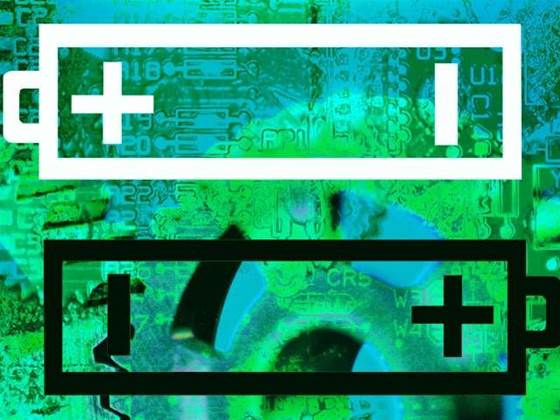
The technology could extend the battery life of mobile devices by boosting the efficiency of their traditional power supplies.
Supercapacitors are very dense capacitors that are capable of storing and discharging large amounts electrical energy very rapidly.
They are often based around activated charcoal or other highly porous materials, and are commercially used as energy storage devices in electric vehicles, or memory backups for IT equipment.
Currently, mobile devices use either switch mode systems or linear power supplies, which deliver high quality power but at low efficiency, electrical engineer Nihal Kularatna explains.
But with modern electrical equipment operating at ever-lower voltages, which switch mode power supplies don't handle very well, Kularatna expects linear systems to find many applications if their efficiency is improved.
"We are using supercapacitors to improve the efficiency of linear power supplies," said Kularatna, of the Waikato University.
The university has filed patents for two working prototypes that use a supercapacitor to improve battery efficiency.
The researchers report having almost doubled the efficiency of a low dropout regulator circuit from 42 percent to 80 percent by using the supercapacitor concept.



.jpg&h=140&w=231&c=1&s=0)
.jpg&h=140&w=231&c=1&s=0)

.png&h=140&w=231&c=1&s=0)


 iTnews Resilience, Rewired Breakfast
 RIMPA Live Convention 2026
 What’s Next?
 iTnews Benchmark Security Awards 2026
 iTnews State of Security Breakfast Sydney







.jpg&h=140&w=231&c=1&s=0)
.jpg&h=140&w=231&c=1&s=0)
.png&h=140&w=231&c=1&s=0)
.jpg&h=236&w=349&c=1&s=1)