
Relax, the crippling PS3 date issue dubbed the "ApocalyPS3" by the Twitterverse has passed but serious implications for Sony's economic gaming cash cow were left in its wake.
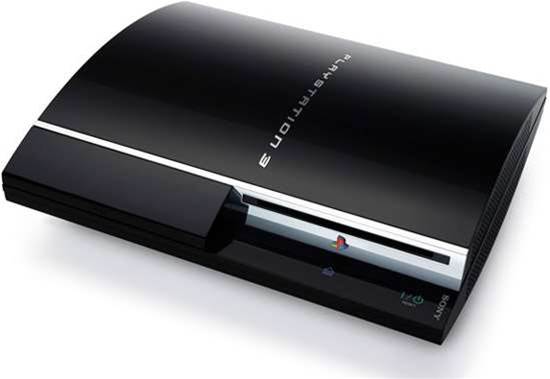
iTnews has confirmed that the catastrophic failure of the global PlayStation network has rectified itself with no apparent lasting ill effects for users who saw their gaming curtailed yesterday. There were concerns that data could have become irretrievably corrupted.
At 1:10pm AEDST, Sony confirmed that its network is again functioning and put the failure down to the flawed internal clock registering this year as a leap year. "Having the internal clock date change from February 29 to March 1 (both GMT), we have verified that the symptoms are now resolved and that users are able to use their PS3 normally," Sony wrote to its blog.
The PS3s may report an April date instead of today's; users can fix the problem by going into their date settings on the cross media bar user interface and updating it either manually or through the internet, Sony said.
As many as 20 million PlayStation 3 owners switched on their machines yesterday to find that an apparent flaw in the internal clock of the popular gaming console rendered the consoles mostly useless for anything other than playing Blu-ray movies. Commenters online quickly narrowed the glitch down to the inability of the system to roll over the date from February 28 to March 1.
Users complained that as a result of what some called a perverse Millennium Bug, games rewards or "trophies", content bought from the Sony online store and games that accessed the PlayStation Network were inoperable.
Sony originally attributed the disruption to a fault with its PlayStation Network but paused downloads in progress resumed during the outage, indicating it was not a fault of the network. And as users shared their experiences online, an image quickly emerged of a flaw with the underlying hardware unrelated to the online service because systems that had never been online also shut out their owners.
Bloggers theorised that the problem was specific to hardware in older, "fat" PS3s. The newer, "slim" PS3s released last September were unaffected, their owners reported in forums online.
Indications that a PS3 was affected included its system clock resetting to either December 31, 1999 or January 1, 2000. Resetting the time manually did not fix the problem and the console would refuse to set its time from the internet.
Trying to log in to the PlayStation Network resulted in a system message displayed: "An error has occurred. You have been signed out of PlayStation Network (8001050F)".
Users also found that content they had bought online reverted to the demo modes and games were reset to the first level and trophies were unavailable.
The fault sorely wrong-footed Sony, which after a few tweets from its corporate PlayStation Twitter account and a posting on its blog acknowledging the issue went dark for most of the say. When it re-emerged from its self-imposed communications blackout about eight hours ago, the company largely reiterated what savvy internet users had been saying for nearly a day.
Owners were hoping, accurately as it turned out, that as the clock rolled around to midnight UTC that the fault would self-correct - and this seemed to be Sony's approach to the problem, recommending PS3 owners not use their consoles for 24 hours.
The complex interaction between the internal clock and Sony's online service seemed to indicate the commodity timekeeping hardware was involved in generating keys to validate e-commerce downloads and user accounts. Without it, Sony's e-commerce ecosystem went into meltdown.
The incident raised serious questions about Sony's ability to respond to unplanned outages, inform its customers and partners (many of whom lost revenue due to the knock-on PSN outage), whether such an incident will happen again and what other gremlins lurk inside the console?
How the electronics giant responds to those questions, including providing compensation to those affected, will have profound implications for its future profitability and confidence in its platforms.
Were you affected by the global Apocalyps3 and 8001050F error? Tell us what you did on the day that PS3 gaming died.



.jpg&h=140&w=231&c=1&s=0)
.jpg&h=140&w=231&c=1&s=0)


 iTnews Resilience, Rewired Breakfast
 RIMPA Live Convention 2026
 What’s Next?
 iTnews Benchmark Security Awards 2026
 iTnews State of Security Breakfast Sydney







.jpg&h=140&w=231&c=1&s=0)
.jpg&h=140&w=231&c=1&s=0)
.png&h=140&w=231&c=1&s=0)
.jpg&h=236&w=349&c=1&s=1)

