Blamed for an estimated 11 million deaths of men, women and children, the Nazi party is arguably history's most evil political power.
Hollerith and the Holocaust
Under Adolf Hitler's leadership from 1933 to 1945, the Nazis identified ethnic Jews and other minorities or those with disabilities in Central and Eastern Europe for the purposes of genocide through medical experimentation, forced labour and execution.
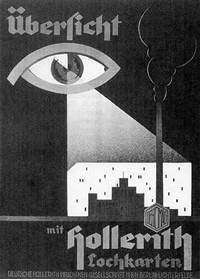
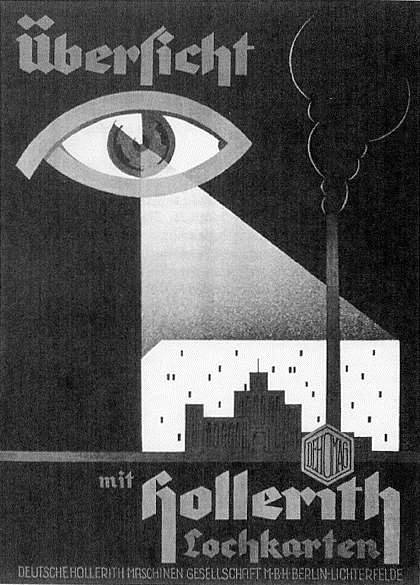
The task of quickly collecting and organising the vast amount of racial census data may have been impossible if not for the use of relatively new punch-card machines that were invented by German-American Herman Hollerith in the 1890s.
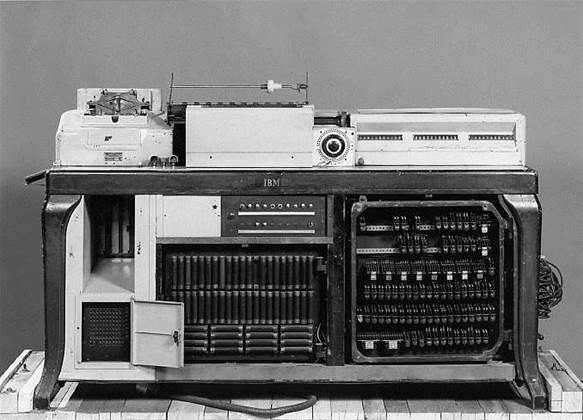
His tabulating machines (pictured), forerunners to today's computers, were used for accounting, tracking inventory and to process US census data. They were developed, made and distributed by the Computing Tabulating Recording Corporation that was later renamed IBM.
IBM and its German subsidiary, Dehomag, leased Hollerith machines and related equipment to the Nazis. According to IBM and the Holocaust author Edwin Black, the five-digit numbers that the machines used to identify prisoners gave rise to the infamous identification tattoos used at the Auschwitz concentration camp.
"There always would have been a holocaust of some kind [even without IBM]," Black says. "But the holocaust that we know, with the astronomical numbers, was the IBM industrial holocaust.
"The Information Age began with the individualisation of statistics, not in Silicon Valley, but in Berlin in 1933," he says.
IBM is suspected to have profited greatly from its dealings with Nazi Germany, including leasing its punch-card machines and printers and supplying the paper that they needed.
IBM has not refuted Black's claims. It claims to have little information concerning operations in Nazi Germany, as most documents were destroyed or lost during the war.
"There has been speculation concerning the use of IBM equipment by Nazi authorities during World War II," says IBM spokesman Doug O'Shelton.
"As with hundreds of foreign-owned companies that did business in Germany at that time, IBM's German operations came under the control of Nazi authorities prior to and during World War II."
"IBM and its employees around the world find the atrocities committed by the Nazi regime abhorrent and categorically condemn any actions which aided their unspeakable acts," he says.
What are some other examples of 'evil uses' of information technology? We'd like to hear your thoughts below...







.png&w=120&c=1&s=0) EDUtech AU
EDUtech AU
.png&w=120&c=1&s=0) Security Exhibition & Conference 2025
Security Exhibition & Conference 2025
 Integrate Expo 2025
 Digital As Usual Cybersecurity Roadshow: Brisbane edition
 iTnews Benchmark Security Awards 2025






.jpg&h=140&w=231&c=1&s=0)
.jpg&h=140&w=231&c=1&s=0)