
When Robert Oppenheimer saw the Trinity atom bomb test in July, 1945, he was reminded of a Hindu scripture: "Now I am become Death, the shatterer of worlds".
In quoting from the Bhagavad Gita, Oppenheimer, father of the atom bomb, was voicing what anyone who has created a significant technology has surely felt at one time or another. Now that the Golem has been set free, what will it do? Will it be turned to peaceful purposes or will it be abused?
The technology improves but the motivations for wrong-doing stay the same. When John Dillinger and his gang robbed US banks in the '30s, he donned disguises and wielded machine guns to steal what was then about US$300,000.
Fast forward to last year and a 'global cashout conspiracy' allegedly led by Israeli hacker Ehud Tenenbaum hit US financial networks for US$10 million.
In that case, despite the changing times, fraud and theft are the same. It's just that the Information Age provides easier access to more data than ever before.
Richard Lucas, who researches ethical issues in IT at the Australian Centre for Applied Philosophy and Public Ethics, says today's crimes differ from their low-tech predecessors in by scale and ease.
"I'm not sure if stealing a million credit card details is any worse than stealing one," he said. "The only difference is one of scale."
The added efficiency of IT could, in some cases, mean an hours-long shutdown of a country's online banking and day-to-day operations. In other cases, it could enable governments to hunt for dissidents by broadly monitoring local voice telecommunications.
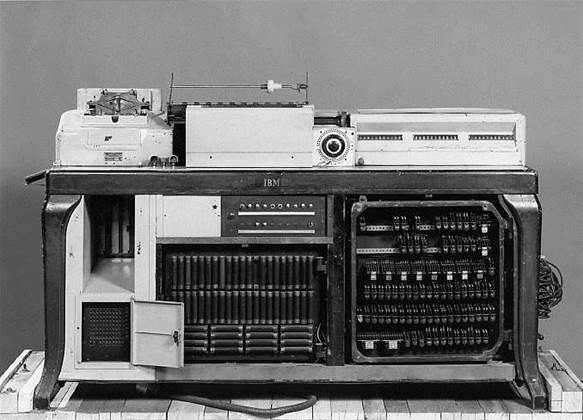
Edwin Black, who investigated the relationship between IBM and Nazi Germany for his investigative book IBM and the Holocaust, wrote that IT such as the Hollerith tabulating machine pictured on this page enabled the Nazis to identify and persecute so many, so quickly.
Lucas says that technology suffers from the "dual-use dilemma": it can be used for peace or war.
"Technology does not have any intentions in its own right," he says. "It can be used for good or bad."
He blames a lack of comprehensive, professional regulatory oversight and ethics education for misuse of IT.
Citing the philosophical "moral distance"', which could shield people from feeling morally obligated to issues that seem far away, Lucas says that IT developers are often far removed from their technologies' impact.
"It's a long way from ‘I'm just writing some code' to ‘someone is being denied welfare payments'," he says.
"We often don't know what these things [such as IT and scientific developments] are going to be used for. But, as a scientist, you can have a really good guess about what these things should be used for."
Between disseminating information, enhancing businesses and providing entertainment, IT has its merits. But, as former US President Franklin Roosevelt observed, "Great power involves great responsibility".
iTnews looks at five technologies that were turned to evil ends.
Read on for iTnews' Five evil uses of IT ...




.jpg&h=140&w=231&c=1&s=0)
.png&h=140&w=231&c=1&s=0)


 iTnews Resilience, Rewired Breakfast
 RIMPA Live Convention 2026
 What’s Next?
 iTnews Benchmark Security Awards 2026
 iTnews State of Security Breakfast Sydney





.jpg&h=140&w=231&c=1&s=0)
.jpg&h=140&w=231&c=1&s=0)
.png&h=140&w=231&c=1&s=0)
.jpg&h=236&w=349&c=1&s=1)

