NBN cost debate picks up steam

  • Email a Friend
  • Print Page
NBN cost debate picks up steam
"Richard and Anthony - the issue is not technology, but financial accountability - a $4B spec for 98% of Australia suddenly morphed into a $40B spec for 90% of Australia - except that there never ..."
By mick09
 
Sep 9, 2009 7:11 AM
Tags: nbn | bhatia | bby | deutsche | bank | broadband | conroy | nbnco | docsis | cable

Would you pay $200 a month for 100Mbps?

The promise of a hyper-fast, state-sponsored national broadband network was mitigated by the high consumer cost to access it, a telecoms industry conference was told last night.
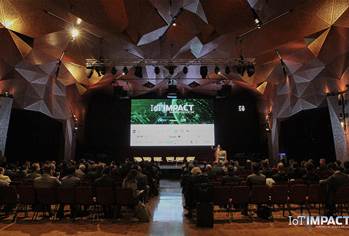
Speaking at the Telecoms World conference, senior analyst with stockbroking firm BBY Mark McDonnell said the oft-touted $43 billion cost of what he said was an "inherently inefficient" Federal Government-funded network "doesn't appear to be based on any detailed study".

McDonnell said there was a risk that the Government was buying what it should otherwise lease.

"There is no clarity around the underpinning assumptions or about the kind of network or industry arrangements implied," McDonnell said.

His revenue models predicted that for the network operator to be reasonably profitable, consumers would need to pay $200 a month, a figure dismissed by Deutsche Bank analyst Sameer Chopra and ridiculed by Primus Telecom managing director and chief executive officer, Ravi Bhatia.

McDonnell took a swipe at Broadband Minister Senator Stephen Conroy saying that while the minister and other NBN proponents "ridiculed the proposition that consumer prices up to $200 a month would be needed for broadband to cover the costs but avoid giving any statements about what it could or should be".

He said on these figures the network would need to pass about 8.5 million houses and 1.5 million businesses, assuming 10 percent return on assets a year and operating costs of about a third of the capital costs. In such a scenario, operator NBN Company or NBNCo  would seek about 15 percent a year profit after tax.

"These are far from aggressive return expectations," he said.

He said that rather than build infrastructure ("pits, poles and ducts"), the Government through the NBNCo should consider leasing Telstra infrastructure.

"As a lower-cost alternative it may be more cost-effective and faster to market if NBNCo would buy Telstra's facilities assuming they agree to sell or those of other utilities."

McDonnell criticised what he called the Government's "high-risk" strategy of deploying a national network with speeds of 100Mbps to each house and business.

"No one has yet provided any real evidence relating to unmet demand for 100Mbps broadband delivery for the household," he said. "No one from Government has been able to give any clarity as to the prices consumers or wholesale customers would be expected to pay."

He said such infrastructure investment was an answer in search of a question that didn't consider the alternatives such as wireless and DOCSIS 3 cable modems, the ancillary costs such as finance for such a project or even if there was a demonstrated need for it?

"There is no clarity around whether the putative $43 billion is simply the construction and deployment costs or does it make some allowance for the startup losses of NBNCo?" he said "How many months or years of losses are being funded by this notional $43 billion capital commitment?"

And he warned the final cost could blow out once interest payments were considered.

The Government was "placing a higher policy value" on competition than "productive efficiency" by rolling out an "inefficient and complex" network that duplicated infrastructure, McDonnell said.

Suggesting that the NBN was "irrational", "emotionally charged" and "lacking in any measure of financial or commercial rigor", McDonnell said it was "one thing to invest for future growth, quite another to create a new network for provision of future services for which there is little meaningful definition or defined demand".

"When it comes to risk, this is about as high risk as it gets," he said.

But the BBY analyst's figures were disputed by Deutsche Bank telecommunications analyst Sameer Chopra, who said the wholesale access price will be closer to $30 a head and about $50 at retail.

Chopra said the NBN should be completed for about $25 billion or $27.5 billion once finance costs were considered, including the $11 billion "gift" from the Government.

"That's not a big number in the scheme of things," Chopra said, referring to the Government commitment. NBNCo would be EBITDA positive in its fifth year and NPAT profitable by its seventh, he said.

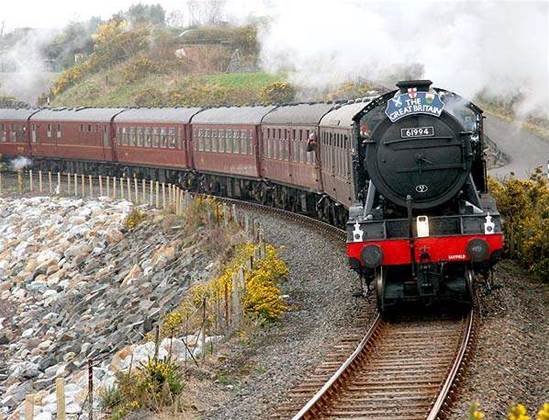
Primus Telecom managing director Ravi Bhatia said he already spends about $200 a month on pay TV, a landline and internet access. And he said that if traditional finance models were applied to water supply systems or at the start of the Steam Age, we wouldn't have running water or railways, respectively, today.

"If you sit and calculate using traditional financial models, it doesn't make any sense," Bhatia said, dismissing McDonnell's projections.

"We don't even know what technology will exist (to take advantage of the network).

"Who could have made a financial model for the steam engine?"

Bhatia went on to criticise Telstra tangentially: "Are we going to be held back by one company? That's the question we need to answer."

And he dismissed wireless as a replacement for cables and ducts because it was a shared resource that degraded quickly as more people used it and bumped up against physical laws of nature.

"It's total BS," he said.


 
Comments: 8
Thoughts on this article? Add a comment below.
Bob
Sep 9, 2009 9:31 AM
Mr McDonnell, a senior analyst speaking at the Telecoms World conference, is making more sense than either governments have made of access costs from the start. As for Primus Telecom managing director Ravi Bhatia comments that he already spends about $200 a month on pay TV, he must have a lot of spare time. This is the guy that comments that "the Primus data centre is bulletproof" and then later after the next crash "the Primus data centre is bulletproof".

Any company whose business plan is with wildly optomistic expectations to "seek about 15 percent a year profit after tax" is going to go broke.

I guess it's lucky it's only taxpayers who will be paying for it.
mick09
Sep 9, 2009 9:56 AM
Right on Ravi - "it doesn't make sense" - "it's total BS". Where is your analysis? Which government funded the Steam Engine? Is your $200 per month comment an endorsement of Mr McDonnell's attempt to quantify the reality of NBN?
MerariSchroeder
Sep 9, 2009 10:58 AM
"We don't even know what technology will exist (to take advantage of the network)."

So you race in blind do you?

"Who could have made a financial model for the steam engine?"

That's the wrong analogy. We're not going from no internet to FTTP, we're not going from morse code to HD video. The industry has plenty of experience, to make at least medium term projections.

"he dismissed wireless as a replacement for cables and ducts because it was a shared resource that degraded quickly as more people used it and bumped up against physical laws of nature."

That's because too many people are ignorant of the scope of wireless, they only think in terms of what they see today, Mobile Cell towers with poor latency. Internet by wireless is still in its' infancy, and there are many ways to squeeze more speed, reliability and better latency out. Directional wireless is just one of many avenues to explore.
norgan
Sep 9, 2009 3:18 PM
I for one am looking forward to being able to get 100mbps for $200. i host in my home for friends and family as well as some small businesses and have just cut back from spending 150/month on a server in the states so i can do it cheaper on my local link that i have since upgraded to a business account with extra ip's.
i am very close to macquarie uni and still only get 4mbit by 700kbps on my cisco 877. this costs me 130/month.
the next option i have is SHDSL which will propably not get me much more than the ADSL2+ link i am on now.

So now here comes the real winner in NBN, a current 10mbit fibre (not to home) will cost at least 3k per month, however with the NBN i will have the option of a fibre link (which ISP's like internode are already doing for 49.95/month at ADSL2+ speeds), for a very affordable price.
for me 100mbit fibre link to home is a dream and for $200, only $70-80 more than my current link?!

NBN is a winner in my mind and i will gladly pay $200/month for 100mbit link.
richardj195
Sep 9, 2009 5:12 PM
Actually I agree with Ravi Bhatia. I believe the construction of this network will in time prove to have a significant impact upon the way Australians live and work, hopefully improving the delivery of all sorts of services to remote communities and relieving the pressure on swamped urban transport infrastructure.

I also agree with Sameer Chopra's comment that the size of the investment is not really that significant when you consider it against other major infrastructure programs, the potential to create new opportunities as well as offset costs in the future. For instance the state of Queensland alone has allocated $16.2 billion over the next five years for capital works for roads alone.

All that's needed is some faith and vision. I think in ten years time people will look back and wonder how Australia ever functioned without the NBN.

xxAnthonyxx
Sep 10, 2009 10:20 AM
i agree with richardj195 in time people will wonder how we ever managed to live without the NBN... this exsact same debate happened over why we needed to upgrade from dial up to adsl. claims on what such bandwidth could possibly be used for and who would need it. well if you build it people will utilize it. we now enjoy sites like youtube. video streaming, better latency for gamers. and much more. sure you might be puzzled for what a 100mbit network could offer. but atm foxtel is crapping in its pants trying to get as many people on foxtel with tones of deals on tv because once this network is built. there dominance is over. because pay tv will be offerable over the fttp network giving open access to new competitors. services seen overseas such as seeing the doctor from home with live video stream (for things you dont have to see the doctor for ofcourse) and he can say yes u do need to come in or not. making the health system better a bit. i may be only 16 but ive done some research and i cant wait for this network to roll out. be so much available and new to use, you have to think outside the box and think what this service would open up and allow us to do. not in the mind frame of i can already do everything like stream videos quiet fine i dont need faster internet for that. one must see beyond current technology uses on the network by simply looking at how other countries like japan have used there network for.

japan since october started rolling out 10gbit network to consumers to upgrade from its 1gbit network. 100 times faster then what we are thinking of upgrading to. if it had boomed and become very successful why are we still arguing about leaving our 3rd world telecommunications standings. in my opinion its not a matter of if we will use the network but how will it be used. because it needs to be built sooner or later. and the NBNco should also focus on laying more connections out to guam and other places. no point at all having a 100mbit local connection for Australia when all the web servers are overseas. with everyone trying to access it it will be as fast as adsl2. also with upgrading the links we bring in investment from people setting up servers here. and allow the end user of the nbn to be able to get higher usage at the same cost if not no cost. as the us have no cap on usage at all. i would only consider going to nbn if i could easily afford 200gigs+ a month. you ask how could i use that. well im on adsl1+ and i use 50gigs a month now easily. and sometimes cap my 60gigs. and with all the video streaming that will occur 200gigs+ (or alot of uncounted data from services) is gona be needed.
mick09
Sep 10, 2009 11:33 AM
Norgan - Yes North Ryde does have some Frog Hollows up and past Macquarie. You seem to be almost a mini-ISP. It is almost the country and city argument. Move three km's and you can have 17 Mbits/s, now, over copper for $50 pm.
mick09
Sep 10, 2009 12:03 PM
Richard and Anthony - the issue is not technology, but financial accountability - a $4B spec for 98% of Australia suddenly morphed into a $40B spec for 90% of Australia - except that there never was, and to this day, is not yet, a spec or costing of anything.
Comment:
Want to participate in the discussion?
Or log in now to comment


Top Stories
TIO website hit by malware
Weekend malware runs one new process per target machine.
 
Microsoft announces Azure launch date
Australia in second wave of country releases.
 
CBA embarks on "database-as-a-service"
Analysis: How the bank intends to save megabucks.
 

Spotlightthe topics we're following

Latest Comments

"Hahahah...What a joke!! "Conroy had said that it was not possible to apply ISP-level filtering ..."
by gerson Feb 9, 2010 10:39 PM
 
"@@Comments, yes, and history keeps repeating itself. Remember the earlier pr-and-media-fuelled ..."
by anonymous Feb 9, 2010 6:40 PM
 
"I would have paid good money to be in court when that clanger dropped. Could you imagine, the ..."
by Private Citizen Feb 9, 2010 6:23 PM
 
"He is not yet listed on NBN Co. website as part of their team of executives (http://www.nbnco.com..."
by Private Citizen Feb 9, 2010 6:07 PM
 
"That would be the list leaked on wikileaks that the minister denied was the ACMA list. The same ..."
by Private Citizen Feb 9, 2010 5:17 PM
1) HTC Magic16 plans 2%
2) Nokia N9743 plans 9%
3) Nokia E7149 plans 1%
4) Apple iPhone 3GS 16GB30 plans 11%
5) Apple iPhone 8GB42 plans 5%
1) iiNet32 plans 5%
2) Netspace36 plans 11%
3) TPG Internet19 plans 14%
4) Optus33 plans 1%
5) Telstra BigPond30 plans 2%

Mobiles | Broadband | Credit Cards

iTnews

Polls

What is the sweet spot for Apple's entry 16GB Wi-Fi iPad?


   |   View results
$549
  78%
 
$579
  10%
 
$619
  4%
 
$649
  3%
 
$699
  5%
TOTAL VOTES: 381

Vote