Just about everyone I meet these days says they are a "social media expert".
Maybe it's because I mix in the rarefied air of information elites to whom to tweet is to be. Or maybe it's an indication that social media is already past its use-by date.
Perhaps, like Joseph Kennedy, I should be skeptical when I see shoe shines tweeting from their iPhones. (Kennedy knew it was time to get out of the stock market in 1929 when a shoe shine gave him market tips; he went on to build the most powerful political dynasty in America on the proceeds of that insight.)
For the three of you reading this piece who are not experts, or even know or care about the subject, let me bring you up to spin.
Humans have been engaged in social media, known in earlier times as socialising, since they started colluding to influence their surroundings. Evidence of this dating back 40,000 years is still on rock walls in places such as Kakadu in Australia's north and traces to the caves linked to Aurignacion culture in Europe and parts of Asia.
Back then, social media consisted of shamans and mystics gathering the tribe around the paintings to recount great hunts, cast spells over wandering herds, induct members into the ways of the tribe and conduct religious ceremonies.
Fast forward to the age of Facebook, Twitter and LinkedIn and it's easy to see how the aims of such ancient ways of interacting translate to today's global, information society. It's still about how your reputation influences those around you and the environment your network inhabits.
Recent converts may be surprised to read that even in the modern context, social media as concept traces back nearly 40 years to work by media theorist Marshall McLuhan and futurist Alvin Toffler. They popularised the notion of the "prosumer" - or a consumer who aided by technology would become a producer of media.
And anyone who remembers the early days of online communities such as the BBS Fidonet echoes, internet relay chat, e-mail listgroups, CompuServe, Usenet forums and the beginning of instant messaging such as the Mirabilis protocol (ICQ, AOL Instant Messenger) may think all this chatter over twittering a bit of a titter.
But they would be wrong. Although many of the principles of those earlier experiences are relevant today, the global spread and influence of newer social-media forms coupled to always-on, high-bandwidth networks and devices with augmented capabilities such as multimedia radically changes its impact and immediacy.
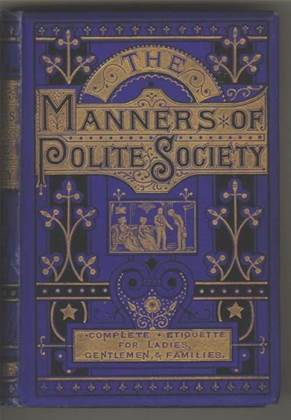
Those earlier online social communities once had rules for the road or etiquette guides to help new travellers find their way. As you can see from the photo on this page from the Rare Book Collection at Monash University's library, they borrowed their essence from established human need to fit in but in a social-media context where relationships are moderated among peers without reference to a higher power the need for civility is even greater.
There was a time when you could get into a flame war (an acrimonious online dispute) with someone and still go about your daily duties. Your online and real-world personas were separate. Today, your online persona is a metaphysical virus that infects your corporeal reality often without your knowledge.
Consider that in a recent US survey of 2667 human resources professionals, the lads and lasses who hire and fire, 45 percent said they use social media sites to screen candidates. More than a third disqualified candidates based on their online identity.
At the e-Crime Symposium in Sydney last month, speaker and Handshake Media principal Rachel Dixon told the story of how "Maggie", a talented web designer, can't get a job because of a flame war in which she was involved years ago as a teen.
So while the rules of the road have scarcely changed in thousands of years, the fines have substantially increased. So it's more important than ever to follow an etiquette when dealing online.
Twitter and Facebook may follow the likes of Usenet, Geocities, Friendster, Aimster and other social media platforms that waxed and waned in popularity but this starter's guide to online social etiquette will show you how to safely engage in online conversation regardless of the platform.
Much of this won't be new to many, some information was culled and adapted from existing online etiquette guides and much added from those in my social media networks.
Read on to Rule 1: How to win a flame war ...



.jpg&h=140&w=231&c=1&s=0)
.jpg&h=140&w=231&c=1&s=0)

.jpg&h=140&w=231&c=1&s=0)


 iTnews Resilience, Rewired Breakfast
 RIMPA Live Convention 2026
 What’s Next?
 iTnews Benchmark Security Awards 2026
 iTnews State of Security Breakfast Sydney






.jpg&h=140&w=231&c=1&s=0)
.jpg&h=140&w=231&c=1&s=0)
.png&h=140&w=231&c=1&s=0)
.jpg&h=236&w=349&c=1&s=1)