

Australia’s telecommunications and competition regulators need to apply the same close scrutiny to the complex world of mobile telephony as they already provide to fixed lines, writes David Havyatt.

New research from the ACMA indicates that an increasing number Australians are opting to only use a mobile phone and abandon fixed line telephony.
Mobile-only carriers such as Vodafone, meanwhile, are launching a range of “infinite” plans that can be interpreted as an attack on the fixed-line telephone.
As more Australians choose to abandon the fixed line for a mobile device, regulators need to address the fact that fixed line customers continue to subsidise mobile service acquisition and that further - mobile only customers really get a rotten deal.
Let’s talk about the cross-subsidy first. Plans for mobiles are complicated, but generally the call rates for any call originating from the mobile are cheap, although they don’t appear that way. That’s because a large amount of calling is included in the monthly charge (incorrectly labelled a cap).
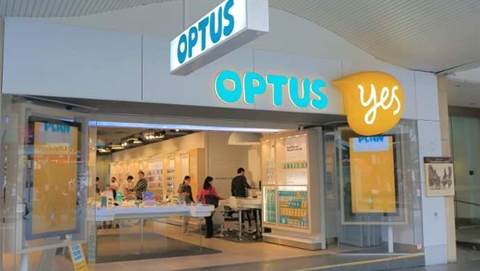
New Optus MVNO amaysim, for example, has launched a simplified plan that just charges just 15c per minute for “standard mobile calls”. And the Vodafone infinite plans include an unlimited number of calls to “standard numbers” in the monthly plan.
So how can the mobile operators do this? Firstly, the Hutchison half of VHA planned back in 2003 with the launch of 3 to make money on data and give voice away.
More significantly, there is an imbalance in interconnect pricing. The marginal external cost the mobile operators face for terminating a voice call on a fixed network is determined by the ACCC PSTN OTA rate, currently a headline rate of 1.10 cents per minute.
The ACCC determined the MTAS Pricing Principlefor the inter-carrier payment for calls to a mobile is 9c per minute. This is where a mobile operator can make some gains - if its pricing is designed to attract customers, it gains inbound MTAS revenue.
The idea that the inbound fixed termination rate is used to cross-subsidise mobile subscriptions isn’t just a theory. Vodafone and Optus have actually argued for high termination rates as it would encourage mobile take-up and hence create greater “utility” for fixed line customers.
But can that be justified when the ACMA statistics tell us there are more mobiles than fixed lines?
The other area where the mobile networks recover more than their costs is in international calls. Unlike a fixed line, where you can pre-select a long distance provider, choose an alternate by dialling an over-ride code or access a calling card platform with a free call number(1800), the mobile customer either has to pay the mobile operator's rates or the high cost to call 1800 from a mobile plus the cost of the call from a calling card provider.
Unsurprisingly, the cost of an international call on a Vodafone “infinite” mobile plan is a lot higher than a standard Telstra fixed line (to the USA 35c plus $1.00 per minute for Vodafone, 45c plus 2c per minute for Telstra). New provider amaysim is also offering cheaper international calls, but is still charging rates of 99c per minute to some major destinations.
Your average phone user makes a lot of calls to free-phone and local rate numbers. That’s because businesses and government agencies we want to talk to have been conditioned to the idea that they need single national numbers to be able to locate themselves wherever they want without incurring high call costs for customers. The mobile operators don’t include these in their definition of “standard calls” - mostly because they need to price 1800 numbers in such a way as to protect their high international call rates from competition from calling cards.
The ACMA data reports that 14 percent of mobile phone subscribers over 14 years of age don’t have a fixed-line telephone. This is nearly consistent with the report that 90 percent of households have a fixed-line telephone and 85 percent of individuals have a mobile phone.
What is unclear from the statistics, however, is how “fixed line telephone” is defined. Households with VoIP are reported separately. Of the 23 percent of households with broadband that say they use VoIP, 17 percent say they use their home phone to access VoIP. That indicates they are fully fledged VoIP services with a phone number as offered by the likes of engin and PennyTel.
The ACMA also states that 86 percent of VoIP users say they have been doing so using their PC or laptop. These are more likely to be users of Voice over Internet services such as Skype.
(As a side note, Skype users will find that their browser may identify numbers on websites as telephone numbers and proffer them as a hyperlink to a Skype call. This happens with telephone numbers on the ACMA’s website – but also with CAN numbers on the ASIC site.)
The VoIP operators continue to be exposed to intense scrutiny by regulators over their services.
But if mobile phones are now the substitute for fixed lines, it is really about time they too were subject to the same scrutiny.
There are three areas the ACCC could productively investigate:
- Investigate whether the MTAS rate is artificially high given the low value the operators place on mobile origination.
- Review the decision to revoke the mobile originating access service declaration and price the service so that calls from mobiles to 1800 and 13/1300 can be priced the same way as calls from fixed lines.
- Investigate whether the ability to preselect the international call provider of your choice from a mobile phone should be introduced.
Ultimately, however, the ACCC could also question whether use by the mobile operators of the word “standard” to refer to calls to fixed and mobile numbers but not 1800 or 13/1300 is misleading or deceptive.




.jpg&h=140&w=231&c=1&s=0)


 iTnews State of Security Breakfast
 iTnews State of Data & AI Breakfast
 Forrester's AI Forum Sydney
 The 2026 iAwards
.jpg&w=120&c=1&s=0) Integrate 2026
Integrate 2026






_(1).jpg&h=140&w=231&c=1&s=0)
