CIOs are blamed either for being unable to deliver on commitments, or for
creating roadblocks hampering business development.
Even IT research organisation Gartner has come out warning CIOs that 90 percent of their IT expenditure goes to "steady state" maintenance projects which deliver no incremental value to the business.
The beleaguered CIO seeking "alignment to business imperatives" needs to find strength and solace walking the "third path" - the space between yes and no.
And no, this approach is not advocating the extended use of "maybe".
Demonstrating strong personal leadership, the CIO needs to be seen as the champion for the application of business decision making principles within IT service requests.
Businesses too readily see the IT budget as an existing pool of money from which all possible IT requests must be met. The CIO is left trying to satisfy an infinite number of possible requests and opportunities from a distinctly finite budget pool.
When the business requests a "service variation" from IT - be it a new PC, improvement to an application, or development of a partner portal - they are committing the organisation to expenditure. If all existing funds are assigned, this new commitment will require new funds.
Standard business practice demands that the authorised business manager is held accountable for the ongoing (lifetime) cost of any request they make which causes IT to commit funds. This does not only apply to capital “purchase” requests, but requests which will involve time or expense on a one-off or ongoing basis.
Once implemented, IT solutions need maintenance. The more solutions you have, the higher the overheads on basic day to day operation. These costs cannot be merely swept under the carpet. They need to be factored in to the original decision to proceed.
The CIO is not positioned to say either yes, or no to any specific request.
Instead the CIO needs to devise and implement appropriate quality processes for helping the business make and hold itself accountable for informed investment decisions - made by the business according to its investment criteria.
If it turns out that only 10 percent of expenditure is made on "new projects" - that is a decision the business has made. The CIO can advocate (but cannot authorise) new financial commitments to functional improvements to improve the business. Only business managers can take responsibility for investments in the business.
The decision making processes which the CIO needs to implement must be intuitive, simple and framed in terms of the existing expenditure (budget) authorisation which operates within the company.
The traditional IT budget is then seen as a limit of pre-authorised expenditure against which to compare an ongoing increase in commitments. Once the budget level is reached, all new commitments need to be joined with new money – or the resources will not be available to service existing commitments. Re-interpretation of the way an IT budget is seen will need to be handled with care appropriate to each organisation.
CIO must provide leadership to finance and the executive management team in order to implement, operate and manage this improved quality framework for IT request decision making.
Simply saying "you decide" is not meeting the responsibilities of the position.
To fulfil senior executive responsibilities, the CIO needs to identify and sell the problem and deliver a complete managed solution.
A comprehensive solution includes processes for communication to enable genuine informed decisions by the business, reporting on future financial commitments against budget, service quality reporting, financial performance metrics and business case decision processes.
Correctly implemented, these disciplines are of value to the business applied to all investment requests – both inside and external to IT. Tackling this thorny issue is not only a matter of survival for today’s CIO caught between blocking or overcommitting – it is an opportunity to prove his/her wider relevance to the improved control and quality management of the business at large.
The third path is the path of taking a leadership role in developing improved management disciplines to the benefit of both IT and the business.
Leadership on the third path is taking your destiny into your own hands - finding a solution to your own problems, improving your customer service image and enhancing management outcomes.
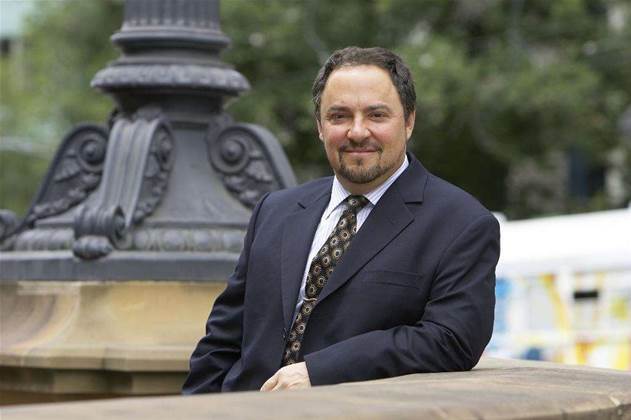
Danny Davis
Executive Director
CIO Institute of Australia
The CIO Institute of Australia is the professional organisation for senior IT executives. It aims to improve the standing of the profession through focussed executive development for its members and outreach to the business community at large.




.jpg&h=140&w=231&c=1&s=0)




 iTnews State of Security Breakfast
 iTnews State of Data & AI Breakfast
 The 2026 iAwards
.jpg&w=120&c=1&s=0) Integrate 2026
Integrate 2026
 Security Exhibition & Conference








_(1).jpg&h=140&w=231&c=1&s=0)