iTnews
  • Home
  • News
  • Technology
  • Hardware

Researchers create super-thin laser mirror

By Robert Jaques
Feb 15 2007 9:50AM
Follow google news

Berkeley boffins believe technology could improve next-gen laser devices.

Researchers create super-thin laser mirror
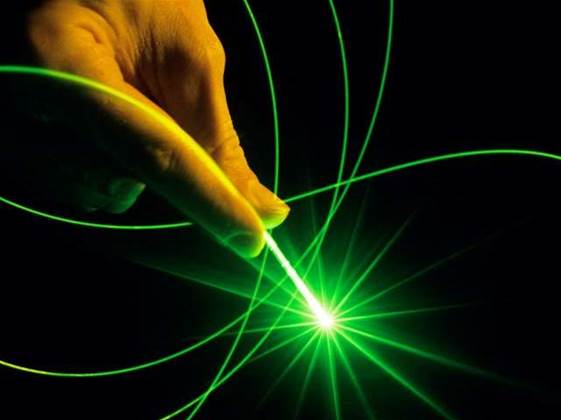
US scientists have created a high-performance mirror which they claim could dramatically improve the efficiency of next-generation laser devices including high-definition DVD players, computer circuits and laser printers.

Developed by engineers at University of California, Berkeley, the new mirror packs the same 99.9 per cent reflective punch as current high-grade mirrors.

But the new mirror is at least 20 times thinner, functions in a considerably wider spectrum of light frequencies and is easier to manufacture.

The researchers believe that all these characteristics present "critical advantages" for today's ever smaller integrated optical devices.

Connie Chang-Hasnain, director of UC Berkeley's Center for Optoelectronic Nanostructured Semiconductor Technologies, developed the super-thin mirror, or 'high-index contrast sub-wavelength grating', with graduate students Michael Huang and Ye Zhou.

"Today's semiconductor lasers demand mirrors that can deliver high reflectivity, but without the extra thickness," said Chang-Hasnain.

"When you reduce the thickness of a mirror, you are significantly reducing the mass of the device, which also translates into lower power consumption. The mirror we've developed overcomes the hurdles that have stalled the advancement of certain lasers."

The UC Berkeley engineers used aluminium gallium arsenide for the high refractive index layer, coupled with a layer of air, which has a very low refractive index of 'one'.

In addition, the high refractive index layer contained grooves spaced by a distance less than a wavelength of light.

In this configuration, light hitting the mirror surface was directed over the grooves. As the light waves passed each semiconductor-air interface, they were strongly reflected back in the opposite direction.

"Reducing the size of the laser's mirror also means a dramatic reduction in weight," added Chang-Hasnain.


Add iTnews as your trusted source

Add iTnews As Your Trusted Source Add iTnews As Your Trusted Source
Got a news tip for our journalists? Share it with us anonymously here.
Copyright ©v3.co.uk
Tags:
createhardwarelasermirrorresearchers

Related Articles

  • Kmart Group to expand RFID tagging to more products and to Target Kmart Group to expand RFID tagging to more products and to Target
  • Microsoft teases new era of AI-driven devices Microsoft teases new era of AI-driven devices
  • PsiQuantum to build computer at Moreton Bay PsiQuantum to build computer at Moreton Bay
  • US to invest in IBM, other quantum computing firms US to invest in IBM, other quantum computing firms
Join our WhatsApp Channel

Partner Content

Thomas Peer Solutions unveils data cloud platform and executive leadership forum for 2026
Partner Content Thomas Peer Solutions unveils data cloud platform and executive leadership forum for 2026
Intelligence × Trust: the equation that will decide Australia's AI winners
Promoted Content Intelligence × Trust: the equation that will decide Australia's AI winners
Agile isn’t the problem: why projects still fail, and what’s missing
Partner Content Agile isn’t the problem: why projects still fail, and what’s missing
You meet the security standard. Shame no one can see it
Promoted Content You meet the security standard. Shame no one can see it

Sponsored Whitepapers

When cyber risk has no clear owner: A practical guide for senior Australian business leaders
Agile in the AI Era: why projects still fail
When Technology Becomes the Blocker: Unlocking Real Outcomes from AI and Cloud
High-volume data sources for AI-driven security analytics
How healthcare organisations can get more value from cloud

Events

  • iTnews State of Security Breakfast iTnews State of Security Breakfast

  • iTnews State of Data & AI Breakfast iTnews State of Data & AI Breakfast

  • Forrester's AI Forum Sydney Forrester's AI Forum Sydney

  • The 2026 iAwards The 2026 iAwards
  • Security Exhibition & Conference Security Exhibition & Conference
Share on Facebook Share on LinkedIn Share on Whatsapp Email A Friend

Most Read Articles

Google says it has cracked a quantum computing challenge

Google says it has cracked a quantum computing challenge

Kmart Group to expand RFID tagging to more products and to Target

Kmart Group to expand RFID tagging to more products and to Target

Microsoft teases new era of AI-driven devices

Microsoft teases new era of AI-driven devices

Australian teen leaks pictures of new iPhone parts

Australian teen leaks pictures of new iPhone parts

techpartner.news logo
Sydney-based AI-cloud waste startup raises $3m
Brennan uses NiCE to modernise its contact centre
Impact Awards: Tecala slashes customer response times for fintech IQumulate
Interactive introduces private cloud platform
Digital61 expands cybersecurity portfolio
All rights reserved. This material may not be published, broadcast, rewritten or redistributed in any form without prior authorisation.
Your use of this website constitutes acceptance of nextmedia's Privacy Policy and Terms & Conditions.